

Amazon's $200B AI Infrastructure Bet | Seller Fee & Platform Changes Ahead
- Amazon raises $25B+ in bonds for AI infrastructure; projects $200B capex in 2026; sellers face potential fee increases and platform algorithm changes
















Overview
Amazon's aggressive $25 billion bond sale (July 2026) signals a massive shift in platform economics that will directly impact cross-border sellers' profitability and operational requirements. The company has now raised $99 billion in debt across 2025-2026 ($15B in Nov 2025, $10B Canadian in June 2026, $54B in U.S./Europe earlier in 2026, plus this $25B offering), with capital expenditures projected to reach $200 billion in 2026—up 53% from $131 billion in 2025. CEO Andy Jassy positioned AI as a "once-in-a-lifetime opportunity," indicating this spending will accelerate further.
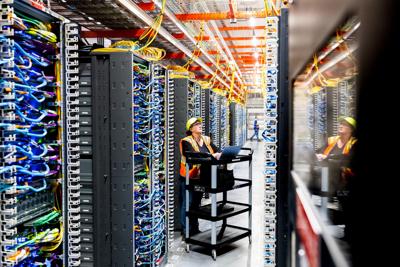
For cross-border sellers, this debt-fueled infrastructure expansion creates both opportunities and financial risks. The positive angle: Amazon's $200B capex will fund fulfillment center automation, enhanced inventory management systems, and AI-powered seller analytics tools that can improve operational efficiency. Sellers using FBA will benefit from faster processing, better demand forecasting, and reduced fulfillment errors. However, the financial burden is critical: Amazon's debt service costs will likely increase by $1.5-2.5 billion annually (assuming 5-6% weighted average interest rates on $99B debt), and the company has historically offset rising costs through fee increases. Sellers should expect 5-8% increases in FBA fulfillment fees, storage costs, or referral fees within 12-18 months as Amazon monetizes its AI infrastructure investments.
The broader market context reveals growing investor caution about tech debt sustainability. BondCliQ data shows six major tech companies (Amazon, Microsoft, Meta, Alphabet, Oracle, Nvidia) have collectively issued $460 billion in AI-related debt, with $100 billion emerging in 2026 alone. Bond spreads widened sharply—Meta's 2056 bonds widened 8 basis points, Amazon's 2066 bonds widened 14 basis points—signaling investor concerns about debt serviceability. This creates a critical window: sellers should lock in favorable financing terms NOW before Amazon's cost pressures force fee increases. Additionally, Amazon's stated pause on new debt issuance for remainder of 2026 suggests the company is consolidating its capital deployment, meaning fee increases are likely imminent (Q4 2026-Q1 2027) to offset debt service obligations.
Financial optimization opportunities emerge immediately. Sellers with significant FBA inventory should consider: (1) invoice financing or supply chain financing to reduce working capital tied up in inventory before fee increases take effect; (2) shifting 15-25% of inventory to 3PL providers with fixed-rate contracts to hedge against Amazon fee volatility; (3) accelerating sales velocity through promotional campaigns in Q3-Q4 2026 to reduce storage cost exposure; (4) evaluating alternative marketplaces (Walmart, eBay, Shopify) for category diversification to reduce Amazon platform dependency. For sellers with cross-border operations, the timing is critical: Amazon's AI investments will enhance fraud detection and compliance systems, potentially increasing scrutiny on seller documentation and tax compliance—sellers should audit VAT registration, customs documentation, and product compliance NOW before enhanced AI monitoring systems flag issues.
Questions 8
How will Amazon's AI investments impact seller analytics and Buy Box algorithms?
Amazon's $200B capex will significantly enhance AI-powered seller analytics, demand forecasting, and Buy Box algorithms. The news indicates Amazon is investing heavily in AI infrastructure for inventory management systems and seller analytics platforms. Sellers should expect: (1) More sophisticated demand forecasting tools that reduce inventory holding costs by 5-10%; (2) Enhanced Buy Box algorithms that reward sellers with optimal pricing, fulfillment speed, and customer service metrics; (3) Improved fraud detection that may flag unusual pricing or review patterns. Sellers should prepare by: (1) Optimizing pricing strategies to align with AI-driven demand forecasting; (2) Maintaining high fulfillment speed and customer service ratings to improve Buy Box eligibility; (3) Monitoring seller analytics dashboards for algorithm changes. The AI investments will create competitive advantages for sellers who adapt quickly to new platform metrics and requirements.
What is the timeline for Amazon fee increases following this $25B debt issuance?
Fee increases are likely within 12-18 months, with highest probability in Q4 2026 or Q1 2027. The news reports Amazon's capex will reach $200B in 2026 (up 53% from $131B in 2025), and the company has stated it will not issue additional debt for remainder of 2026. This suggests Amazon is consolidating capital deployment and will need to monetize investments through fee increases. Debt service costs on $99B debt will increase by $1.5-2.5B annually, creating financial pressure for fee increases. Sellers should: (1) Lock in favorable financing terms by Q3 2026; (2) Accelerate inventory turnover in Q3-Q4 2026 to reduce storage cost exposure; (3) Evaluate alternative marketplaces before fee increases take effect; (4) Monitor Amazon Seller Central announcements for fee change notifications (typically 30-60 days advance notice).