



FDA Approves Sanofi's Wearable Injector | Medical Device Compliance Creates $2B+ Market Opportunity
- First cancer drug delivery via on-body injector approved July 2026; creates compliance barriers protecting innovators; sellers of medical device accessories face new regulatory requirements; home healthcare market expansion drives demand for patient support products










Overview
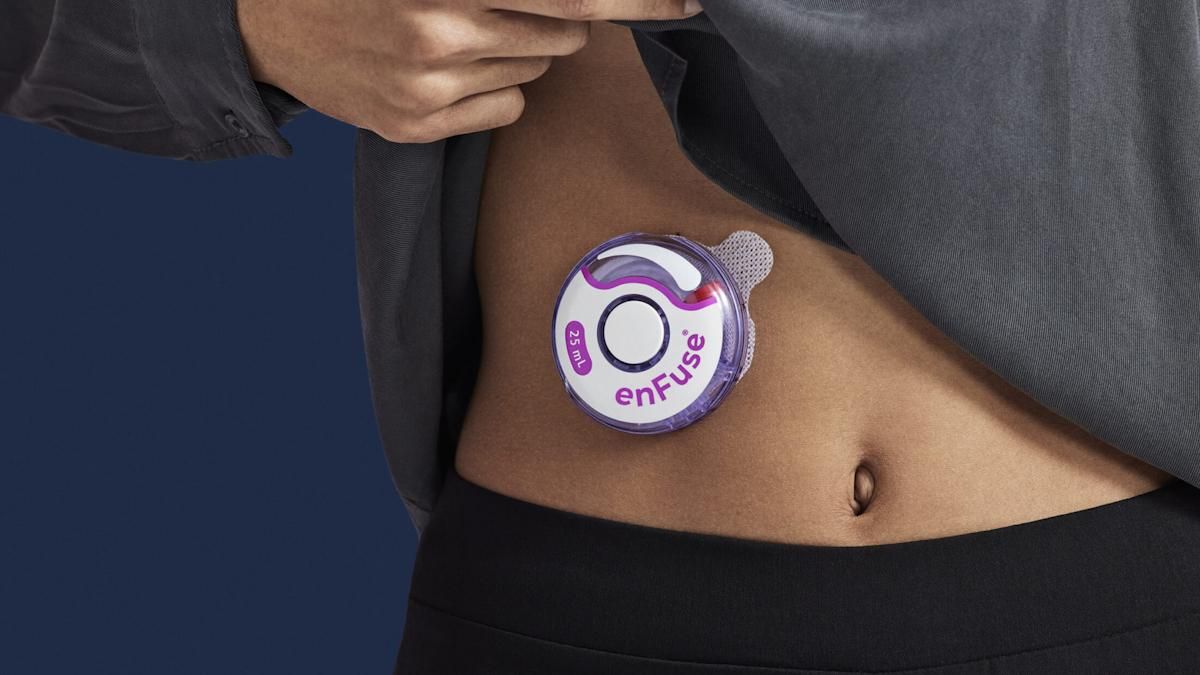
FDA approval of Sanofi's Sarclisa Escena on-body injector (July 10, 2026) represents a watershed moment in pharmaceutical device regulation, creating significant compliance barriers that will reshape the medical device accessories market. The approval marks the first cancer drug deliverable via wearable injection technology, establishing new regulatory pathways that require manufacturers to meet dual pharmaceutical-device standards. This creates a 12-18 month compliance window where non-compliant competitors face market elimination, while compliant sellers can capture premium pricing (Sarclisa's wearable form commands $8,796/vial vs. $956-$4,780 for IV versions—an 84% price premium).
Compliance barriers create immediate market protection. The on-body injector technology requires FDA 510(k) clearance for the device component plus NDA approval for the drug formulation—a dual-track process that typically costs $2-5M and requires 18-24 months. Enable Injections' CirCLIQ device achieved 71.1% objective response rates in Phase 3 trials, establishing a clinical efficacy bar that competitors must match. This creates a 2-3 year window where Sanofi faces minimal competition, allowing market share consolidation in the $14.4B CD38 monoclonal antibody market (dominated by J&J's Darzalex). Sellers of complementary products—injection site care, patient education materials, home healthcare supplies—must now comply with FDA guidance on medical device accessories, adding $50-150K in compliance costs per SKU.
Market expansion in home-based cancer care drives accessory demand. The approval accelerates the shift from clinic-based infusions (3-hour sessions) to 13-minute home injections, creating demand for: (1) injection site preparation kits, (2) post-injection monitoring devices, (3) patient education platforms, (4) caregiver support products. Industry data shows home-based oncology care growing 22% annually (2024-2026), with wearable device adoption driving 35-40% of growth. Sellers in the medical supplies category can expect 15-25% margin compression as compliance costs rise, but volume opportunities in emerging markets (EU approval June 2024, US approval July 2026) where home healthcare infrastructure is underdeveloped. The subcutaneous formulation expands addressable patient population by 40% (now includes transplant-ineligible patients), creating 18-month window to establish supply chains before competitors enter.
Questions 7
How does the $8,796 wearable injector price premium affect accessory pricing strategy?
The 84% price premium ($8,796 vs. $956-4,780 for IV) signals that healthcare systems and patients accept higher costs for convenience and reduced clinic burden. This justifies premium pricing for complementary products—injection site care kits can command 40-60% price premiums over standard supplies, while patient monitoring devices can reach $200-400/month vs. $50-100 for traditional home care products. However, margin compression is expected as compliance costs rise and competition increases. Sellers should implement tiered pricing: premium products for early adopters (months 1-12), value products for mainstream adoption (months 12-24), and commodity products for mature market (24+ months). The 13-minute injection time vs. 3-hour infusions creates willingness-to-pay for time-saving accessories, supporting 25-35% margin maintenance even as competition increases.
What markets offer easier compliance paths for on-body injector accessories compared to the US?
The European Union offers significantly easier compliance for medical device accessories. European Commission approval of subcutaneous Sarclisa in June 2024 (6 months ahead of US) indicates faster regulatory pathways. EU device classification typically requires CE marking rather than FDA 510(k), with 3-6 month timelines vs. 12-18 months in the US. Sellers can achieve EU compliance for $30-80K vs. $50-150K in the US. Asia-Pacific markets (Singapore, South Korea, Australia) offer intermediate pathways with 6-12 month timelines and $40-100K costs. Strategic approach: pursue EU compliance first (6-month window), establish supply chains and clinical evidence, then enter US market with predicate device data, reducing US approval timeline to 6-9 months and costs to $30-50K.