
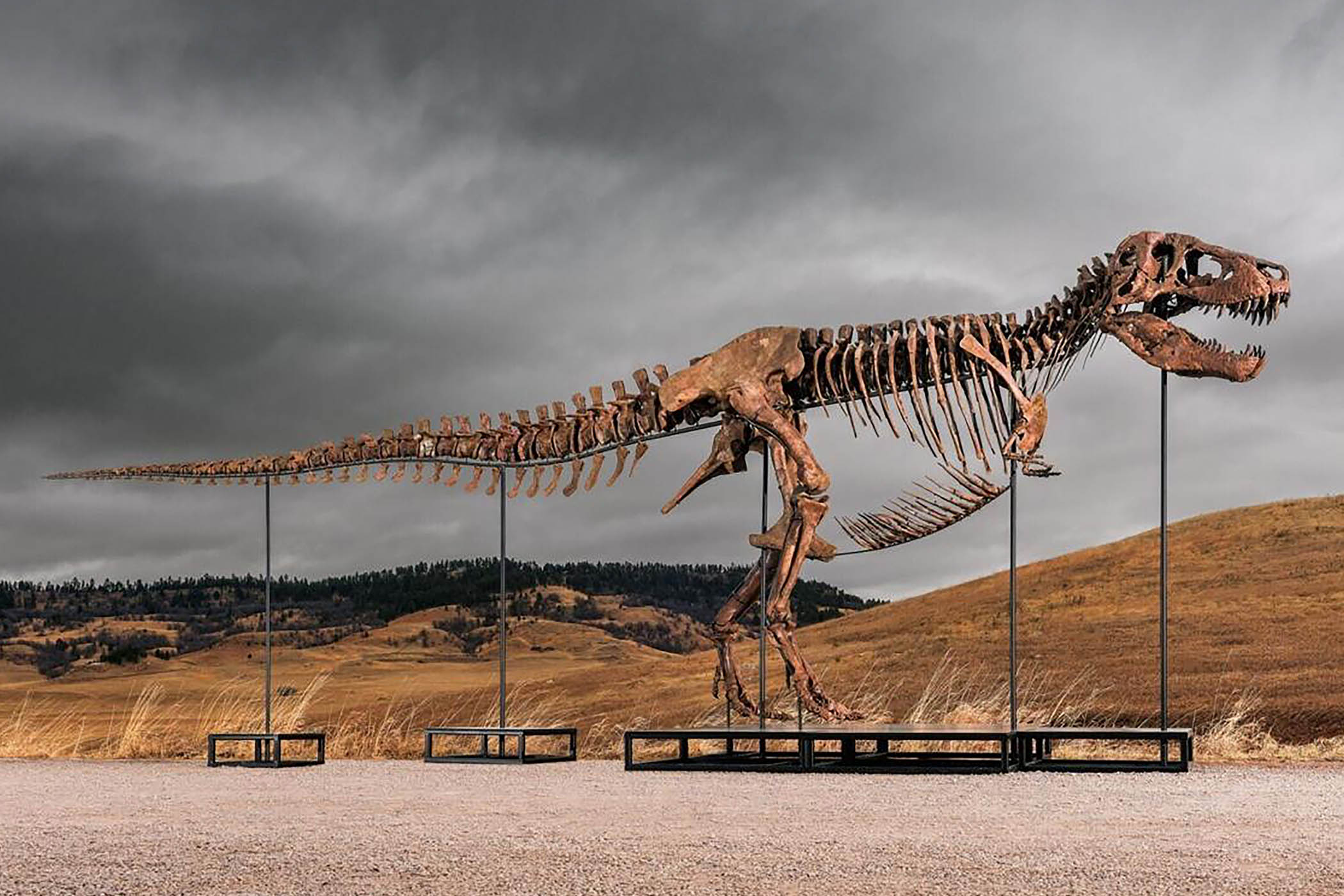

Luxury Collectibles Market Boom | Emerging Seller Opportunities in High-Value Merchandise Categories
- Ultra-wealthy spending on premium collectibles reaches $100M+ annually; sellers can capitalize on replica, educational, and merchandise opportunities in dinosaur/paleontology niche
Overview
The private fossil market is experiencing unprecedented growth, with record-breaking auction prices signaling a fundamental shift in ultra-high-net-worth consumer behavior toward tangible asset acquisition. Gus, a 67-million-year-old Tyrannosaurus rex skeleton, is expected to fetch $20-30 million at Sotheby's New York, while recent comparable sales include a $44.6 million stegosaurus (Ken Griffin, 2024) and a $31.8 million T-rex skeleton (Abu Dhabi ruling family, 2020). This $100M+ annual market in premium collectibles reveals critical insights for e-commerce sellers: ultra-wealthy consumers are actively seeking exclusive, authenticated merchandise with provenance documentation—a trend extending far beyond fossils into art, watches, and rare collectibles.
For cross-border sellers, this market expansion creates three distinct opportunity vectors. First, the celebrity investor trend (Nicolas Cage, Russell Crowe, Leonardo DiCaprio) demonstrates that high-net-worth individuals use collectibles as status symbols and portfolio diversification tools, driving demand for authenticated merchandise across luxury marketplaces like Sotheby's, Christie's, and emerging digital platforms. Second, the regulatory landscape presents critical compliance considerations: while fossil sales are legal in the UK and US (where landowners retain property rights), China, Mongolia, and Argentina prohibit fossil exports entirely. This creates a bifurcated market where sellers must navigate export restrictions, customs documentation, and authentication requirements—similar to art and antiquities compliance frameworks.
Third, the scientific community's opposition (Society of Vertebrate Paleontology argues private ownership undermines museum preservation missions) signals emerging regulatory risk. As fossil prices exceed museum budgets, governments may implement export controls or authentication requirements similar to CITES regulations for endangered species. Sellers should monitor regulatory developments in target markets, particularly EU nations considering cultural heritage protections. The market also reveals consumer psychology: ultra-wealthy buyers prioritize authenticity, provenance, and exclusivity over price sensitivity, suggesting premium positioning and detailed documentation strategies outperform discount-based competition. Educational merchandise (dinosaur models, paleontology books, museum-quality replicas) represents a lower-risk adjacent category capitalizing on mainstream interest without regulatory exposure.
Questions 8
What market opportunity does the $100M+ fossil auction trend create for e-commerce sellers?
The record-breaking fossil sales ($44.6M stegosaurus in 2024, $20-30M expected for Gus T-rex) demonstrate ultra-wealthy consumers' appetite for authenticated, high-value collectibles. E-commerce sellers can capitalize through three channels: (1) Educational merchandise (dinosaur models, paleontology books, museum-quality replicas) targeting mainstream consumers inspired by celebrity investor trends; (2) Authenticated collectibles marketplaces requiring detailed provenance documentation and third-party certification; (3) Niche luxury platforms serving high-net-worth individuals seeking exclusive items. Sellers should prioritize authentication documentation and premium positioning over price competition, as ultra-wealthy buyers prioritize exclusivity and provenance over cost.
What adjacent product categories can sellers develop from the fossil market trend?
Beyond authentic fossils, sellers can develop: (1) Educational merchandise (dinosaur models, paleontology textbooks, museum-quality replicas) targeting students and mainstream consumers; (2) Luxury home décor (fossil-inspired art, paleontology-themed furniture, museum-quality displays); (3) Authenticated collectibles in adjacent categories (meteorites, minerals, rare geological specimens); (4) Digital content (paleontology courses, virtual museum tours, authentication guides); (5) Niche apparel and accessories (paleontology-themed fashion, collector merchandise). These categories avoid regulatory exposure while capturing the mainstream interest generated by celebrity investor trends and record-breaking auction prices. Educational merchandise particularly benefits from the Society of Vertebrate Paleontology's emphasis on public access and research—positioning products as supporting scientific education appeals to conscious consumers.