




Smart Glasses Market Hits 3.6M Units | AI Sellers' Guide to 130% Growth Opportunity
- Global shipments surge 130% YoY to 3.566M units in Q1 2026; Meta dominates with 7M+ units sold in 2025; Google enters Fall 2026; sellers face product fragmentation and high return rates requiring AI-powered differentiation strategies







Overview
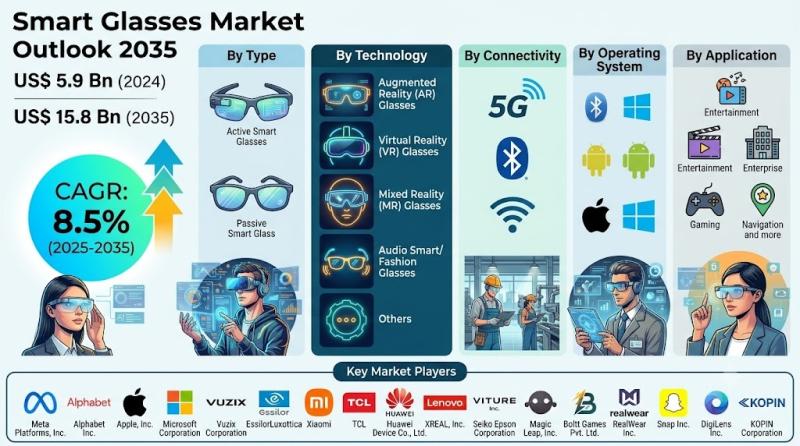
The smart glasses market is experiencing explosive growth with global shipments reaching 3.566 million units in Q1 2026, up 130.1% year-over-year, according to IDC data. Meta and EssilorLuxottica dominated 2025 with over 7 million AI glasses sold—more than triple the combined 2023-2024 sales—while Google's competitive entry in Fall 2026 signals mainstream market acceleration. This represents a critical e-commerce opportunity for sellers, but success requires immediate AI-powered strategies to navigate severe product fragmentation and high return rates plaguing the category.
The core challenge for e-commerce sellers is category fragmentation without standardized definitions. PCMag's comprehensive review reveals smart glasses span wildly different product types: audio-only frames, AR display devices, prescription eyewear replacements, and hybrid systems. Unlike smartphones or laptops, there are no universal manufacturing standards or consistent feature sets across brands. This fragmentation creates massive consumer confusion—and opportunity for sellers who can use AI to clarify product positioning. Meta's Ray-Ban Display ($299-$799 pricing range) targets the sunglasses market with iconic Wayfarer design and deep WhatsApp/Instagram integration, while Google's Intelligent Eyewear (launching September 2026) positions as prescription replacement with Warby Parker partnerships. The market shows strong regional momentum: China contributed 610,000 units with 23.5% growth in Q1 2026, signaling Asia-Pacific as critical sourcing and sales region.
Industry experts project 2028 as the breakthrough year, but current high return rates indicate premature commercialization. Technical bottlenecks include inadequate display quality (low resolution, poor color fidelity), severe battery limitations (2-4 hours daily use), insufficient AI processing power, and poor wearing comfort. Supply chain partners are aggressively addressing these through specialized components: Quectel's dedicated XR assembly line, Wuxi WUQI's WQ9002A Wi-Fi 6 chip (50-60% power reduction vs. smartphone chips), and Corechip's ARS45 AI glasses-specific chip partnering with 10+ manufacturers including iFLYTEK and XREAL. For sellers, this means 2026-2027 is the high-risk, high-reward window—early movers can capture market share before 2028 standardization, but must invest heavily in product education, content differentiation, and customer support to manage returns.
Questions 8
How should sellers differentiate smart glasses products given category fragmentation?
PCMag's comprehensive review reveals smart glasses lack universal manufacturing standards, spanning audio-only frames, AR displays, prescription replacements, and hybrid systems. **Sellers must use AI-powered product research tools to map feature matrices and identify underserved niches—for example, prescription eyewear replacement (Google's positioning) vs. sunglasses fashion (Meta's Ray-Ban strategy).** Create detailed comparison content showing which features matter for specific use cases: audio glasses for hands-free calling, AR displays for navigation/information, prescription options for daily wear. Implement AI-driven customer segmentation to target buyers by use case rather than generic 'smart glasses' positioning. This directly addresses consumer confusion that PCMag identified as the category's primary challenge.
What is the pricing strategy for smart glasses across major brands?
**Meta's Ray-Ban Display pricing spans $299-$799 depending on features and frame style, already available since September 2025 through Best Buy, LensCrafters, and Ray-Ban stores.** Google hasn't announced pricing for its Intelligent Eyewear (launching Fall 2026), but positioning as prescription replacement suggests premium positioning vs. Meta's sunglasses-first approach. This creates pricing arbitrage opportunities for sellers: entry-level audio glasses at $299-$399, mid-range AR displays at $500-$700, and premium prescription options at $700+. Sellers should monitor Meta's distribution expansion (currently in major retail chains) and prepare for Google's Fall 2026 launch to capture early adopters before mainstream adoption in 2028.