





AI Investment Correction Signals Hardware Demand Shift | E-Commerce Sellers Face Tech Cost Volatility
- Semiconductor stocks down 20-33% since June peak; AI infrastructure spending uncertainty threatens device pricing stability for sellers relying on tech-enabled fulfillment and automation tools




















.jpg)





Overview
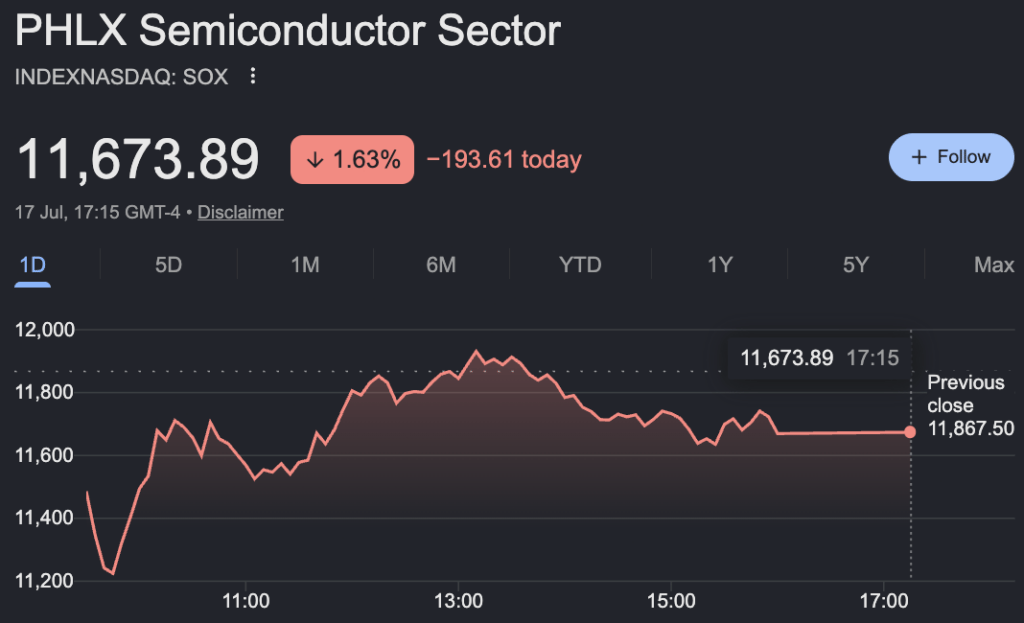
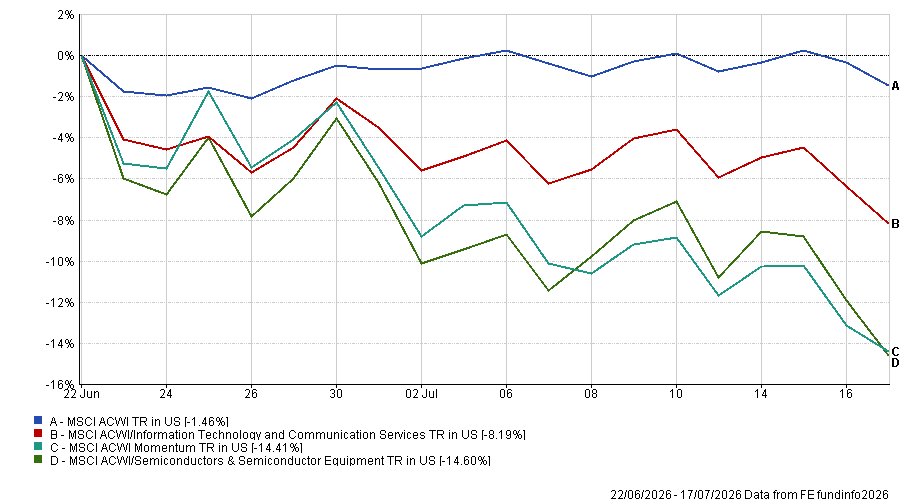
The semiconductor market correction—with the iShares Semiconductor ETF (SOXX) down 20% since June 22 highs, Intel declining 33%, and Micron down 30%—signals a critical inflection point for e-commerce sellers dependent on AI-powered infrastructure. While Nvidia has held relatively steady (down only 3%), the broader "AI fatigue" among investors reflects uncertainty about which hyperscalers will actually monetize record AI spending, creating cascading implications for sellers across three dimensions.
First, hardware cost volatility directly impacts seller operations. E-commerce sellers increasingly rely on AI-powered tools for inventory management, dynamic pricing, customer service automation, and fulfillment optimization. The semiconductor correction creates two competing pressures: (1) potential price declines for computing hardware as demand concerns mount, which could reduce costs for sellers building AI infrastructure, but (2) supply chain uncertainty as manufacturers like Intel and Micron reduce capital expenditure, potentially creating shortages in specialized chips for fulfillment automation, barcode scanning systems, and warehouse robotics. Sellers operating 3PL networks with automated systems face unpredictable replacement and upgrade costs through 2024-2025.
Second, the correction reveals AI tool consolidation risk. The "AI fatigue" Christopher Wood describes at Jefferies indicates investors are questioning which AI platforms will survive the current hype cycle. Sellers who've invested in emerging AI tools for product research, content generation, and customer service automation face platform viability risk—if venture-backed AI SaaS companies struggle to raise follow-on funding amid semiconductor stock weakness, tools like Helium 10, Jungle Scout, or niche AI copywriting platforms could face acquisition, feature cuts, or shutdown. This creates urgency for sellers to audit their AI tool stack and identify mission-critical vs. experimental tools before potential consolidation.
Third, the correction creates a competitive intelligence opportunity. The pattern where strong earnings preceded stock declines (Nvidia in May, Samsung) suggests market participants are front-running earnings announcements. Sellers can apply this pattern to their own competitive analysis: when major e-commerce platforms (Amazon, Shopify, eBay) announce AI feature launches, the initial enthusiasm often precedes skepticism about actual ROI. This suggests sellers should adopt a "wait-and-see" approach to expensive AI platform upgrades, testing features in limited SKU sets before full rollout.
For sellers, the immediate implication is clear: AI infrastructure costs face near-term volatility, but the correction also signals a reset in AI tool pricing and consolidation opportunities. Sellers should lock in multi-year contracts for mission-critical AI tools NOW before platform failures force expensive migrations, while simultaneously delaying non-essential hardware upgrades until semiconductor pricing stabilizes in Q4 2024 or Q1 2025.
Questions 8
How should sellers adjust their 3PL automation strategy?
The semiconductor correction creates uncertainty in 3PL automation technology costs. Sellers should: (1) Audit current automation ROI—if warehouse robotics deliver <15% cost savings, defer upgrades 6-9 months; (2) Negotiate fixed-price automation contracts with 3PL providers through 2025 to hedge against component cost volatility; (3) Diversify across 2-3 3PL providers to reduce supply chain risk; (4) Prioritize software-based automation (WMS optimization, labor scheduling AI) over hardware-intensive solutions until semiconductor pricing stabilizes. This approach maintains operational efficiency while reducing capex risk.
What specific AI tools should sellers prioritize during this correction?
Prioritize tools with proven ROI and established market positions: (1) Dynamic pricing engines (typically 8-12% margin lift), (2) Inventory forecasting AI (reduces stockouts 20-30%), (3) Customer service chatbots (40-50% cost reduction), (4) Product research platforms (accelerate launch cycles 30-40%). Defer experimental tools in content generation, image recognition, or niche automation until platform consolidation clarifies. Negotiate 3-year contracts with established vendors (Shopify, Amazon native tools) to lock in pricing before potential cost increases from reduced competition.