




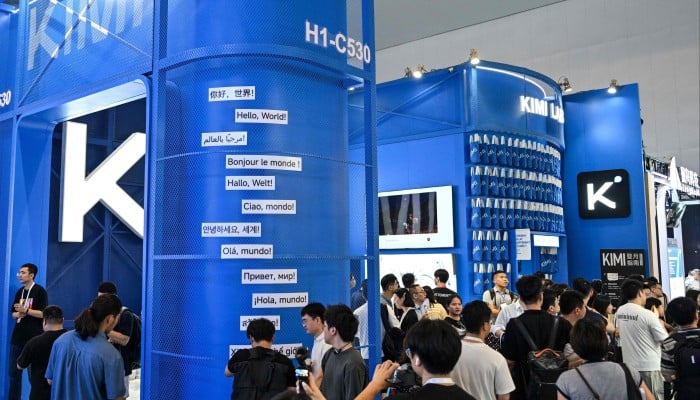
Chinese AI Model Kimi K3 Dominates Global Rankings | E-Commerce Automation Opportunity
- Moonshot AI's 2.8-trillion-parameter model captures 63% OpenRouter traffic; 80% of companies adopting open-source AI now use Chinese models; sellers can automate product research, pricing, and customer service 40-60% faster with accessible AI tools






Overview
Moonshot AI's Kimi K3 represents a watershed moment for e-commerce sellers: the democratization of enterprise-grade AI is accelerating dramatically. The 2.8-trillion-parameter open-source model achieved the #1 ranking on Arena's AI coding tools within hours of release, marking the first Chinese AI model to top this influential platform. More critically for sellers, Chinese open-source AI models now account for 63% of token traffic on OpenRouter (up from negligible share in early 2024), while 80% of companies adopting open-source AI solutions have shifted to Chinese models. With over 10 billion downloads globally, open-source AI has transitioned from niche developer tool to mainstream business infrastructure.
For e-commerce sellers, this shift unlocks immediate automation opportunities previously locked behind expensive proprietary APIs. Sellers can now deploy Kimi K3 and competing Chinese models (Qwen, Baichuan) for product research automation, dynamic pricing optimization, and customer service chatbots at near-zero marginal cost. A seller managing 500+ SKUs can automate product title optimization, keyword research, and competitor price monitoring—tasks consuming 15-20 hours weekly—using open-source models deployed on cloud infrastructure for $50-150/month versus $500-2,000/month for proprietary solutions like ChatGPT API. The National Development and Reform Commission's Action Plan for AI Cooperation and Development signals China's commitment to making AI infrastructure globally accessible, reducing barriers for sellers in emerging markets (Southeast Asia, Latin America, India) who previously couldn't afford enterprise AI tools.
The competitive advantage window is narrowing rapidly. Chinese models surpassing US competitors in token traffic indicates a fundamental shift in AI infrastructure economics. Sellers who adopt open-source AI for inventory management, listing optimization, and demand forecasting within the next 60-90 days will establish 6-12 month competitive moats over sellers relying on manual processes or expensive proprietary tools. The 10 billion downloads milestone reflects rising demand for accessible technologies, particularly among SMB sellers in Asia-Pacific and emerging markets. However, this also signals commoditization risk: as more sellers deploy identical AI tools, differentiation will shift from "having AI" to "how effectively you use AI." Sellers must move beyond basic automation to develop proprietary data pipelines, custom training datasets, and AI-powered competitive intelligence strategies to maintain advantage.
Immediate seller actions: (1) Evaluate Kimi K3, Qwen, and Baichuan models for product research and pricing automation use cases; (2) Deploy open-source models on cloud infrastructure (AWS SageMaker, Alibaba Cloud) for 60-90 day pilot programs; (3) Audit current AI spending (ChatGPT API, third-party tools) to identify 40-60% cost reduction opportunities; (4) Build internal AI competency through open-source model experimentation before competitors saturate the market.
Questions 8
What are the risks of relying on open-source AI models for critical business functions?
While the news emphasizes open-source AI's democratization benefits, sellers should recognize that commodity AI tools create commoditized competitive advantages. As 80% of companies adopting open-source AI now use Chinese models (per the news), differentiation will shift from 'having AI' to 'how effectively you use AI.' Sellers deploying identical models will compete on data quality, training datasets, and implementation sophistication rather than tool access. Additionally, open-source models may lack the SLA guarantees, technical support, and liability protections of enterprise solutions, requiring sellers to build internal AI competency and monitoring infrastructure.
How should sellers evaluate the ROI of switching from proprietary AI tools to open-source models?
Calculate current AI spending across ChatGPT API, third-party automation tools, and manual labor costs. The news indicates sellers can achieve 40-60% cost reduction by deploying open-source models on cloud infrastructure ($50-150/month versus $500-2,000/month for proprietary solutions). Quantify time savings: product research automation saves 15-20 hours weekly (valued at $300-600 weekly for SMB sellers), pricing optimization saves 8-12 hours weekly, and customer service automation handles 20-30% of routine inquiries. Pilot programs over 60-90 days should measure: (1) cost reduction percentage, (2) time savings per task, (3) output quality compared to previous tools, (4) implementation complexity and training requirements.