





US Semiconductor Reshoring Drives 10% Chip Price Hikes in 2027 | Seller Impact
- TSMC planning 10% price increases by 2027; 20-50% higher US production costs force electronics sellers to absorb margin compression or raise prices
/A%20close-up%20shot%20of%20the%20Taiwan%20Semi%20logo%20on%20a%20corporate%20building%20by%20Jack%20Hong%20via%20Shutterstock.jpg)








Overview
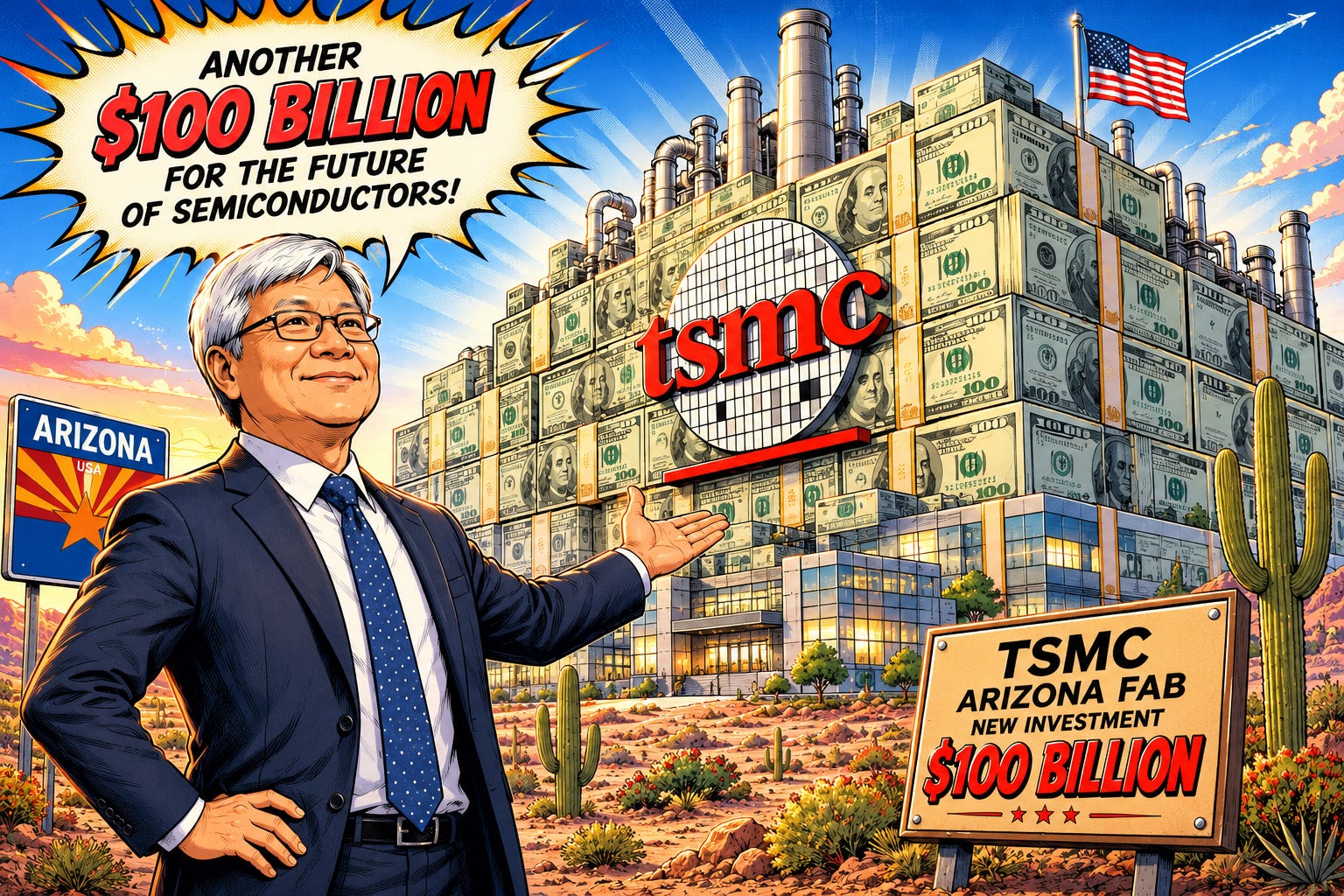
Trump's reshoring mandate is fundamentally restructuring semiconductor supply chains, with direct cost implications for electronics sellers across Amazon, eBay, and Shopify. TSMC's $200 billion U.S. manufacturing commitment—driven by Trump's trade policies and a historic Taiwan trade deal—is creating a two-tier pricing structure: Taiwan-made chips remain cost-competitive, while U.S.-produced semiconductors cost 20-50% more depending on subsidies and tax credits. TSMC's CFO Wendell Huang confirmed gross margin compression of 2-3% in early stages, widening to 3-4% in later stages, with planned 10% price increases across advanced and mature chip production by 2027.
For electronics sellers, this creates immediate sourcing decisions. Sellers of AI-powered devices, smart home products, gaming hardware, and consumer electronics relying on TSMC chips face three scenarios: (1) absorb 2-4% margin compression if sourcing from U.S. fabs, (2) maintain Taiwan sourcing but face geopolitical supply risk and potential tariff exposure, or (3) shift to alternative foundries (Samsung, Intel, SMIC) with different cost/quality tradeoffs. The 2027 price increase timeline provides 18-24 months for inventory planning, but early movers securing long-term contracts at current rates gain competitive advantage. Small sellers (under $1M annual revenue) are most vulnerable, lacking negotiating power to lock in pre-2027 pricing; mid-market sellers ($1-10M) can negotiate volume discounts; enterprise sellers have direct TSMC relationships enabling custom pricing.
Supply chain diversification becomes a competitive necessity. The news explicitly notes customer demand for geographical diversification following COVID disruptions provides justification beyond political pressure. Sellers should audit their product BOMs (bills of materials) to identify TSMC dependency, then model cost scenarios: Taiwan sourcing (current baseline), U.S. sourcing (20-50% premium), or alternative foundries (Samsung 5nm, Intel 4, SMIC 7nm). Electronics categories most exposed include: AI accelerators, gaming GPUs, smartphone processors, IoT chips, and automotive semiconductors. Sellers with products using mature node chips (28nm+) face lower cost impact than cutting-edge AI chips, creating category-specific margin pressure. The historic trade deal with Taiwan signals long-term U.S.-Taiwan cooperation, reducing tariff risk on Taiwan imports but increasing political pressure on customers to source domestically.
Questions 8
How should I adjust my Amazon FBA or Shopify pricing strategy for electronics products?
For Amazon FBA electronics: monitor competitor pricing weekly and adjust your cost basis by Q2 2025 to reflect anticipated 2027 price increases. Use Amazon's pricing tools to model elasticity—test 3-5% price increases on lower-competition products first. For Shopify sellers: implement dynamic pricing that reflects supply chain costs; use email marketing to justify price increases to existing customers. Both platforms: consider bundling strategies (pair high-margin products with lower-margin items to offset compression), offer tiered pricing (premium/standard/budget versions), and emphasize supply chain security as a value proposition. For gaming and AI products specifically, position U.S.-sourced chips as a premium feature justifying 5-10% price premiums. Monitor TSMC's quarterly earnings reports for updated margin guidance—each update provides 3-6 month lead time before actual price increases.
What supply chain diversification strategy should I implement before 2027?
Implement a three-pillar strategy: (1) Maintain TSMC Taiwan sourcing for differentiated AI products where you can justify premium pricing; (2) Shift mature-node products (28nm+) to Samsung or SMIC for 10-20% cost savings; (3) Develop contingency relationships with Intel Foundry Services for strategic products. Begin qualification testing immediately—foundry switching requires 6-12 months of validation. Audit your product portfolio by chip node: identify which products use TSMC's advanced nodes (5nm, 7nm) versus mature nodes (28nm+). For advanced-node products, negotiate long-term contracts at current rates by Q3 2025 to lock in pricing before 2027 increases. For mature-node products, complete alternative foundry qualification by Q4 2025 to enable sourcing shifts by 2026.