

Rising Treasury Yields & Oil Prices Spike Seller Financing Costs | Cross-Border Impact
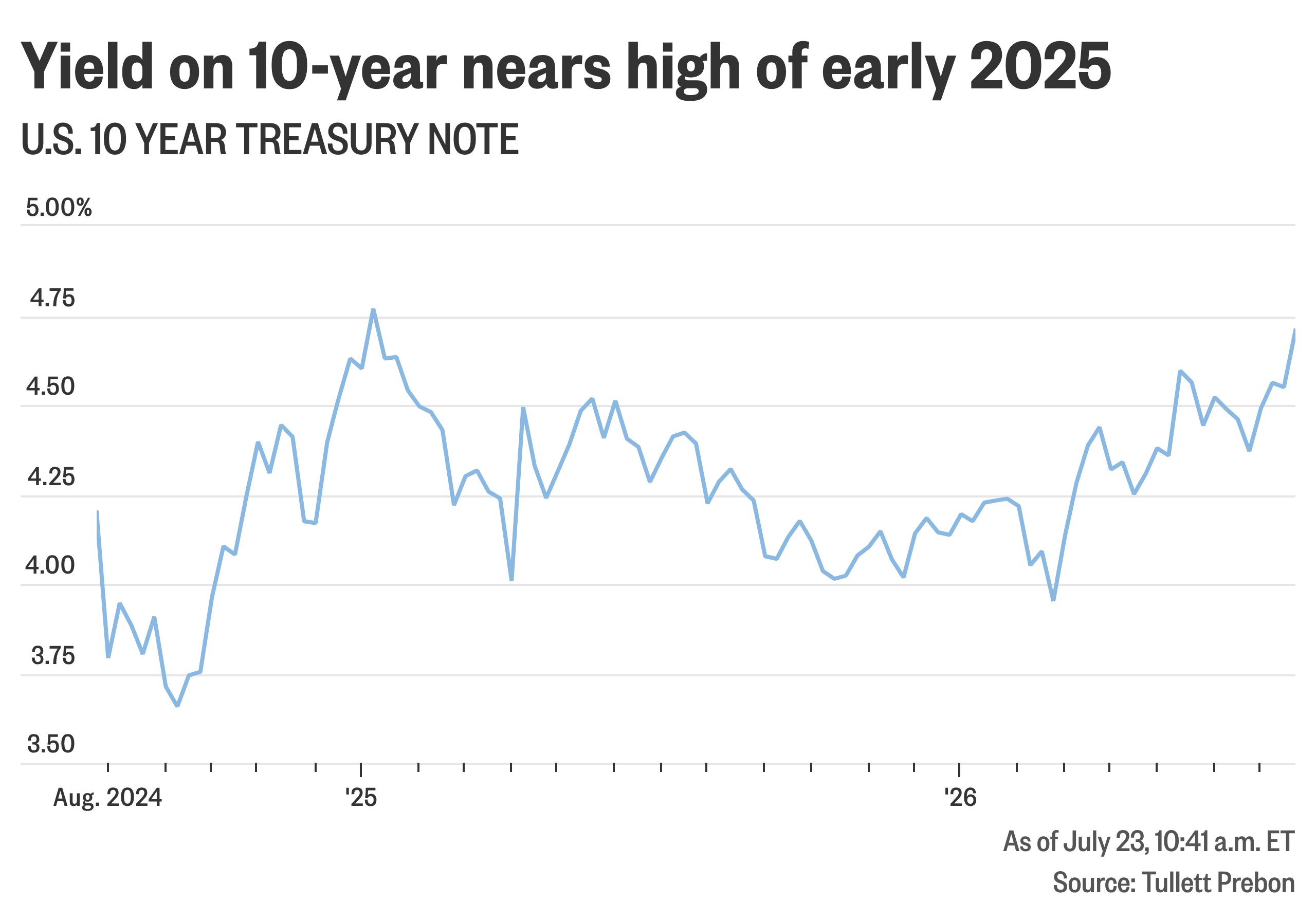
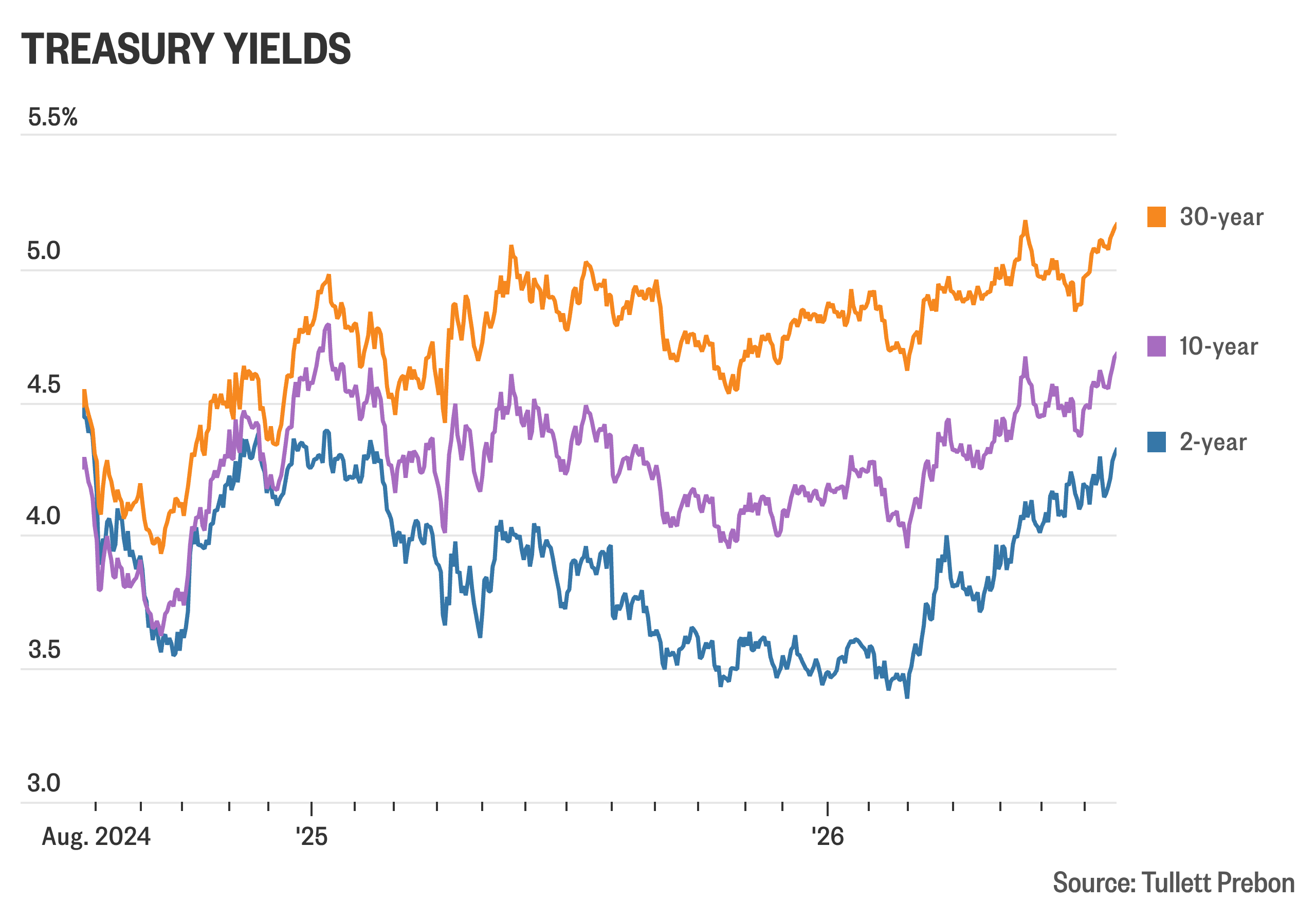
- 10-year Treasury yields hit 4.71% (highest since Jan 2025) as Brent crude surges to $100/barrel; inventory financing costs rise 150-300 basis points for cross-border sellers managing multi-market cash flow






















Overview
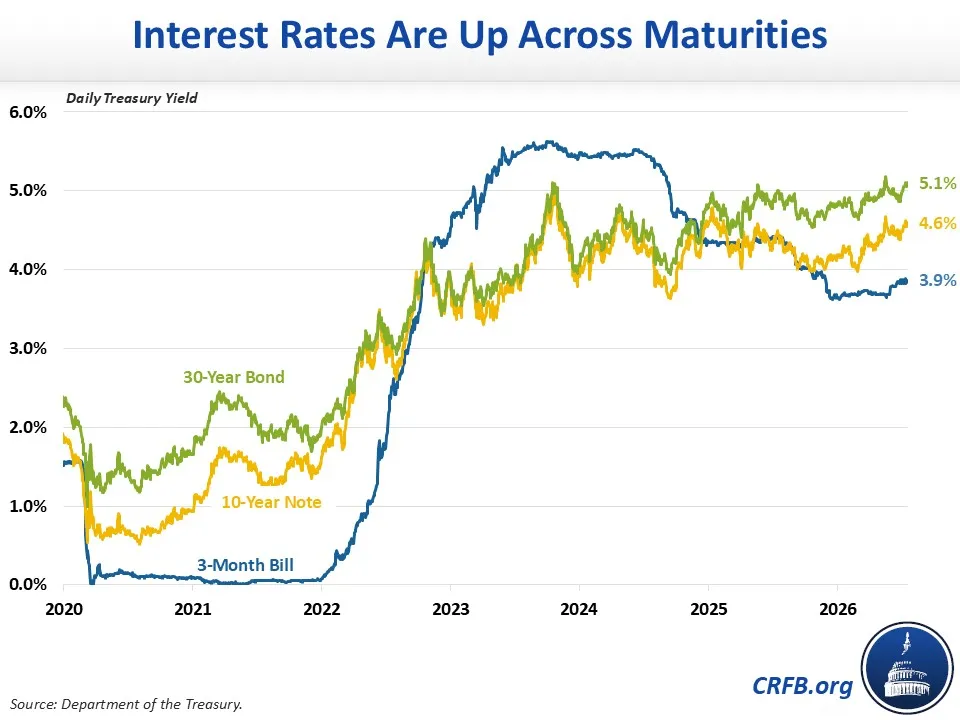
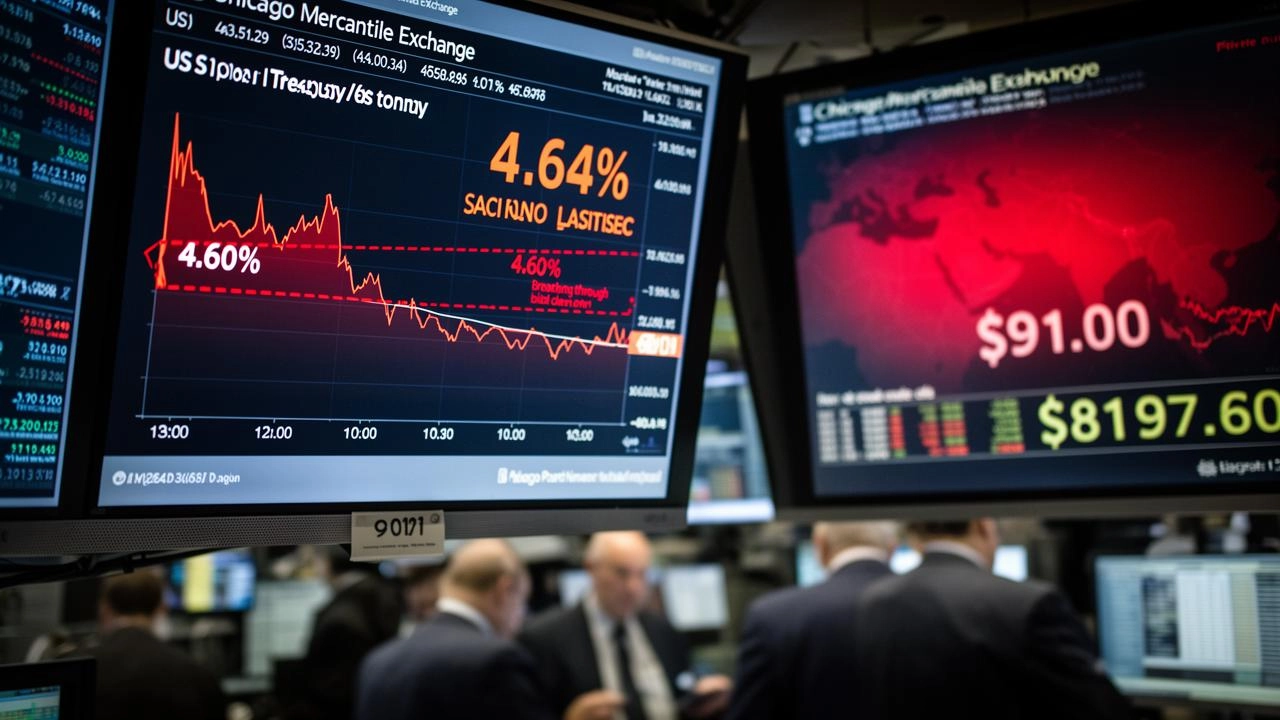
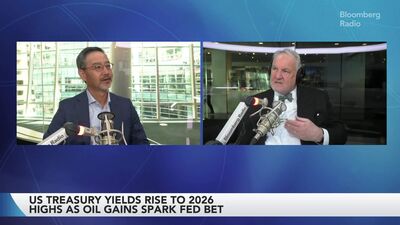
Rising US Treasury yields and geopolitical oil shocks are directly increasing borrowing costs for cross-border e-commerce sellers. On July 23, 2026, the 10-year Treasury yield surged to 4.71%—its highest level since January 2025—driven by escalating Iran-US tensions and Brent crude reaching $100 per barrel (up $6 from prior levels). The 2-year yield climbed 6 basis points to 4.362%, while 30-year rates touched 5.183%. Market participants priced in a 36% probability of a Federal Reserve rate hike under new Chair Kevin Warsh, with traders expecting policy tightening as soon as the following week. This yield environment directly translates to higher working capital financing costs for sellers relying on inventory loans, purchase order financing, and short-term lines of credit—critical funding sources for cross-border operations.
For inventory-dependent sellers, the financing cost impact is immediate and material. Sellers financing $100K-$500K in inventory through traditional working capital loans now face APR increases of 150-300 basis points compared to early 2025 rates. A seller with $250K in outstanding inventory financing at 8% APR (typical mid-2025 rate) could see costs rise to 9.5-11% APR, translating to an additional $3,750-$7,500 annually in financing expenses. Invoice factoring and supply chain finance products—increasingly popular among Amazon FBA and Shopify sellers—are also repricing upward as lenders adjust rates to reflect higher Treasury yields. The yield curve steepening (30-year rates now 5.19%, approaching 2007 highs) signals sustained higher borrowing costs, making short-term financing strategies less attractive and forcing sellers to optimize cash conversion cycles aggressively.
Geopolitical supply chain disruption compounds financing pressure. The Iran conflict escalation and Houthi attacks on Red Sea shipping routes create additional uncertainty for sellers importing goods through affected regions. Shipping delays and insurance premium increases (marine insurance costs typically rise 20-40% during geopolitical crises) extend cash conversion cycles by 7-14 days, requiring sellers to hold larger working capital buffers. Simultaneously, rising Treasury yields dampen consumer discretionary spending—the S&P 500 dropped 1.4% and Nasdaq fell 2.5% on July 23—signaling potential demand softness for non-essential categories (apparel, electronics, home goods). Sellers in these categories face a dual squeeze: higher financing costs to carry inventory while consumer demand potentially weakens. Currency volatility also increases with yield curve uncertainty; sellers with multi-currency exposure (USD/EUR, USD/GBP, USD/CNY) face higher hedging costs as central banks worldwide reassess monetary policy in response to US yield movements.
Questions 8
What FX hedging strategies protect against currency volatility during geopolitical crises?
Rising Treasury yields and geopolitical tensions increase currency volatility. USD typically strengthens during crises (safe-haven flows), which benefits US-based sellers exporting but hurts those importing. For sellers with EUR/GBP/CNY exposure: (1) Forward contracts lock exchange rates 30-180 days out, costing 0.5-1.5% premium but eliminating FX risk; (2) Currency options (puts/calls) cost 1-3% but provide downside protection while allowing upside capture; (3) Natural hedging—match revenue and cost currencies (e.g., sell in EUR, source from EU suppliers). With 30-year Treasury rates at 5.19% (highest since 2007), interest rate differentials between USD and other currencies are widening, making forward contracts more expensive but more valuable for protection.
Which financing products offer the best terms for sellers during rising rate environments?
During Treasury yield spikes, competitive financing products include: (1) Revenue-based financing (RBF) from Clearco, Pipe, or Shopify Capital—rates typically 6-12% APR, less sensitive to Treasury yields than traditional loans; (2) Inventory financing from Flexport, Fundbox, or Amazon Lending—rates rising but still competitive at 8-14% APR for established sellers; (3) Supply chain finance from Tradeshift or Coupa—extends payment terms 30-60 days, effectively providing 0% financing; (4) Invoice factoring at 1.5-3% per 30 days for sellers with strong B2B revenue. Compare all options: a $200K inventory loan at 10% APR costs $20K annually, while RBF at 8% on $50K monthly revenue costs $4K annually but requires consistent cash flow.