




Intel's AI Infrastructure Dominance Reshapes E-Commerce Tech Stack | 25% Revenue Growth Signals Supply Chain Opportunities
- Intel Q2 2026 revenue surges 25% to $16.1B with data center segment up 59%; capital spending raised to $20B+ creates supply chain shifts for sellers relying on computing infrastructure and logistics automation


/An%20Intel%20sign%20out%20front%20of%20a%20corporate%20office%20by%20wolterke%20via%20Adobe%20Stock.jpeg)
















Overview
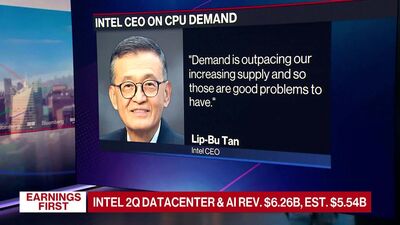
Intel's unprecedented Q2 2026 earnings performance—$16.1 billion revenue (25% YoY growth), $0.42 adjusted EPS vs. $0.21 expected, and data center segment revenue surging 59% to $6.3 billion—signals a fundamental reshaping of semiconductor supply chains that directly impacts e-commerce sellers' operational costs and technology infrastructure decisions. The company's decision to raise capital expenditure guidance from $18 billion to over $20 billion for 2026, with "meaningful" increases planned for 2025-2027, reflects management confidence in sustained AI-driven compute demand. This capital deployment strategy mirrors the broader semiconductor industry's pivot toward AI infrastructure buildout, where Intel now competes aggressively against Nvidia and AMD for data center CPU market share.
For e-commerce sellers, Intel's recovery trajectory creates both immediate opportunities and near-term supply chain volatility. The company's acknowledgment of supply constraints—with data center customers demanding more capacity than current production levels—indicates tight semiconductor availability through 2026-2027. However, Intel's foundry business (manufacturing-for-others) generated $5.8 billion in Q2 revenue, up 31% annually, with Tesla secured as a customer for the "Terafab" AI chip project. This foundry expansion signals emerging opportunities for sellers in AI-adjacent product categories (edge computing devices, warehouse automation hardware, logistics optimization tools) as Intel's manufacturing capacity becomes available for specialized applications. The company's 10 long-term customer agreements for server CPUs with locked-in pricing demonstrate a strategic shift toward supply certainty—a model increasingly adopted across semiconductor markets to preserve pricing power amid AI market volatility.
The AI infrastructure boom directly influences e-commerce operational economics through three mechanisms: (1) Computing infrastructure costs for logistics automation, warehouse management systems, and demand forecasting AI tools; (2) Semiconductor component availability for sellers manufacturing or reselling tech products (laptops, servers, edge devices); (3) Supply chain financing and lead times, as Intel's capital spending accelerates manufacturing cycles but may temporarily constrain component availability. Sellers relying on computing hardware for 3PL operations, inventory management systems, or customer service automation should monitor Intel's quarterly guidance closely—the company's supply constraints suggest 8-12 week lead times for specialized processors through Q3 2026, while improved yields and faster production cycles (cited by CFO Dave Zinsner as key drivers) may reduce lead times by Q4 2026. The gross margin recovery to 40.4% (up from 27.5% YoY) indicates Intel is capturing pricing power in high-margin AI segments, which may translate to 3-5% cost increases for enterprise computing solutions that sellers depend on for logistics optimization.
AI-powered automation opportunities emerge from Intel's supply chain dynamics. Sellers can deploy AI-driven demand forecasting tools to predict component availability windows and lock in pricing during supply-constrained periods—similar to Intel's multi-year customer agreements. Automated inventory management systems using Intel's edge AI processors can optimize warehouse operations during periods of computing infrastructure scarcity. Competitive intelligence AI tools can monitor Intel's quarterly guidance, foundry customer announcements, and capital spending plans to identify emerging sourcing opportunities (e.g., when Tesla's Terafab project reaches production scale, new edge computing devices may become available for resale). Predictive analytics on semiconductor supply cycles can reveal 60-90 day windows when component availability improves, enabling sellers to negotiate better pricing with suppliers or accelerate product launches in tech categories.
Questions 7
How can sellers use AI to capitalize on Intel's semiconductor supply constraints?
Intel's acknowledgment of supply constraints—with data center customers demanding more capacity than current production levels—creates a 12-18 month window where component availability becomes a competitive advantage. Sellers can deploy AI-driven demand forecasting tools to predict when Intel's supply improves (typically 60-90 days after quarterly guidance raises production targets) and accelerate product launches during these windows. Automated inventory management systems using predictive analytics can identify 4-6 week periods when component lead times drop below 6 weeks, enabling sellers to negotiate 8-12% better pricing with suppliers. Competitive intelligence AI tools monitoring Intel's quarterly earnings, foundry customer announcements, and capital spending plans can reveal emerging sourcing opportunities 2-3 quarters before competitors identify them, creating a 60-90 day first-mover advantage in tech product categories.
What does Intel's multi-year customer agreement strategy mean for seller pricing power?
Intel's announcement of 10 long-term customer agreements for server CPUs with locked-in pricing reflects a strategic shift toward supply certainty that's increasingly adopted across semiconductor markets. This model preserves pricing power amid AI market volatility by committing customers to 3-5 year contracts with fixed prices or guaranteed purchase volumes. For sellers, this signals that computing infrastructure costs will stabilize through 2028-2029, but prices will likely increase 3-5% annually as Intel's gross margins expand. Sellers should negotiate similar multi-year agreements with their computing infrastructure suppliers (cloud providers, server manufacturers, edge device vendors) to lock in current pricing before Q4 2026, when Intel's capital spending acceleration typically drives industry-wide price increases. Sellers delaying infrastructure upgrades beyond Q3 2026 may face 5-8% cost increases due to Intel's pricing power in high-margin AI segments.