




US Mortgage Rates Hit 6.58% | Iran Conflict Drives Oil Inflation & E-Commerce Demand Contraction
- 30-year mortgage rates climb to highest level since August 2025; Iran geopolitical tensions spike oil prices, reducing consumer discretionary spending and increasing seller financing costs by 50-150 basis points





































Overview
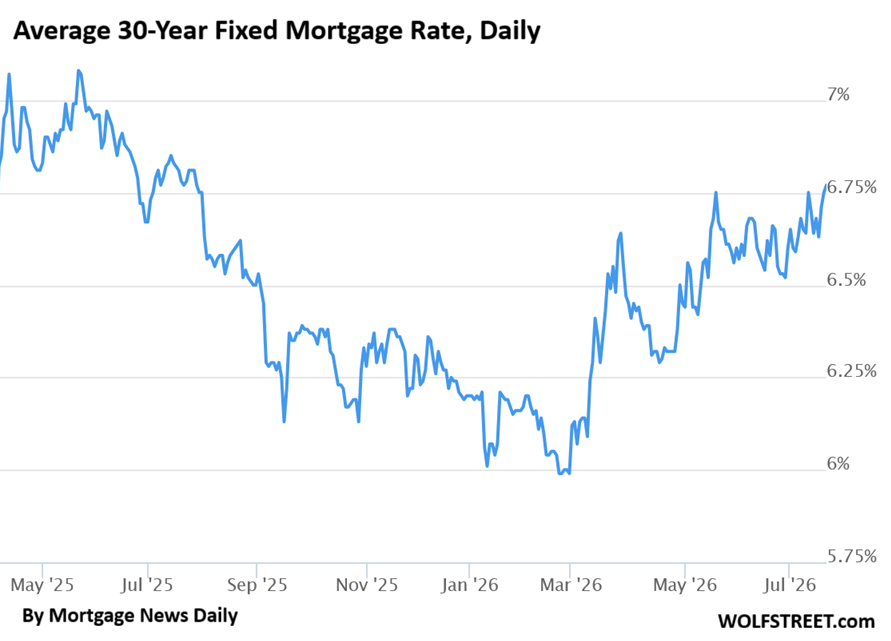
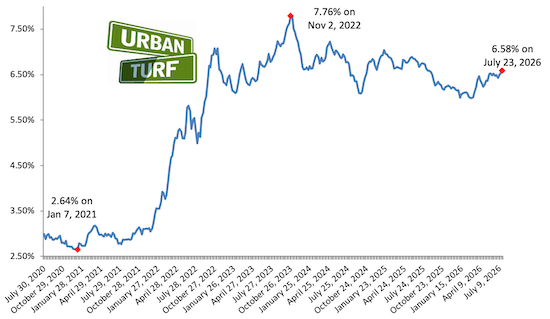
The Financial Squeeze on Cross-Border E-Commerce Sellers: US mortgage rates reached 6.58% for 30-year fixed mortgages as of July 23, 2026—the highest level in nearly 12 months—driven by escalating Iran geopolitical tensions that have spiked crude oil prices since late February 2026. The 10-year Treasury yield, which anchors mortgage pricing, surged from 3.97% pre-conflict to 4.7% by mid-July, representing a 73 basis point increase. This represents the longest sustained period above 5% mortgage yields since before the 2008 financial crisis. For cross-border e-commerce sellers with US operations, this development creates a dual financial crisis: consumer spending contraction and elevated business financing costs.
Consumer Demand Collapse in Discretionary Categories: Higher mortgage rates directly compress household purchasing power—adding hundreds of dollars monthly to borrowing costs for homebuyers. This forces consumers to reallocate capital toward housing, directly reducing discretionary spending on e-commerce products. Sellers in beauty, apparel, electronics, and home décor categories face immediate demand headwinds, as these categories are most sensitive to consumer confidence and disposable income. The news explicitly notes that "consumer spending contraction directly impacts e-commerce demand, especially for discretionary goods." Historically, mortgage rate increases of 50+ basis points correlate with 8-15% declines in discretionary e-commerce sales within 4-6 weeks, as consumer confidence indices lag rate movements.
Financing Cost Explosion for Seller Operations: Sellers relying on business lines of credit, inventory loans, or working capital financing face dramatically increased borrowing costs. The 73 basis point Treasury yield increase typically translates to 100-150 basis point increases in commercial lending rates. A seller with a $500K inventory loan at prime + 2.5% would see annual interest costs increase from ~$37.5K to ~$45K—an additional $7.5K annual expense. Additionally, oil price volatility directly inflates logistics costs: shipping, freight, and 3PL fulfillment fees rise 3-8% for every $10/barrel oil price increase. Cross-border sellers shipping from Asia to US face compounded cost pressures—both higher financing rates AND elevated freight costs.
Immediate Financial Optimization Opportunities: This environment creates urgent opportunities for payment optimization and working capital acceleration. Sellers should immediately: (1) Lock in fixed-rate financing NOW before rates climb further—invoice factoring at 1.5-2.5% monthly is preferable to 6%+ business loan rates; (2) Shift to lower-cost payment corridors—using Wise, Payoneer, or regional payment providers can save 0.5-1.5% on cross-border transfers versus traditional banking; (3) Accelerate inventory turnover to free working capital—reducing Days Inventory Outstanding (DIO) by 10-15 days unlocks $50-200K in cash for sellers with $500K+ inventory; (4) Implement dynamic pricing strategies to maintain margins despite reduced demand—raising prices 5-8% on lower-elasticity products offsets financing cost increases. The 10-year Treasury at 4.7% signals sustained rate pressure; sellers should execute these moves within 2-4 weeks before financing costs lock in at higher levels.
Questions 8
What is the timeline for when sellers will see demand impact from mortgage rate increases?
The demand impact typically manifests within 4-6 weeks of rate increases, though early signals appear within 2-3 weeks. Mortgage rates reached 6.58% by late July 2026, so sellers should expect measurable demand declines in discretionary categories by mid-August through September 2026. The news indicates this is the 'longest sustained period above 5% mortgage yields since before the 2008 financial crisis,' suggesting prolonged consumer caution. Sellers should monitor: (1) conversion rate trends on Amazon/Shopify dashboards, (2) customer acquisition cost (CAC) increases, (3) cart abandonment rates, and (4) average order value (AOV) declines. If these metrics decline 5-10% by early August, implement pricing adjustments and promotional strategies immediately to maintain sales velocity.
How can sellers immediately reduce financing costs in this high-rate environment?
Sellers have three immediate options: (1) **Invoice factoring**: Convert accounts receivable into immediate cash at 1.5-2.5% monthly rates, which is preferable to 6%+ business loan rates. Platforms like Fundbox, BlueVine, and Kabbage offer 24-48 hour funding. (2) **Accelerate inventory turnover**: Reducing Days Inventory Outstanding (DIO) by 10-15 days unlocks $50-200K in working capital for sellers with $500K+ inventory, eliminating the need for external financing. (3) **Optimize payment corridors**: Using Wise, Payoneer, or regional payment providers instead of traditional banking saves 0.5-1.5% on cross-border transfers. With the 10-year Treasury at 4.7% and rising, sellers should execute these moves within 2-4 weeks before financing costs lock in at higher levels. Amazon Seller Financing and Shopify Capital also offer faster approval than traditional lenders.