




Open-Weight AI Models | Cost Reduction & Automation Opportunity for SME Sellers
- 25 major tech companies advocate for accessible AI; could reduce seller tool costs 40-60% and democratize automation for 10M+ SME sellers globally by 2027














Overview
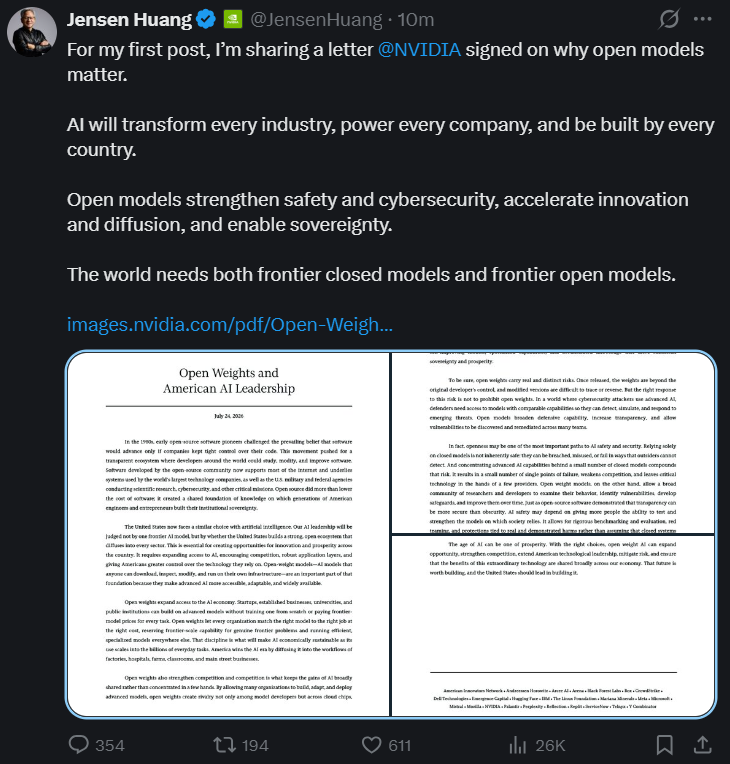
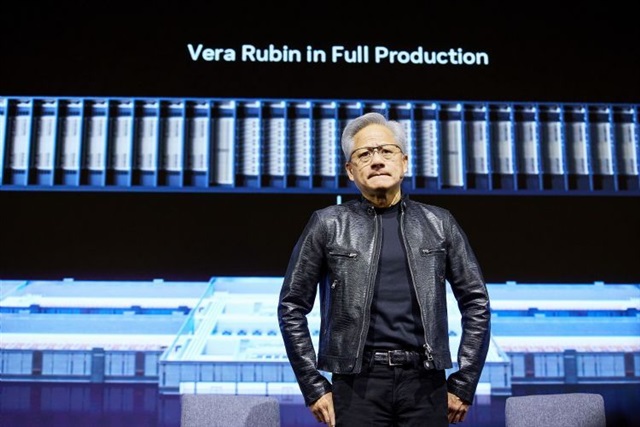
On July 24, 2026, a coalition of 25 major technology companies—including Nvidia, Microsoft, Meta, IBM, and Palantir—released a formal position paper and joint letter urging policymakers to avoid premature restrictions on open-weight AI models. Open-weight models are downloadable, modifiable AI systems that users can operate independently on their own infrastructure, contrasting sharply with proprietary closed models from OpenAI and Anthropic (each valued near $1 trillion). This policy advocacy directly impacts cross-border e-commerce sellers by addressing the future accessibility and cost structure of AI-powered business tools.
The Core Opportunity for Sellers: The coalition argues that open-weight models should form the foundation of a competitive, distributed AI ecosystem—similar to how open-source software transformed computing. For e-commerce sellers, this means potential access to cost-effective AI capabilities for inventory management, dynamic pricing, customer service automation, and market analysis that currently require expensive proprietary subscriptions. Sellers using proprietary AI tools today pay $500-2,000+ monthly for features like demand forecasting, listing optimization, and chatbot automation. Open-weight alternatives could reduce these costs by 40-60% while enabling customization for niche categories and regional markets.
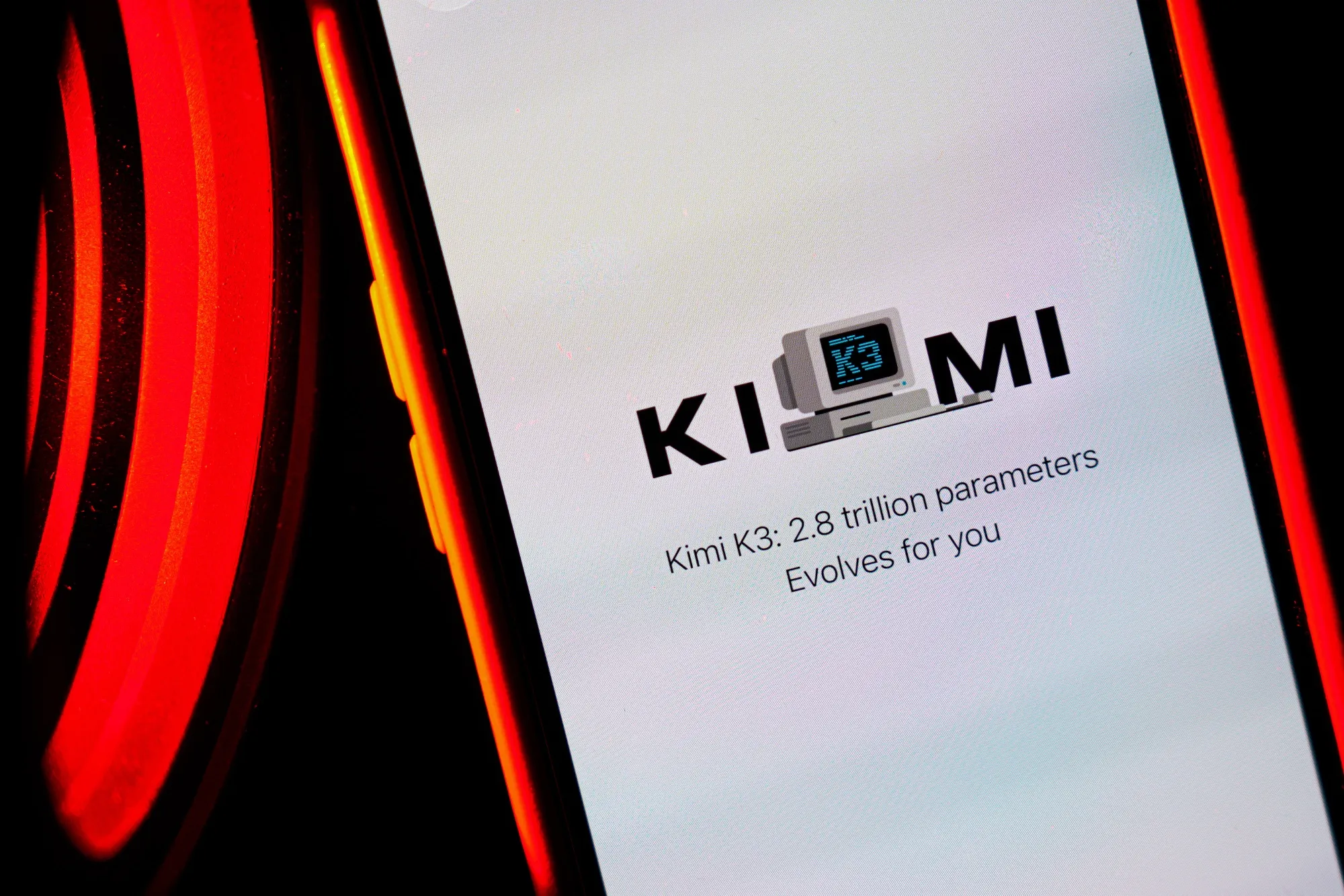
Competitive Dynamics & Geopolitical Context: The letter was prompted by rising concerns about Chinese open-weight models gaining competitive ground—specifically Moonshot AI's Kimi K3, which outperforms several cutting-edge American models on industry benchmarks. U.S. Treasury Secretary Scott Bessent indicated the Trump administration would investigate potential IP theft by Chinese companies. However, the signatory companies argue that restrictive policies would harm American innovation and SME competitiveness. This creates a critical window: if open-weight models remain unrestricted, sellers can expect a flood of affordable AI tools entering the market within 12-18 months. If restrictions tighten, proprietary tool costs may increase 20-30% as vendors consolidate market share.
Immediate Seller Implications: The policy outcome will determine whether AI-powered business tools become democratized (benefiting 10M+ SME sellers globally) or remain concentrated among well-capitalized enterprises. Sellers currently using ChatGPT, Jasper, or proprietary Amazon/Shopify AI features should monitor this policy development closely. Open-weight adoption could enable sellers to build custom AI agents for category-specific pricing optimization, competitor monitoring, and customer segmentation—currently requiring $5,000-15,000 in annual tool subscriptions. The coalition's advocacy suggests policymakers will likely favor open-weight development, making this a high-probability opportunity for sellers to reduce operational costs and increase automation sophistication within 6-12 months.
Questions 8
Which seller segments will benefit most from open-weight AI adoption?
Three seller segments will see the highest ROI from open-weight AI: (1) **SME sellers managing 100-1,000 SKUs** — currently spending $1,600-3,000/month on proprietary tools; open-weight models could reduce costs 40-60% ($640-1,200/month) while enabling category-specific customization; (2) **Sellers in emerging markets (Southeast Asia, Latin America, India)** — where proprietary tool costs consume 5-10% of revenue; open-weight models democratize access to enterprise-grade AI at 1/10th the cost; (3) **Niche category sellers (collectibles, handmade, specialty products)** — where proprietary tools lack category-specific optimization; open-weight models enable custom AI agents trained on category-specific data. The coalition's July 24, 2026 letter specifically mentions expanding compute access for startups and researchers, signaling policy support for SME adoption. Large sellers (Amazon FBA aggregators, Shopify Plus merchants) will see lower ROI as they already have custom AI infrastructure. The policy outcome will likely democratize AI access for 10M+ SME sellers globally within 12-18 months.
What is the timeline for open-weight AI tools becoming production-ready for e-commerce sellers?
Based on the coalition's advocacy and industry momentum, the timeline is: (1) **Immediate (0-6 months)** — open-weight models (Llama 2, Mistral, Falcon) are already production-ready for technical sellers; early adopters can deploy custom pricing and content automation now; (2) **Near-term (6-12 months)** — expect 10-15 open-weight AI SaaS platforms specifically designed for e-commerce sellers to launch, offering plug-and-play integrations with Amazon, Shopify, eBay; (3) **Medium-term (12-18 months)** — open-weight tools will achieve feature parity with proprietary solutions for 80% of seller use cases (pricing, content, customer service); (4) **Long-term (18-24 months)** — open-weight models will likely dominate the SME seller market, with proprietary tools retreating to enterprise/specialized segments. The coalition's July 24, 2026 letter urges policymakers to expand compute access and invest in shared training assets, suggesting government support for accelerating this timeline. Sellers should begin testing open-weight frameworks now to gain 6-12 month competitive advantage before tools commoditize.