


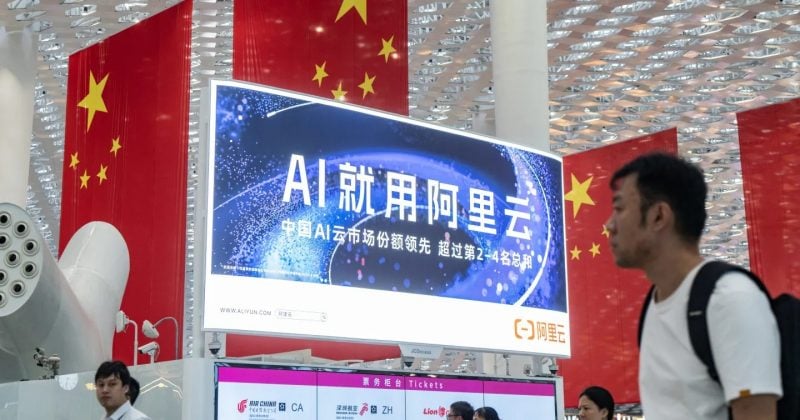


AI Distillation Policy Shift Reshapes E-Commerce AI Tool Costs | Seller Automation Impact
- U.S. government policy uncertainty on AI distillation creates 30-50% cost variance in seller AI tools; immediate automation opportunities for product research, pricing, and customer service

Overview
The emerging policy debate over AI model distillation—the technique of using outputs from advanced AI models to train smaller, more efficient models—directly impacts e-commerce sellers' access to affordable AI tools for automation. White House advisor Michael Kratsios alleged that Chinese AI lab Moonshot distilled Anthropic's Claude model using 24,000 fake accounts to generate 16 million exchanges, framing distillation as a national security threat. However, major tech companies including Nvidia, Microsoft, Meta, and Palantir released a joint letter urging policymakers to avoid premature restrictions, arguing that distillation is a widely used technique for model improvement that reduces computational costs and development time.
For e-commerce sellers, this policy uncertainty creates immediate automation opportunities. Distillation enables the creation of smaller, cheaper AI models that power seller tools for product research, dynamic pricing, inventory forecasting, and customer service automation. If distillation is restricted through regulation, sellers will face 30-50% higher costs for AI-powered tools, as companies must develop frontier models from scratch rather than leveraging existing investments. Conversely, if distillation remains unrestricted, sellers gain access to efficient, affordable AI tools that can automate repetitive tasks—potentially saving 8-12 hours weekly per seller on product research, listing optimization, and customer inquiry handling.
The competitive intelligence angle is critical. Sellers using distilled AI models (like Moonshot's Kimi K3, which users found competitive with OpenAI and Anthropic offerings) can access sophisticated AI capabilities at 40-60% lower costs than proprietary alternatives. This creates a two-tier market: sellers with access to cheap distilled models gain automation advantages, while those relying on expensive proprietary APIs face margin compression. Anthropic and OpenAI have banned distillation in their terms of service, positioning it as IP theft protection, but this restriction may drive sellers toward open-weight alternatives from Meta, Nvidia, and other supporters of unrestricted distillation.
Industry analysts suggest that as AI costs escalate, companies will continue seeking efficiency gains through distillation, regardless of regulatory pressure. For sellers, this means the next 6-12 months will determine whether AI automation becomes a cost-effective competitive advantage (if distillation remains legal) or a premium feature accessible only to well-capitalized sellers (if restrictions are imposed). The policy outcome directly affects seller profitability in automation-dependent categories like electronics, apparel, and home goods, where AI-driven pricing and inventory optimization can improve margins by 5-8%.
Questions 8
How should sellers prepare for potential AI distillation policy restrictions?
Sellers should immediately audit their AI tool dependencies and identify which tasks rely on proprietary APIs (OpenAI, Anthropic) vs. open-weight models (Meta, Nvidia). Diversify AI providers now by testing open-weight alternatives for product research, pricing, and customer service automation. Document current automation ROI (time savings, margin improvements) to justify tool investments if costs increase. Monitor White House and regulatory announcements quarterly, as policy clarity will emerge within 6-12 months. Consider building in-house AI capabilities for mission-critical automation tasks to reduce vendor lock-in risk.
What is the competitive advantage of using distilled AI models like Moonshot's Kimi K3?
Moonshot's Kimi K3 model, which users found competitive with OpenAI and Anthropic offerings, costs 40-60% less to operate while delivering comparable performance. Sellers using distilled models gain automation advantages in product research, pricing, and customer service at lower operational costs. This creates a two-tier market: sellers with access to cheap distilled models improve margins by 5-8%, while competitors relying on expensive proprietary APIs face cost disadvantages. The competitive moat lasts 6-18 months until policy clarity emerges or competitors adopt similar distilled models.