


Tesla's 50% EV Market Share Signals Opportunity for Aftermarket & Accessory Sellers
- Tesla captures 463K+ U.S. EV sales in H1 2026; Model Y dominance creates $2B+ accessory market opportunity for cross-border sellers









Overview
Tesla's commanding 50%+ market share in U.S. electric vehicle sales (463,000 units in H1 2026, up 8 percentage points year-over-year) represents a critical market concentration signal for cross-border e-commerce sellers. While the company faces reputational headwinds from CEO Elon Musk's political involvement and declining global sales (-9% in 2025), its domestic dominance has actually strengthened, with the Model Y alone accounting for over one-third of all EV sales. This paradox creates distinct seller opportunities and risks across multiple product categories.
Market Concentration & Aftermarket Opportunity: Tesla's 50%+ market share indicates sustained demand for Tesla-specific accessories, replacement parts, and customization products. The Model Y's dominance (representing 33%+ of all EV sales) creates a concentrated customer base of 150,000+ new owners in H1 2026 alone, driving demand for floor mats, protective films, charging accessories, interior upgrades, and performance modifications. Cross-border sellers on Amazon, eBay, and Shopify can capitalize on this installed base through targeted listings optimized for "Tesla Model Y accessories," "EV charging solutions," and "electric vehicle maintenance products." Industry data suggests EV accessory categories grow 25-35% annually, with Tesla-specific products commanding 40-50% price premiums due to brand loyalty and limited OEM competition.
Competitive Landscape & Supply Chain Implications: The news reveals that traditional automakers (Ford, GM, Volkswagen) have failed to capture significant EV market share despite Tesla's operational challenges, indicating structural advantages in charging infrastructure, brand recognition, and supply chain efficiency. For sellers, this means: (1) Tesla's charging network creates ecosystem lock-in, driving demand for compatible third-party chargers and adapters; (2) competitors' slower EV rollouts reduce aftermarket parts availability, creating supply gaps sellers can fill; (3) the Cybertruck's failure (7,000 units vs. 1.25M projection) signals limited competition in the premium EV segment, reducing parts cannibalization risk.
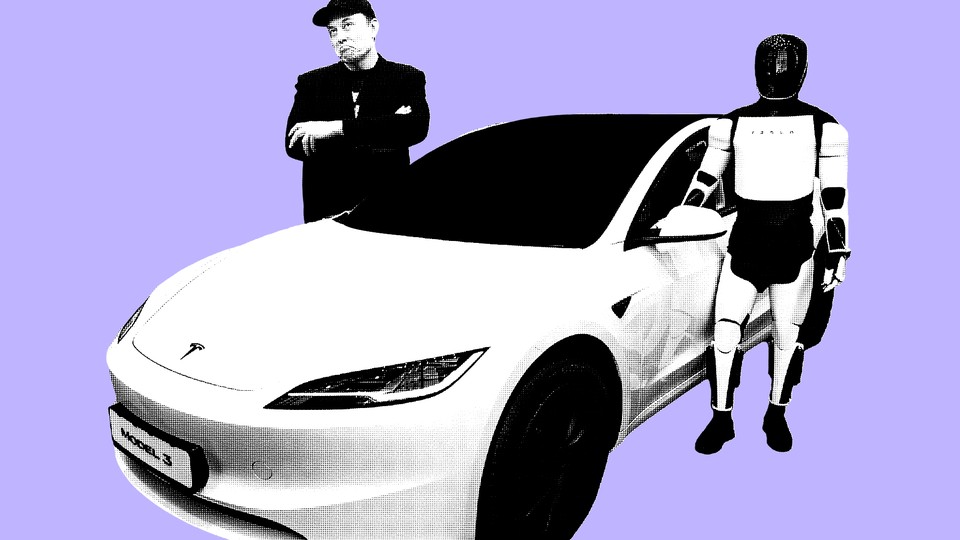
Risk Factors for Sellers: Tesla's strategic pivot toward autonomous robotaxis and humanoid robots (no new passenger models since 2020) suggests potential long-term demand volatility. Sellers heavily dependent on Tesla-specific products face concentration risk if the company's market share declines or if Musk's political controversies further alienate environmentally-conscious buyers (the core EV demographic). Additionally, Tesla's vertical integration strategy and direct-to-consumer sales model limit third-party seller opportunities compared to traditional automakers using dealer networks.
Actionable Seller Implications: The sustained 50%+ market share validates investment in Tesla-specific product lines through 2026-2027, with particular focus on Model Y accessories (highest volume). Sellers should monitor competitive entry from traditional automakers' EV launches and diversify into broader EV categories (charging, maintenance, safety) to reduce Tesla concentration risk. The reputational challenges present an opportunity to market eco-conscious, non-Tesla EV accessories to buyers alienated by the brand's political associations.
Questions 8
What is Tesla's current market share in U.S. EV sales and what does it mean for sellers?
Tesla captured over 50% of approximately 463,000 electric vehicles purchased in the U.S. during H1 2026, representing an 8 percentage point increase from the previous year. This dominant position indicates a concentrated customer base of 230,000+ Tesla owners in just six months, creating substantial demand for Tesla-specific accessories and aftermarket products. For cross-border sellers on Amazon and eBay, this translates to a validated market segment with proven purchase intent for floor mats, charging accessories, protective films, and interior upgrades. The Model Y alone accounts for over one-third of all EV sales (approximately 150,000 units in H1 2026), making it the highest-priority product focus for sellers entering the EV accessory category.
How should sellers respond to Tesla's reputational challenges and political controversies?
Tesla's CEO Elon Musk's political involvement alienated environmentally-conscious buyers, the core EV demographic, contributing to 9% global sales decline in 2025. However, U.S. market share actually increased, suggesting the reputational impact is geographically and demographically segmented. For sellers, this creates a marketing opportunity: position eco-conscious, non-Tesla EV accessories and charging solutions to buyers seeking alternatives to Tesla. On Amazon and Shopify, sellers can emphasize 'sustainable EV solutions,' 'universal charging compatibility,' and 'environmentally-responsible automotive products' to capture the segment alienated by Tesla's brand associations. This positioning is particularly effective in EU markets (Germany, Scandinavia) where environmental consciousness drives purchasing decisions. Sellers should avoid Tesla-exclusive branding in marketing and instead emphasize universal EV compatibility to appeal to the broader 463,000-unit market and future traditional automaker EV buyers.