




Open-Source vs Closed AI Models | Critical Licensing Guide for E-Commerce Sellers
- Licensing restrictions on Meta LLaMA, DeepSeek, and Alibaba models affect AI tool selection, compliance costs, and operational automation for cross-border sellers

Overview
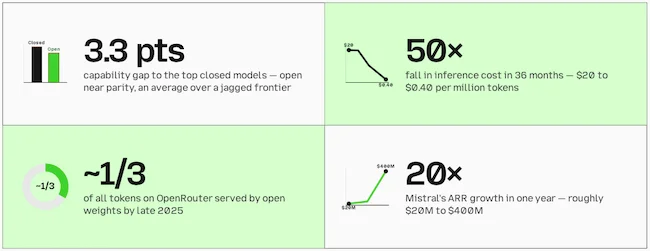
The distinction between closed, open-source, and open-weight AI models has become critical for e-commerce sellers evaluating automation tools for product research, pricing optimization, and customer service. Meta's LLaMA (released February 24, 2023) marked a major shift toward transparency, releasing inference source code and model weights, yet the Open Source Initiative determined its commercial licensing restrictions prevented true open-source classification. This licensing gap directly impacts sellers: proprietary systems like ChatGPT offer reliability and support but require ongoing subscription costs ($20-100/month per user), while open-weight alternatives from DeepSeek AI and Alibaba provide cost-free deployment but demand technical infrastructure investment and compliance verification.
The practical implications for sellers are substantial. Closed AI systems (ChatGPT, Claude) provide immediate plug-and-play functionality for listing optimization, competitor analysis, and customer service automation—reducing manual content creation time by 60-70% but creating vendor lock-in and recurring costs. Open-weight models eliminate licensing fees and allow customization for category-specific applications (e.g., fashion trend detection, electronics specification extraction), but require in-house technical teams or 3PL partnerships to implement, adding 4-8 weeks to deployment timelines and $5,000-15,000 in setup costs.
The critical distinction emerges around training data accessibility. True open-source AI requires not just source code and weights, but also training datasets—a requirement that creates practical challenges for modern models requiring terabytes of data. For sellers, this means: (1) Closed systems provide proprietary training on e-commerce-specific data (Amazon reviews, competitor listings) but restrict data export and analysis; (2) Open-weight models allow sellers to fine-tune on their own historical data (past listings, conversion patterns, customer feedback), enabling predictive pricing and demand forecasting tailored to their specific categories and regions.
Sellers must evaluate three dimensions: licensing compliance (commercial reuse restrictions), data ownership (who controls your business data fed into the AI), and long-term viability (vendor sustainability and API stability). Small sellers (under $500K annual revenue) typically benefit from closed systems due to lower technical overhead, while mid-market sellers ($500K-5M) can justify open-weight investments for competitive differentiation in pricing automation and inventory optimization. Enterprise sellers (5M+) increasingly deploy hybrid strategies: closed systems for customer-facing applications and open-weight models for internal analytics and supply chain optimization.
Questions 8
Can sellers use open-weight AI models on Amazon, eBay, or Shopify without violating platform policies?
Platform policies vary significantly. **Amazon** permits AI-generated content but requires disclosure and prohibits certain automated practices (bulk listing manipulation). **eBay** allows AI tools for listing optimization but restricts automated bidding and pricing. **Shopify** permits third-party AI apps but requires compliance with data privacy policies. The critical issue: many open-weight models (including LLaMA) have licensing restrictions that may conflict with platform terms. Before deploying any open-weight AI, sellers must: (1) review platform policies on AI usage; (2) verify licensing terms don't restrict commercial deployment; (3) ensure data handling complies with platform privacy requirements; (4) test on a small inventory subset before full rollout. Violations can result in account suspension or permanent bans. Closed systems like ChatGPT are generally safer because vendors (OpenAI, Anthropic) maintain compliance with major platforms, but sellers should still verify current policies before implementation.
What does 'training data ownership' mean for e-commerce sellers using AI?
Training data ownership determines who controls the information you feed into AI systems. Closed AI systems (ChatGPT) retain your data for model improvement and cannot be fully deleted, creating compliance risks under GDPR and data privacy laws. Open-weight models allow sellers to fine-tune on proprietary data (past listings, customer feedback, conversion history) while maintaining full ownership and control. For cross-border sellers, this distinction affects: (1) GDPR compliance—closed systems may violate data residency requirements; (2) competitive advantage—open-weight models can be customized for category-specific predictions (fashion trends, electronics demand); (3) data security—proprietary information stays on your servers. Sellers handling sensitive customer data should prioritize open-weight models or closed systems with explicit data deletion guarantees.