





Chinese AI Models Cut Costs 98% vs US | E-Commerce Automation Opportunity
- DeepSeek, Moonshot, Z.AI enable sellers to automate product research, pricing, and customer service at $0.87-$15 per million tokens vs $50 for Claude 3.5








Overview
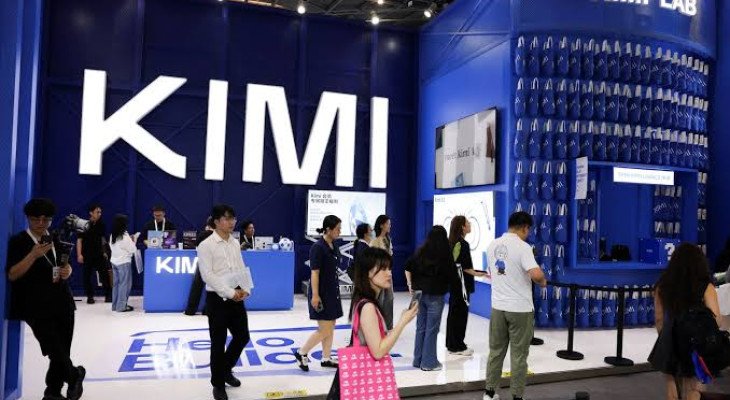
Chinese AI startups are fundamentally reshaping e-commerce automation economics. DeepSeek-V4-Pro costs $0.87 per million output tokens compared to Anthropic's Claude 3.5 at $50—a 98% cost reduction that directly impacts seller profitability. Moonshot AI's Kimi K3 (launched July 16, 2024) achieved 930,000 global downloads and 86,000 US downloads within one week, while Z.AI's GLM-5.2 excels in coding and creative design applications. These models now dominate OpenRouter's developer marketplace with six of the top ten positions held by Chinese companies as of mid-July 2024. Major US companies including Coinbase, Airbnb, Cursor, and DoorDash have quietly integrated Chinese AI models to reduce spiraling AI budgets—Coinbase CEO Brian Armstrong reported halving AI spending by deploying Kimi and GLM models across operations.
For e-commerce sellers, this cost differential unlocks immediate automation opportunities. Product research automation that previously cost $500-1,000/month using Claude 3.5 now costs $8-15/month with DeepSeek or Kimi. Dynamic pricing optimization, inventory forecasting, and customer service chatbots become economically viable for small and mid-sized sellers who previously couldn't afford AI infrastructure. The open-source nature of Chinese models (downloadable and deployable locally) eliminates licensing restrictions, enabling sellers to fine-tune models for category-specific applications—fashion trend analysis, product description generation, competitive intelligence gathering. Goldman Sachs research confirms Chinese AI models have reached critical adoption stage, particularly for agentic AI usage requiring autonomous multistep task execution, which directly applies to order fulfillment automation, supplier communication, and listing optimization workflows.
Competitive advantage accrues to early adopters within 1-3 months. Sellers deploying DeepSeek or Kimi for product research can identify trending categories 2-4 weeks faster than competitors still using expensive US models. Pricing optimization algorithms running on Chinese models can adjust 500+ SKUs daily at 1/50th the cost of traditional pricing software. Customer service automation handling 80% of routine inquiries (returns, shipping, product questions) costs $200-400/month instead of $2,000-5,000 with US-based solutions. However, geopolitical risks exist: Congress is investigating US companies' use of Chinese AI models due to security concerns, and the Trump administration has accused Moonshot of using covert methods to build K3. Sellers should monitor regulatory developments while capitalizing on the current cost advantage window, which may narrow if US export controls tighten or if Chinese startups face sustainability pressures (Z.AI reported 132% revenue surge to 724 million yuan but net losses jumped 60% to 4.7 billion yuan in the past year).
Immediate seller actions: Audit current AI spending across product research, pricing, and customer service tools. Test DeepSeek-V4-Pro or Kimi K3 on non-critical workflows (competitive analysis, draft content generation) within 2 weeks. Calculate ROI by comparing current monthly AI costs against Chinese model alternatives—most sellers will identify 60-80% cost reduction opportunities. For sellers with technical resources, evaluate open-source deployment of GLM-5.2 for category-specific fine-tuning (fashion trend detection, electronics specification extraction). Establish contingency plans for potential regulatory restrictions by documenting current workflows and identifying US-based alternatives as backup options.
Questions 8
What are the geopolitical risks of relying on Chinese AI models for seller operations?
Congress is investigating US companies' use of Chinese AI models due to security concerns and competitive threats to American AI developers. The Trump administration has accused Moonshot of using covert methods to build K3, while some US politicians claim Chinese startups engage in illicit model distillation—accusations Beijing rejects. Sellers should monitor regulatory developments and establish contingency plans by documenting current workflows and identifying US-based alternatives as backup options. However, the current regulatory environment permits use of Chinese AI models, and the cost advantage window may remain open for 6-12 months. Sellers should capitalize on this opportunity while maintaining flexibility to transition to US models if restrictions tighten. Z.AI's sustainability concerns (132% revenue surge but 60% increase in net losses) also suggest potential long-term reliability risks.
How quickly can sellers see ROI from switching to cheaper AI models?
Most sellers achieve full ROI within 1-2 weeks of deployment. A seller spending $2,000/month on AI tools for pricing optimization, product research, and customer service can reduce costs to $200-400/month using Chinese models—a $1,600-1,800 monthly savings. Switching costs (testing, staff training, workflow integration) typically total $500-1,000, meaning ROI occurs within 3-7 days. Sellers with larger AI spending ($5,000+/month) see ROI within 1-2 days. The key is starting with non-critical workflows (competitive analysis, draft content generation) to validate performance before expanding to core operations. After 2-4 weeks of testing, most sellers can confidently migrate 60-80% of AI workloads to Chinese models.