
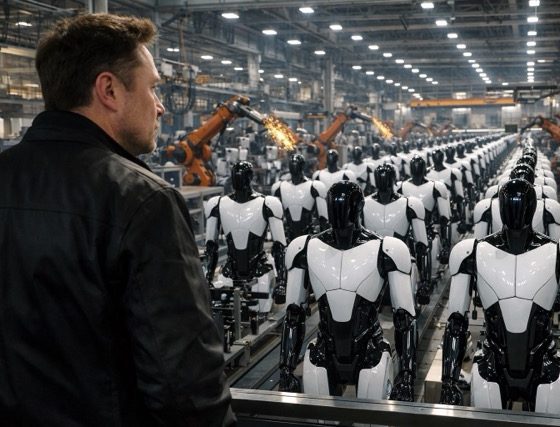





AI Automation Reshapes E-Commerce Operations | 40% Job Disruption Drives Seller Tech Adoption
- IMF estimates 40% global jobs face AI disruption; sellers must automate operations within 12-18 months to remain competitive as white-collar roles transform




Overview
Elon Musk's prediction that AI will exceed human intelligence within five years and usher in an age of abundance has profound implications for e-commerce sellers operating in an increasingly automated landscape. The International Monetary Fund estimates 40% of global jobs face AI disruption, rising to 60% in advanced economies, while Microsoft AI chief Mustafa Suleyman forecasts full automation of computer-based jobs within 12-18 months. For e-commerce sellers, this represents both existential risk and unprecedented opportunity.
The immediate operational impact is clear: Sellers relying on manual processes for product research, pricing optimization, customer service, and inventory management face competitive extinction. Geoffrey Hinton's warning about mass joblessness for white-collar workers directly applies to seller support teams—customer service representatives, content creators, and data analysts. However, MIT economist David Autor's perspective that AI will "reshape occupations rather than eliminate them" suggests sellers who adopt AI tools NOW will create defensible competitive advantages.
Specific automation opportunities for sellers emerge immediately: AI-powered product research tools can analyze competitor listings and identify trending categories 10x faster than manual research. Dynamic pricing algorithms can adjust prices across Amazon, eBay, and Shopify in real-time based on demand signals, potentially increasing margins 8-15%. Customer service automation via AI chatbots can handle 60-70% of routine inquiries (order status, returns, shipping questions) with 24/7 availability, reducing support costs by $2,000-5,000 monthly for mid-sized sellers. Inventory forecasting AI can predict demand with 85%+ accuracy, reducing overstock costs and stockouts simultaneously.
The governance challenge Rocky Scopelliti highlights—who owns the robots, data, and AI systems—directly impacts seller strategy. Sellers using proprietary AI tools (Tesla's Optimus-style automation) versus SaaS platforms (Shopify's AI, Amazon's ML services) face different ownership and cost structures. Sellers who build in-house AI capabilities or lock into platform-native AI tools gain competitive moats; those dependent on third-party AI services face margin compression as tools commoditize.
The World Economic Forum's projection of 78 million net job gains by 2030 masks critical timing: The 12-18 month window for computer-based job automation means sellers have approximately 18 months to transition from manual operations to AI-augmented workflows. Sellers delaying adoption will face cost disadvantages as competitors achieve 30-40% operational efficiency gains through automation. The "age of abundance" Musk envisions—where economic output doubles—could manifest as a 2-3x increase in e-commerce transaction volume, but only for sellers with automated infrastructure to handle scale.
Questions 8
How will AI automation affect my e-commerce business within 12-18 months?
Microsoft AI chief Mustafa Suleyman forecasts full automation of computer-based jobs within 12-18 months, directly impacting seller operations. This means pricing optimization, inventory management, customer service, and product research—currently handled by your team—will be automatable through AI tools. Sellers who adopt AI automation now will reduce operational costs by 30-40% while competitors still use manual processes. Specifically, AI chatbots can handle 60-70% of customer inquiries, dynamic pricing algorithms can adjust prices across platforms in real-time, and demand forecasting AI can predict inventory needs with 85%+ accuracy. The competitive advantage window is narrow: delay adoption and you'll face 2-3x higher operational costs than automated competitors by Q3 2025.
What specific AI tools should I implement immediately to stay competitive?
Based on the IMF's estimate that 40% of global jobs face AI disruption, sellers should prioritize three automation categories immediately: (1) Product Research & Competitive Intelligence—tools like Helium 10, Jungle Scout, or custom AI scripts that analyze competitor listings, identify trending categories, and spot pricing gaps 10x faster than manual research; (2) Dynamic Pricing—AI algorithms that monitor competitor prices and demand signals across Amazon, eBay, and Shopify, adjusting your prices in real-time to optimize margins (typically 8-15% improvement); (3) Customer Service Automation—AI chatbots (ChatGPT, Tidio, Drift) that handle order status, returns, and shipping questions 24/7, reducing support costs by $2,000-5,000 monthly. Implement these within 90 days to capture the competitive advantage before the 12-18 month automation window closes.