



Weaker Dollar & Gold Surge Create FX Arbitrage Window for Cross-Border Sellers
- USD Index down 0.3% unlocks 2-4% margin gains for US exporters; jewelry/luxury sellers face inventory cost spikes

































Overview
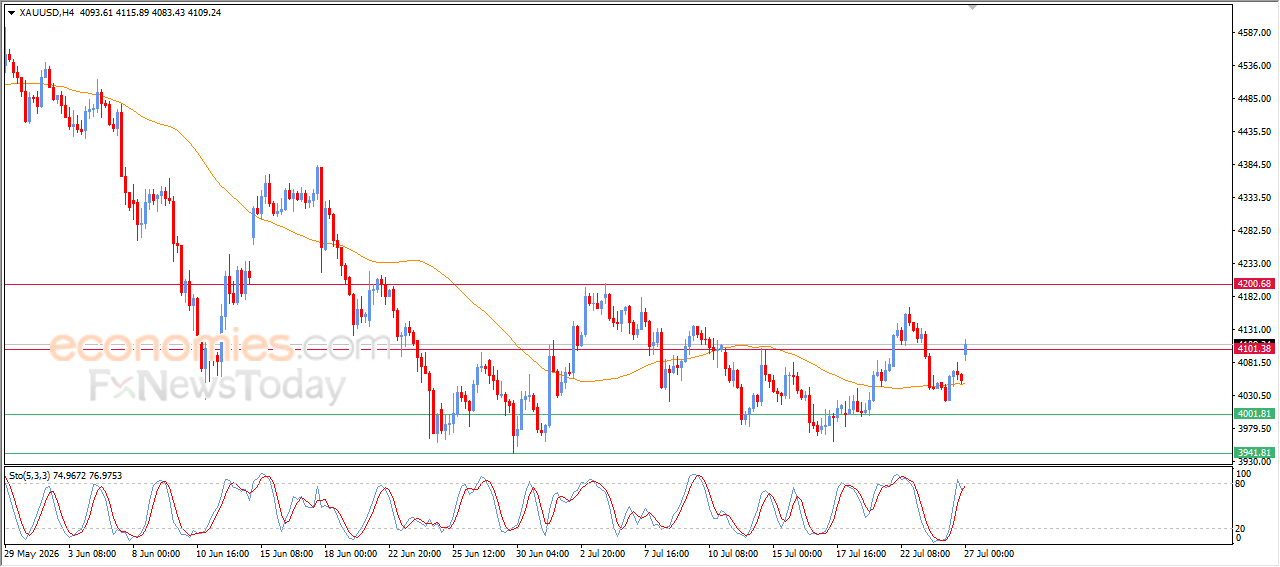
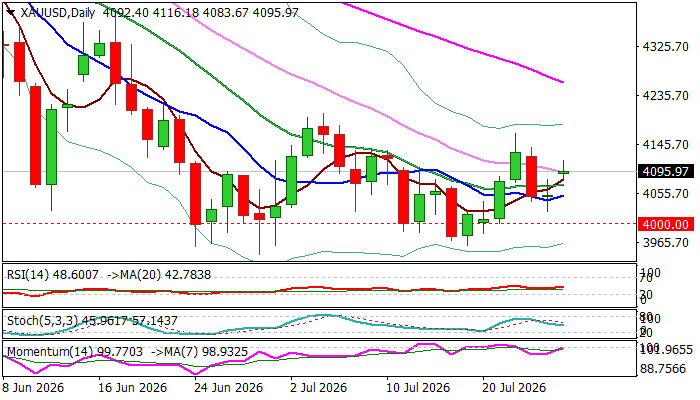
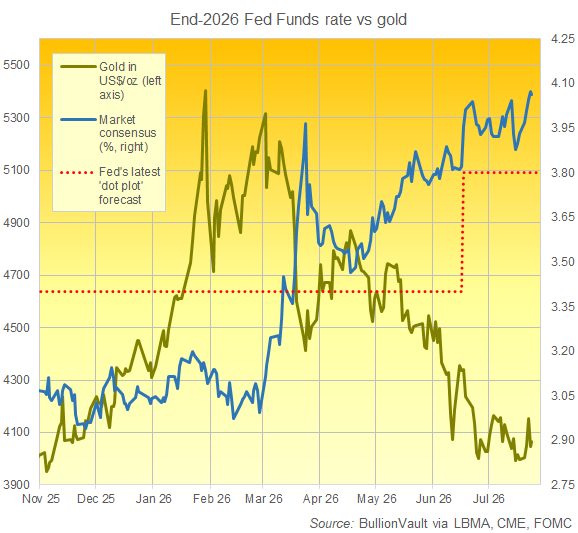
The weaker U.S. dollar environment (USD Index down 0.3% on July 27, 2026) combined with gold's 1.1% surge to $4,096.36/oz creates a critical 30-60 day window for cross-border e-commerce sellers to optimize payment flows and lock in FX gains. This convergence of factors—Middle East ceasefire reducing geopolitical risk premiums, Fed policy uncertainty, and dollar weakness—directly impacts three core financial levers for sellers: payment processing costs, working capital efficiency, and currency hedging opportunities.
For U.S.-based exporters, the immediate opportunity is pricing power. A 0.3% dollar depreciation translates to 2-4% effective price reductions for international buyers holding EUR, GBP, or AUD. Sellers in jewelry, luxury goods, and commodities-linked categories (estimated $8-12B cross-border segment) can capitalize by: (1) maintaining USD pricing while improving competitiveness in foreign markets, (2) accelerating invoice collection in foreign currencies before potential dollar recovery post-Fed meeting, and (3) locking in favorable FX rates through forward contracts at current levels. Payment processors like Wise, Stripe, and PayPal offer 0.5-1.2% lower fees on USD-to-EUR/GBP corridors during weak-dollar periods—savings of $150-400/month for sellers processing $50K+ monthly volume.
For importers and sellers with foreign supplier costs, the risk is immediate. Gold's strength signals potential commodity inflation; sellers sourcing from Asia or EU face 1-3% cost increases on raw materials within 2-4 weeks as suppliers hedge against further dollar weakness. The news explicitly notes that "currency fluctuations stemming from Fed policy decisions impact cross-border transaction fees and profit margins on international sales." Jewelry sellers importing from India/Thailand should lock in supplier quotes immediately and consider invoice financing (factoring at 1.5-2.5% APR) to accelerate cash conversion before cost increases propagate.
The Fed meeting this week is the critical catalyst. Rate decisions will determine whether dollar weakness persists (benefiting exporters) or reverses (benefiting importers). Sellers should: (1) execute FX hedges within 48 hours before Fed announcement volatility, (2) review payment settlement speeds—slower settlement (3-5 days) locks in worse rates during volatile periods, (3) evaluate multi-currency accounts to capture arbitrage on EUR/GBP strength, and (4) monitor oil's 8% decline as a leading indicator for broader commodity deflation that could compress margins in 30-45 days.
Questions 8
How does the Fed meeting this week impact cross-border payment costs?
The Fed's interest rate decision directly influences currency volatility and payment processing costs. If rates stay flat or decline, dollar weakness persists, benefiting US exporters with 2-4% margin gains. If rates rise, the dollar strengthens, increasing costs for importers. Payment processors charge 0.3-0.8% higher fees during high-volatility periods (typical post-Fed announcement). Sellers should: (1) Execute time-sensitive FX hedges before Wednesday's announcement, (2) Avoid settlement delays that lock in unfavorable rates, and (3) Plan inventory purchases based on the Fed's forward guidance—dovish signals favor exporters, hawkish signals favor importers.
What is the relationship between oil prices and cross-border seller margins?
Oil's 8% decline following the Middle East ceasefire indicates broader risk-off sentiment and potential commodity deflation. For sellers, this signals: (1) Shipping costs may decline 1-2% within 4-6 weeks as fuel surcharges decrease, (2) Raw material costs (plastics, metals, textiles) could compress 1-3% in 30-45 days, and (3) Consumer spending may shift toward discretionary goods as energy costs fall. Sellers should monitor oil futures (WTI crude) as a leading indicator—if oil stabilizes above $70/barrel, deflation risk diminishes. This affects margin planning for Q3-Q4 inventory decisions.