



China DUV Chipmaking Tools Disrupt Semiconductor Supply | Seller Impact 2026
- Mass production of domestic DUV equipment triggers 7-10% stock declines for ASML/SanDisk; reshapes chip availability and pricing for electronics sellers through 2026-2027










Overview
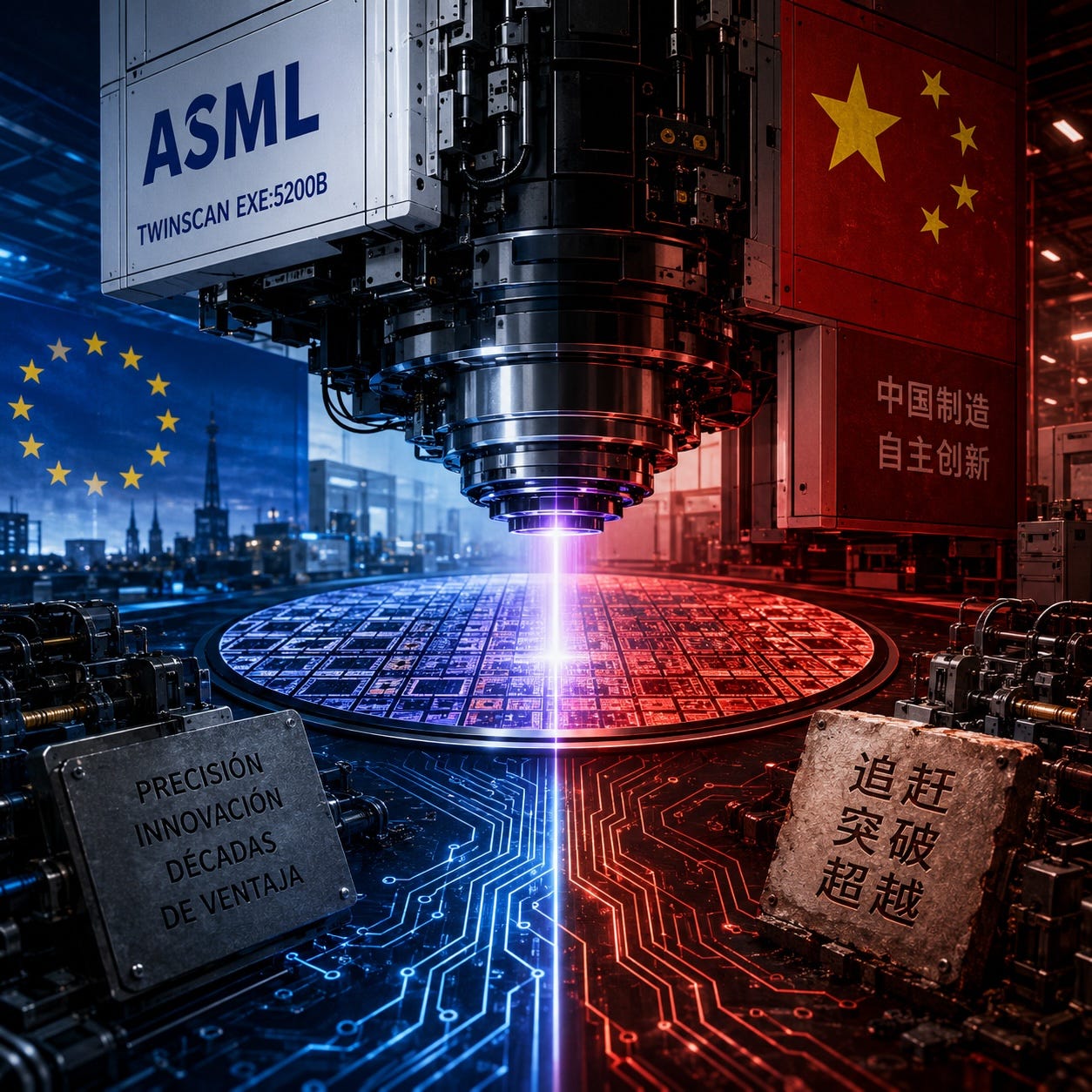
China's mass production of domestically developed deep ultraviolet (DUV) chipmaking tools represents a watershed moment in semiconductor geopolitics, with direct implications for cross-border e-commerce sellers relying on chip-dependent products. On July 27, 2026, Chinese advancement in domestic chip equipment manufacturing triggered sharp market volatility: ASML Holding dropped 7.09%, SanDisk fell 10.20%, reflecting investor concerns about market share erosion in the $80B+ semiconductor equipment sector. This development signals a fundamental shift in global semiconductor manufacturing capacity distribution, driven by China's "Made in China 2025" initiative and U.S.-led export restrictions that paradoxically accelerated indigenous alternative development.
The competitive landscape is undergoing structural transformation. ASML has maintained approximately 80% dominance in extreme ultraviolet (EUV) lithography equipment, supplying TSMC and Samsung with near-monopoly pricing power. The emergence of state-backed Chinese competitors—now mass-producing DUV tools—threatens this dominance and creates pricing pressure across the semiconductor supply chain. For e-commerce sellers in electronics, computing devices, and IoT categories, this translates to three critical dynamics: (1) Chip availability volatility: Chinese semiconductor manufacturers increasingly sourcing domestically reduces Western foundry capacity utilization, potentially creating supply shortages for non-Chinese chip buyers through 2026-2027; (2) Pricing bifurcation: Chinese-sourced chips may see 8-15% cost reductions due to domestic equipment access, while Western-sourced components face margin compression as ASML competitors pressure pricing; (3) Supply chain diversification acceleration: Global tech companies accelerating sourcing shifts away from China-dependent supply chains, creating temporary component shortages and logistics disruptions.
For cross-border sellers, the operational impact is immediate and multi-dimensional. Electronics sellers (HS codes 8471-8517) sourcing from China-based manufacturers may experience 3-6 week supply delays as Chinese foundries prioritize domestic equipment integration and capacity optimization. Sellers relying on TSMC/Samsung components face potential 5-12% cost increases through 2026 as these foundries invest capex to maintain competitive positioning against Chinese state-backed competitors. The policy-driven competitive shift creates a 12-18 month window where sellers can exploit pricing arbitrage: sourcing Chinese-manufactured chips at 10-15% discounts while Western alternatives remain premium-priced, then gradually shifting as Chinese equipment quality matures. This aligns with broader tariff arbitrage opportunities as U.S.-China trade tensions intensify—sellers can legally source from Vietnam/India-based manufacturers using Chinese chips (lower tariff exposure) versus direct China sourcing.
Questions 8
When should sellers lock in pricing with suppliers given this semiconductor equipment competition?
**Immediate action required (Q3 2026)**: Contact suppliers for Q4 2026-Q1 2027 pricing quotes and lock in rates for high-volume SKUs. Chinese-sourced chip prices will likely decline 5-8% over next 12 months, but the decline will be non-linear—expect 2-3% drops in Q4 2026, then accelerating declines in Q1-Q2 2027 as Chinese equipment reaches full production capacity. Sellers should negotiate **tiered pricing agreements** with suppliers: lock in Q4 2026 prices for 60-70% of anticipated volume, maintain 20-30% flexibility for price renegotiation in Q1 2027, and reserve 10% for opportunistic sourcing if prices drop faster than expected. For Western-sourced chips, expect pricing to remain stable through Q4 2026, then face 3-5% pressure in Q1-Q2 2027 as ASML competitors gain market share. The optimal timing to shift sourcing from Western to Chinese chips is **January-March 2027** when price differentials peak (8-15%) but quality parity is established. Sellers delaying this decision until Q2+ 2027 will miss the arbitrage window as competitors have already optimized sourcing.
What geopolitical risks should sellers monitor regarding semiconductor supply chains?
Three critical geopolitical risks require monitoring: (1) **U.S. export controls escalation**: If U.S. tightens restrictions on advanced chip exports to China (beyond current CHIPS Act controls), Chinese foundries may prioritize domestic customers, reducing chip availability for non-Chinese sellers and creating supply shortages through 2027. Monitor USTR announcements and Commerce Department guidance monthly; (2) **Taiwan geopolitical tensions**: TSMC produces 50%+ of advanced chips globally. Any Taiwan-related escalation would disrupt Western semiconductor supply, forcing sellers to shift entirely to Chinese-sourced chips within weeks. Maintain 8-12 week safety stock of critical TSMC components; (3) **Chinese equipment quality concerns**: If Chinese DUV tools fail to meet international standards (yield rates, precision), Chinese foundries may revert to Western equipment, delaying the competitive shift and extending Western chip supply constraints. Monitor industry reports on Chinese equipment performance quarterly. The combined geopolitical risk window extends through 2027—sellers should maintain geographic supply chain diversification (China/Taiwan/South Korea/Vietnam) and avoid over-concentration in any single source.