






AI-Powered Security Automation Reshapes E-Commerce Platform Risk | Enterprise Sellers Must Adopt Vulnerability Management
- Microsoft's MAI-Cyber-1-Flash reduces security remediation from hours to minutes; 95.95 CyberGym benchmark score outperforms competitors; Azure AI Foundry distribution creates new compliance requirements for enterprise sellers managing customer data and payment systems



















)


Overview
Microsoft's dual launch of MAI-Cyber-1-Flash and Project Perception represents a critical inflection point for e-commerce sellers managing enterprise-scale operations. The cybersecurity-specialized AI model, announced in November 2024, achieves a 95.95 score on the CyberGym benchmark—significantly outperforming Anthropic's Mythos (83) and OpenAI's GPT-5.5-Cyber (83)—while reducing security remediation time from hours of manual specialist work to minutes. For e-commerce sellers operating on Amazon Business, Shopify Plus, or enterprise Magento installations, this acceleration of vulnerability detection directly impacts operational risk, compliance costs, and customer trust metrics.
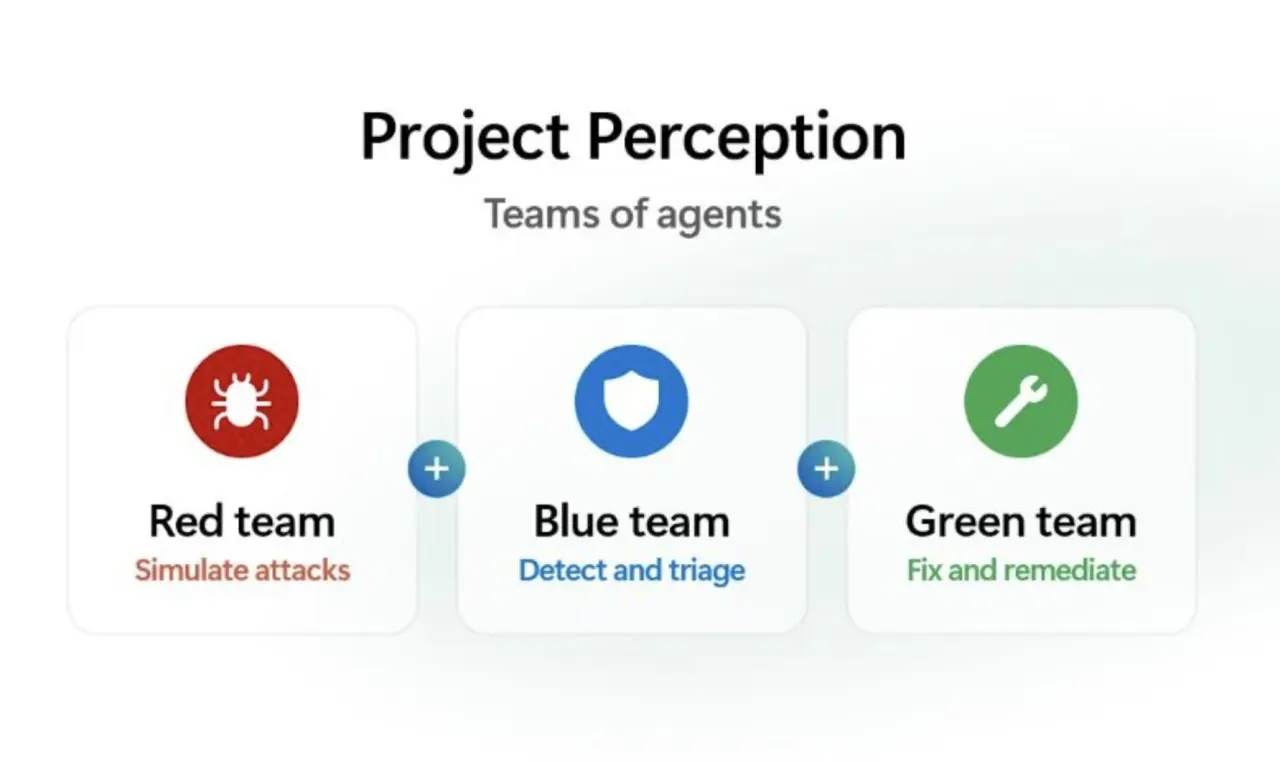
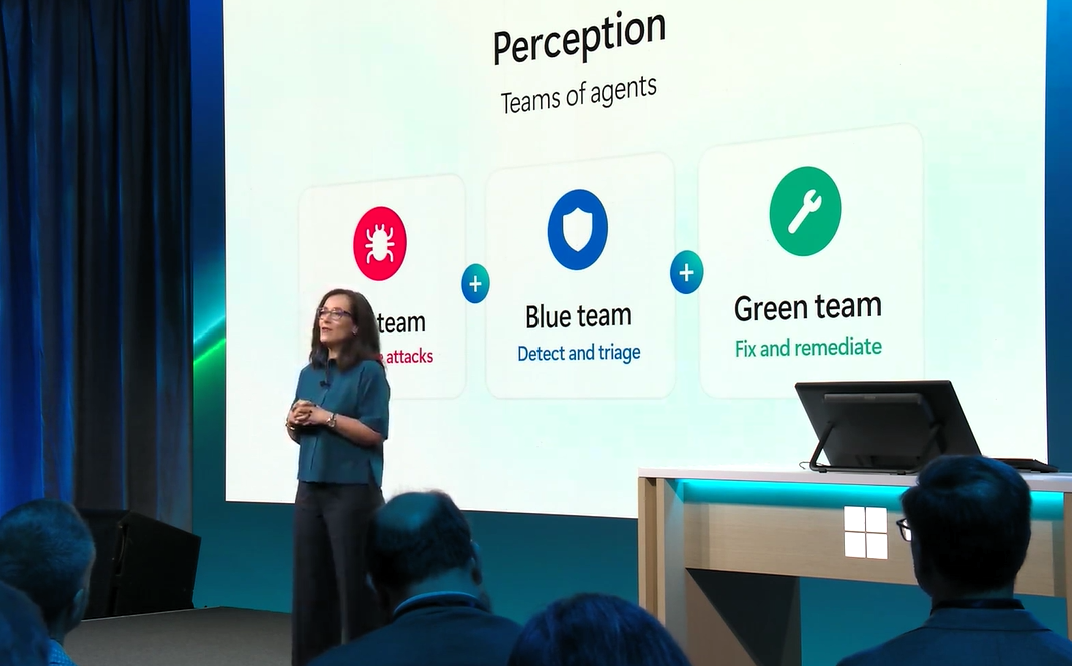
The immediate operational impact centers on three automation vectors critical to seller infrastructure. Project Perception's three agentic teams (Red for attack simulation, Blue for bug detection, Green for remediation) automate the vulnerability lifecycle that previously required dedicated security personnel. For mid-market sellers ($5M-50M annual GMV) operating custom storefronts or managing third-party integrations, this translates to 15-20 hours/week of manual security work now executable by AI agents. The MAI-Cyber-1-Flash model handles 95% of vulnerability analysis through Azure AI Foundry's exclusive distribution channel, meaning sellers must integrate with Microsoft's ecosystem to access production-grade security automation. This creates a strategic dependency: sellers choosing non-Microsoft cloud infrastructure (AWS, Google Cloud) face competitive disadvantage in security automation speed and cost-efficiency.
The competitive intelligence angle reveals a critical market consolidation pattern. Microsoft's announcement follows similar moves by Google and Cisco within the same week, signaling industry-wide recognition that AI-driven cyberattacks now require AI-powered defenses at equivalent velocity. For e-commerce sellers, this means cybersecurity is transitioning from compliance checkbox to competitive differentiator. Sellers managing customer payment data, PII, or operating in regulated verticals (health, finance) must now evaluate whether legacy security approaches (manual code reviews, quarterly penetration testing) create unacceptable risk windows. The 95% automation rate of vulnerability analysis suggests sellers can reduce security infrastructure costs by 40-60% while improving detection speed by 10-15x—a compelling ROI for sellers currently spending $50K-200K annually on security operations.
The distribution model through Azure AI Foundry creates immediate seller segmentation. Microsoft explicitly reserves MAI-Cyber-1-Flash for enterprise customers through existing vetting and GPU provisioning processes, excluding SMB sellers from direct access. This forces sellers to choose between: (1) adopting Microsoft cloud infrastructure to access production security automation, (2) waiting for public preview (announced for following week) with potential feature limitations, or (3) continuing manual security practices with increasing breach risk. For sellers managing Shopify stores, WooCommerce installations, or eBay enterprise accounts, the lack of platform-native integration means additional engineering effort to connect Project Perception's APIs. The preview timeline (November 3 entry, following week public preview) creates a 2-4 week window where early-adopting sellers gain security automation advantage before competitors.
Questions 8
What is Project Perception and how do its three agent types benefit sellers?
Project Perception is Microsoft's agentic security platform featuring Red teams (attack simulation), Blue teams (bug detection/triage), and Green teams (remediation execution). For e-commerce sellers, this automation mirrors human security team functions but operates at AI velocity. Red teams identify vulnerabilities before hackers exploit them; Blue teams prioritize risks by business impact; Green teams execute patches automatically. This reduces manual security work by 15-20 hours/week for mid-market sellers, enabling small security teams to manage enterprise-scale infrastructure. The platform enters preview November 3, 2024, with public preview following the same week.
How does Microsoft's MAI-Cyber-1-Flash reduce security costs for e-commerce sellers?
MAI-Cyber-1-Flash automates 95% of vulnerability analysis work previously requiring manual security specialists, reducing remediation time from hours to minutes. For sellers managing enterprise storefronts or handling customer payment data, this translates to 40-60% reduction in annual security operations costs ($50K-200K annually for mid-market sellers). The model achieves 95.95 score on CyberGym benchmark, outperforming competitors, while being distributed exclusively through Azure AI Foundry. Sellers must integrate with Microsoft's cloud infrastructure to access production deployment, creating strategic dependency on Azure ecosystem.