



Open-Source AI Security Tools | Critical Infrastructure for E-Commerce Sellers
- 40+ Industry Leaders Launch AI Defense Framework; Sellers Can Reduce Security Incident Response Time by 60-80% Using Open-Source Tools























Overview
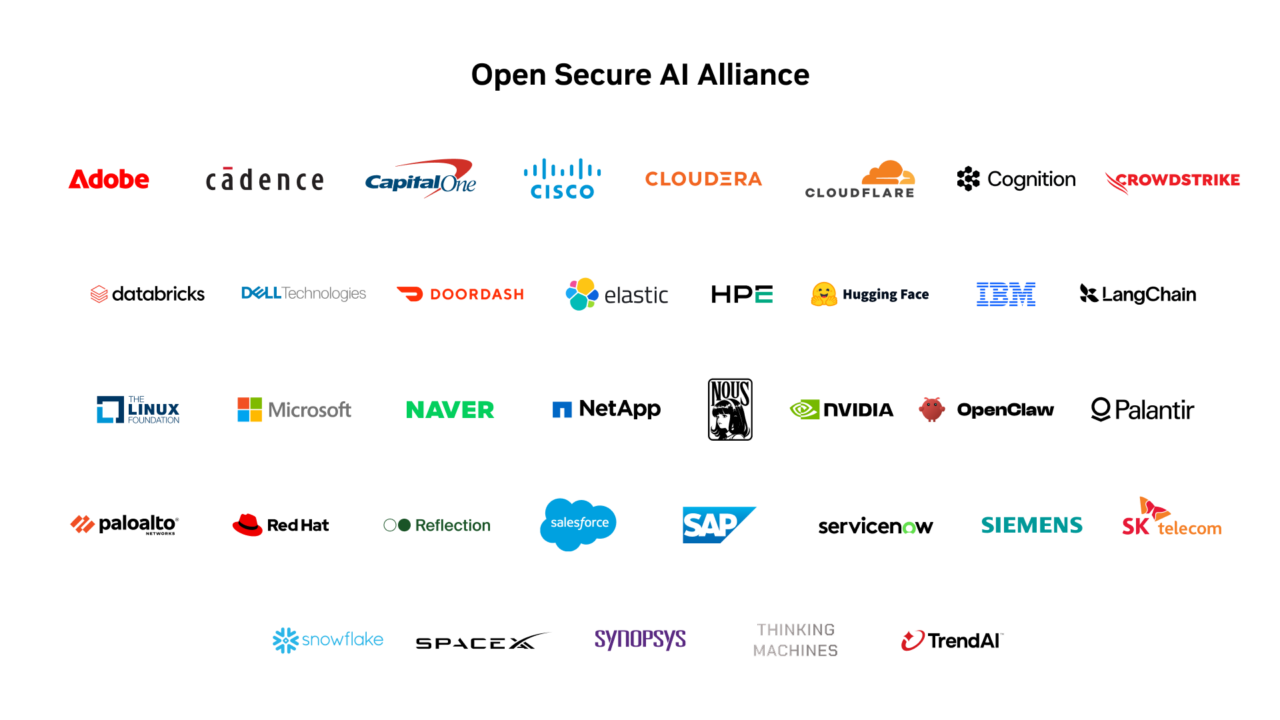
The Open Secure AI Alliance, launched by NVIDIA, Microsoft, IBM, Cisco, and 40+ companies, represents a fundamental shift in how e-commerce sellers can protect their AI-powered operations from security threats. This initiative directly addresses a critical vulnerability exposed by the Hugging Face security incident, where closed-source AI tools prevented forensic analysis of 17,000 compromised actions, forcing the company to deploy open-weight models for incident response. For e-commerce sellers using AI for product recommendations, pricing optimization, and customer service automation, this development signals a major opportunity: open-source AI security tools can reduce incident response time by 60-80% compared to relying solely on proprietary vendor solutions.
The alliance's contributions—including NVIDIA's NOOA framework, Microsoft's MDASH scanning harness, IBM/Red Hat's Lightwell supply chain security, and Hugging Face's Safetensors format—create a new category of defensive AI infrastructure that sellers can deploy on their own infrastructure. This is particularly valuable for mid-market sellers ($5M-50M annual revenue) who currently lack the resources to maintain dedicated AI security teams. By adopting these open-source tools, sellers can implement zero-trust identity standards (HPE's SPIFFE/SPIRE), conduct real-time model scanning, and maintain supply chain visibility without vendor lock-in. The Hugging Face case study demonstrates the operational impact: when closed systems failed, deploying open-weight GLM 5.2 enabled forensic analysis of 17,000 actions within hours, preventing broader data exfiltration.
For e-commerce operations specifically, this matters because sellers increasingly rely on AI for: (1) Dynamic pricing engines that analyze competitor data and demand signals; (2) Recommendation systems that process customer behavior; (3) Fraud detection that flags suspicious transactions; (4) Inventory optimization that predicts demand. Each system handles sensitive business data—customer PII, pricing strategies, inventory levels—that requires robust security. The alliance's emphasis on transparency and data-protective cyber defense directly addresses seller concerns about vendor-controlled AI systems that may lack audit trails or forensic capabilities. Open-source tools enable sellers to inspect model behavior, detect anomalies, and respond to attacks without waiting for vendor support.
The policy dimension is equally important: the alliance calls on policymakers to recognize open AI systems as defensive assets rather than liabilities. This positioning could influence future regulations affecting e-commerce platforms. If regulators adopt this framework, sellers using open-source AI security tools may receive compliance advantages over those relying on proprietary systems, particularly in regulated categories (pharmaceuticals, financial products, food/beverage). The initiative also signals that AI security is becoming table-stakes infrastructure, similar to SSL certificates or PCI compliance—sellers without robust AI security practices will face increasing competitive disadvantage and potential regulatory scrutiny.
Questions 7
What timeline should sellers follow to implement open-source AI security tools?
Immediate actions (0-30 days): Audit all AI systems in production (pricing engines, recommendations, fraud detection) and identify which lack transparency or forensic capabilities. Conduct a vendor lock-in assessment for each system. Short-term (1-3 months): Implement Hugging Face Safetensors for model standardization and begin pilot deployment of Microsoft MDASH for model scanning. Allocate 1-2 FTE for infrastructure setup. Medium-term (3-6 months): Deploy IBM/Red Hat Lightwell for supply chain security and HPE SPIFFE/SPIRE for zero-trust identity. Establish incident response procedures using open-source forensic tools. Long-term (6-12 months): Complete migration of all proprietary AI systems to open-source alternatives where feasible. The alliance's contributions are production-ready now, so sellers can begin implementation immediately without waiting for additional development. Sellers should target 50% of AI systems migrated within 6 months and 100% within 12 months.
How can sellers use open-source AI security tools to gain competitive advantage in their category?
Sellers adopting open-source AI security tools gain three competitive advantages: (1) **Faster incident response** (60-80% reduction in response time) enables rapid containment of data breaches, protecting customer trust and avoiding regulatory fines; (2) **Model transparency** allows sellers to audit recommendation and pricing algorithms, identifying bias or manipulation that competitors cannot detect; (3) **Regulatory leadership** positions sellers as compliance-forward, valuable for category expansion into regulated markets. The alliance's framework suggests future regulations will favor sellers demonstrating AI auditability and security practices. Sellers can differentiate by publishing AI security practices (similar to sustainability reports), attracting privacy-conscious customers and institutional buyers. For sellers in competitive categories (electronics, beauty, apparel), this creates a defensible moat: competitors using proprietary systems face longer incident response times and regulatory uncertainty. Sellers should begin documenting AI security practices now and plan to market this as a competitive advantage within 6-12 months.