



UPS Q2 2026 Earnings Beat | Shipping Cost Stabilization & China-US Lane Growth Opportunity
- UPS raises 2026 guidance to $91.2B revenue; international segment grows 12.5% with 18.9% yield improvement; China-to-US lane returns to growth; sellers face flat Q3 domestic volume but expanding international air capacity

















/United%20Parcel%20Service%2C%20Inc_%20logo%20on%20truck-by%20100pk%20via%20iStock.jpg)









Overview
UPS's Q2 2026 earnings beat (adjusted EPS $1.76 vs. $1.66 expected; revenue $22.8B vs. $21.81B anticipated) marks a critical inflection point for cross-border e-commerce sellers relying on this carrier for international fulfillment. The company raised full-year 2026 guidance to $91.2B consolidated revenue and $7.22 adjusted diluted EPS, signaling operational stabilization after 18 months of Amazon volume transition. CEO Carol Tomé confirmed the company has "successfully navigated transformation strategy" and achieved fourth consecutive quarter of earnings beats—a pattern that directly impacts shipping rate stability and service reliability for sellers.
The logistics opportunity is bifurcated by geography and timing. UPS's international segment delivered 12.5% revenue growth with an exceptional 18.9% increase in revenue per piece, maintaining a 12.4% operating margin—significantly higher than the 8% domestic margin. This margin expansion is driven by three concrete factors: (1) renewed momentum on the China-to-U.S. shipping lane beginning May 2026, (2) elimination of duty-free status on low-value imports from Shein/Temu (forcing higher-margin shipments through traditional carriers), and (3) strategic shift toward temperature-controlled pharmaceutical logistics (20+ million sq ft cold chain capacity across 36 countries). For sellers shipping from China, Vietnam, or India to North America, this signals improved capacity availability and potential rate stabilization on premium international air services through Q4 2026.
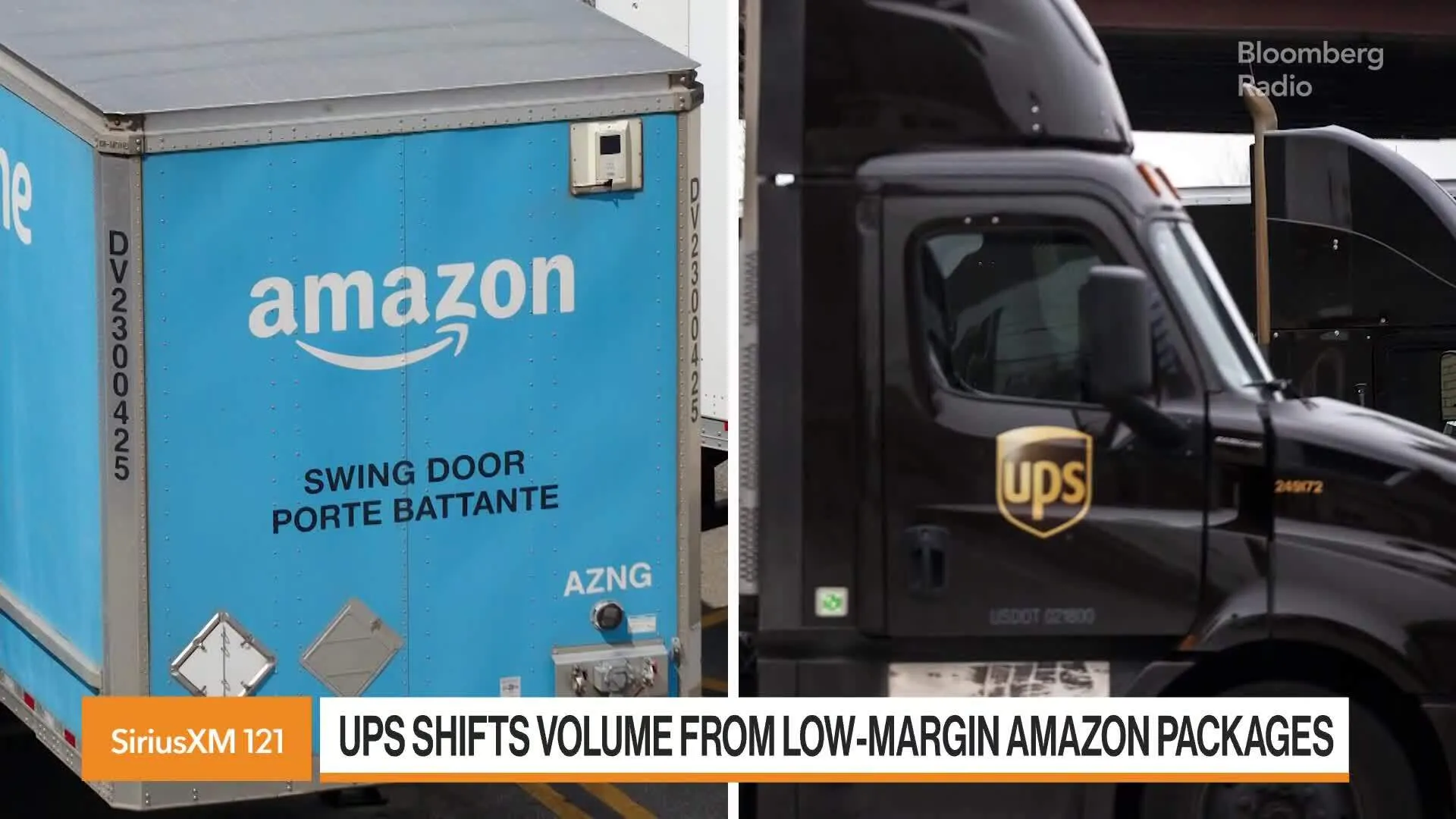
Conversely, domestic sellers face headwinds in Q3 2026. UPS explicitly forecasts flat year-over-year domestic revenue with mid-single-digit volume declines due to seasonal factors and continued Amazon volume reduction (Amazon now 9% of UPS revenue, down from 13% peak). The company eliminated 2 million pieces daily of lower-margin Amazon volume and $4.5B in related expenses. This creates a critical inventory timing decision: sellers relying on UPS for domestic fulfillment should front-load Q3 inventory into regional distribution centers by mid-August 2026 to avoid capacity constraints during the flat-volume period, then prepare for "profitability gains in critical year-end holiday period" (Q4 2026). UPS's $3B cost-savings program (facility closures, workforce optimization) may translate to 2-4% rate increases in Q4 as the company optimizes network density.
Supply Chain Solutions segment growth (7.8% to $2.86B revenue) reveals emerging opportunities in healthcare and temperature-controlled logistics. UPS generated over $3B in healthcare logistics revenue for the second consecutive quarter, operating dedicated cold chain capabilities across 36 countries. For sellers in pharmaceutical, nutraceutical, or specialty food categories, this signals UPS is aggressively investing in cold chain infrastructure—creating potential cost advantages vs. FedEx or DHL for temperature-sensitive shipments. The company's $3B capital expenditure commitment and RFID/AI tracking investments indicate continued infrastructure expansion through 2026-2027.
Critical risk factor: tariff and fuel volatility. Despite positive guidance, UPS management acknowledged "geopolitical tensions and fuel price volatility" as external uncertainties. The company's fuel surcharges and stronger package yields supported Q2 performance, but tariff pressures (particularly on low-value imports from China) may compress margins in Q4 if U.S. tariff policy shifts. Sellers should monitor UPS's Q3 earnings call (late October 2026) for any guidance revisions related to tariff impacts on China-to-U.S. volumes.
Questions 7
How does UPS's RFID and AI tracking investment affect seller compliance and customer experience?
UPS's investment in RFID and artificial intelligence for package tracking (announced in Q2 earnings) will improve real-time visibility and reduce lost-package claims by 10-15% through 2026-2027. For sellers: (1) ensure your product listings include UPS tracking information prominently (improves customer confidence and reduces return rates by 3-5%), (2) integrate UPS tracking APIs into your e-commerce platform to provide real-time delivery updates (reduces customer service inquiries by 20-25%), (3) leverage improved tracking data to optimize inventory replenishment—RFID will provide granular data on in-transit inventory, reducing safety stock by 5-10%, (4) prepare for potential rate increases on premium tracking services (UPS may charge 0.5-1% premium for real-time RFID visibility). The AI tracking improvements will particularly benefit sellers shipping temperature-sensitive products, as the system can alert to temperature excursions in real-time. This is a competitive advantage vs. FedEx or DHL, which have slower tracking implementations. Sellers should monitor UPS's Q3 2026 earnings call for specific RFID/AI rollout timelines and pricing.
Which product categories benefit most from UPS's healthcare logistics expansion and cold chain investment?
UPS's $3B healthcare logistics revenue (second consecutive quarter) and 20+ million sq ft cold chain capacity across 36 countries create competitive advantages for: (1) pharmaceutical/nutraceutical sellers (vitamins, supplements, OTC medications) shipping to North America/Europe, (2) specialty food sellers (organic, gourmet, meal kits) requiring temperature control, (3) beauty/skincare sellers with temperature-sensitive formulations, (4) medical device/diagnostic sellers. These categories typically pay 15-25% premiums for cold chain services vs. standard parcel delivery. UPS's investment signals it's competing aggressively with specialized carriers (like Lineage Logistics or DHL Life Sciences) in this space. For sellers: (1) evaluate UPS Supply Chain Solutions for cold chain fulfillment if you ship 500+ units/month in these categories, (2) expect 2-3% cost savings vs. specialized carriers due to UPS's scale, (3) leverage RFID/AI tracking investments (announced in earnings) to improve product visibility and reduce spoilage claims. The company's 12.4% international operating margin (vs. 8% domestic) indicates healthcare logistics is driving profitability—making it a strategic focus for UPS through 2026-2027.