



AI Model Pricing Collapse | 80% Luna Cost Cuts Enable E-Commerce Automation at Scale
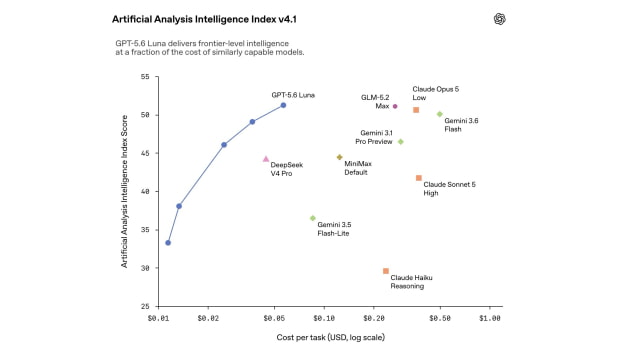
- OpenAI slashes GPT-5.6 Luna by 80% to $0.20/million tokens; Terra drops 20% to $2/million tokens effective July 30, 2026. Competitive pressure from Chinese models forces industry-wide cost restructuring, creating immediate automation ROI opportunities for sellers in product descriptions, customer service, and inventory management.




)









/pcq/media/media_files/2026/07/27/chat-gptt-2026-07-27-15-32-43.jpeg)


Overview
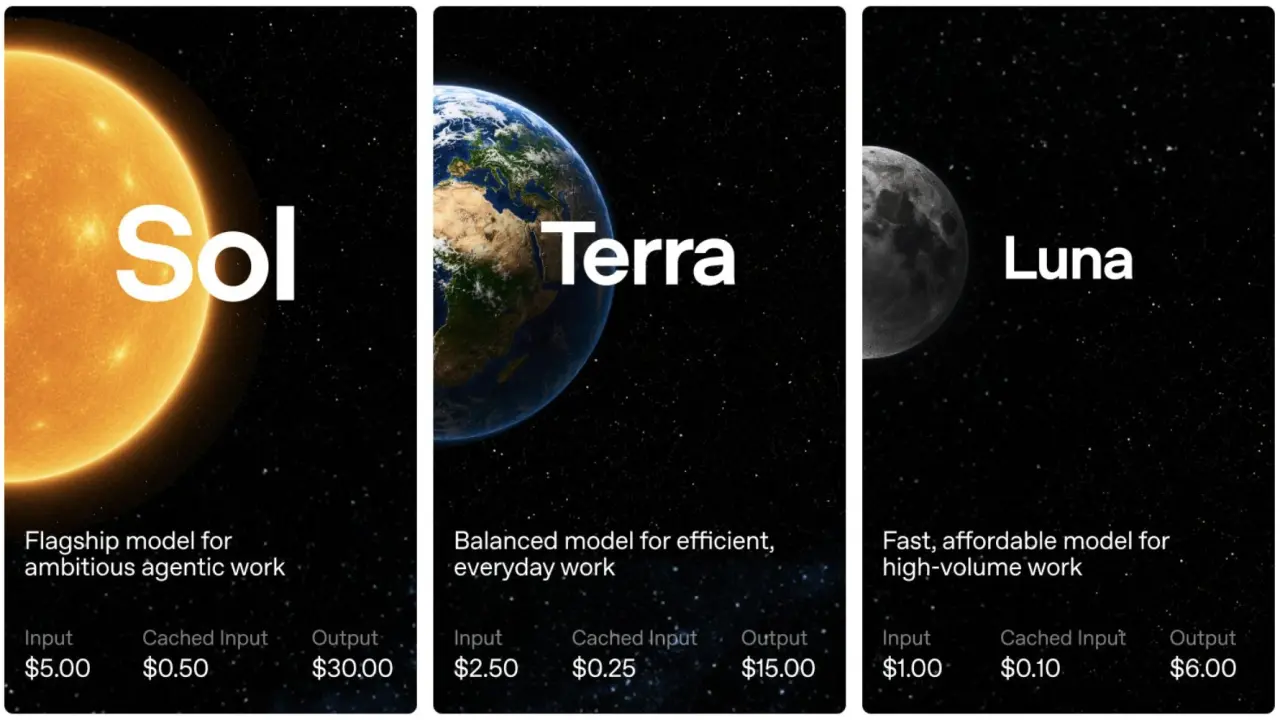
OpenAI's dramatic 80% price reduction for GPT-5.6 Luna (from $1.00 to $0.20 per million input tokens) and 20% cut for Terra (from $2.50 to $2.00) represents a fundamental market inflection point for e-commerce sellers. Announced July 30, 2026—just three weeks after GPT-5.6 launch—these cuts reflect intensifying competitive pressure from Chinese startups (Moonshot AI's Kimi K3) and tech giants (Google, Microsoft) promoting cost-effective alternatives. The pricing shift signals the industry's transition from "tokenmaxxing" (unlimited AI usage without cost discipline in 2022-2023) to ROI-driven spending aligned with measurable business value.
For cross-border e-commerce sellers, this pricing collapse immediately unlocks three high-ROI automation opportunities: (1) Product Description Generation: Luna at $0.20/million tokens enables sellers to auto-generate 500-1,000 product descriptions monthly for under $5, compared to $50-100 at previous pricing. A mid-size seller (2,000+ SKUs) can now generate category-specific, SEO-optimized listings across Amazon, eBay, and Shopify simultaneously, reducing content creation time from 40 hours/week to 4 hours/week. (2) Customer Service Automation: Luna's 99% cost advantage over Anthropic's Claude Fable 5 (per News 2 benchmarks) enables real-time chatbot responses for order tracking, returns, and FAQs across multiple platforms. Sellers managing 500+ daily inquiries can deploy AI-powered support for under $10/month, versus $200-300 with previous pricing. (3) Inventory & Pricing Intelligence: Terra at $2/million tokens enables daily price monitoring across 10,000+ competitor SKUs, demand forecasting, and dynamic pricing optimization. The 20% cost reduction makes this accessible to sellers with $50K-100K monthly revenue, previously requiring $500+ monthly AI budgets.
Competitive dynamics accelerate adoption urgency. Anthropic's Claude Sonnet 4.6 now costs $3.00/million input tokens—50% more than OpenAI's Terra—forcing sellers to evaluate model switching. Microsoft and Google's expanded lower-cost offerings create a three-way price war, with Luna's $0.20 pricing establishing a new market floor. Enterprise adoption slowdown (Uber burned annual AI budgets in 4 months before implementing controls) demonstrates cost sensitivity, but e-commerce sellers benefit from this pressure: vendors now compete on efficiency rather than capability alone. The introduction of Fast mode for Sol (2.5x speed at 2x price) creates a tiered strategy: Luna for high-volume, latency-tolerant tasks (batch descriptions, bulk customer responses); Terra for balanced workloads (real-time pricing, moderate-volume support); Sol for speed-critical operations (live chat, time-sensitive inventory alerts).
Token consumption patterns require monitoring. While per-token costs dropped dramatically, reasoning models consume 3-5x more tokens during extended agentic tasks (per News 4). A seller using Luna for complex inventory forecasting might see token usage increase 300%, offsetting 80% of the price cut. However, for straightforward tasks (product descriptions, basic customer responses), the cost reduction is near-total. Sellers should audit current AI spending: those spending $200-500/month on AI tools can now achieve identical outputs for $20-50/month, freeing capital for inventory expansion or marketing.
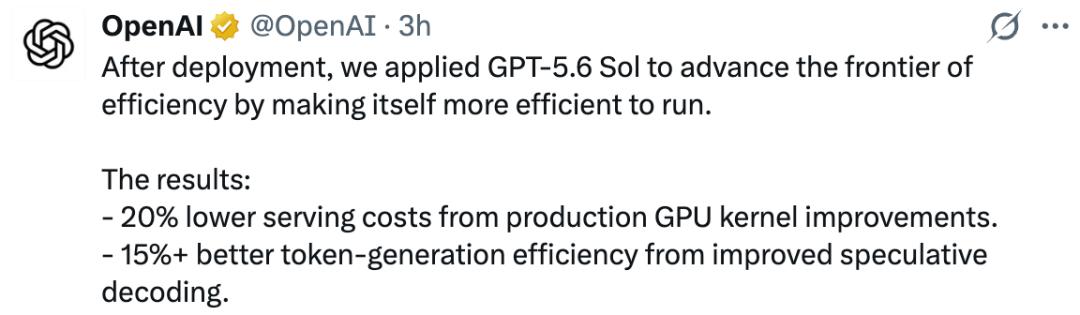
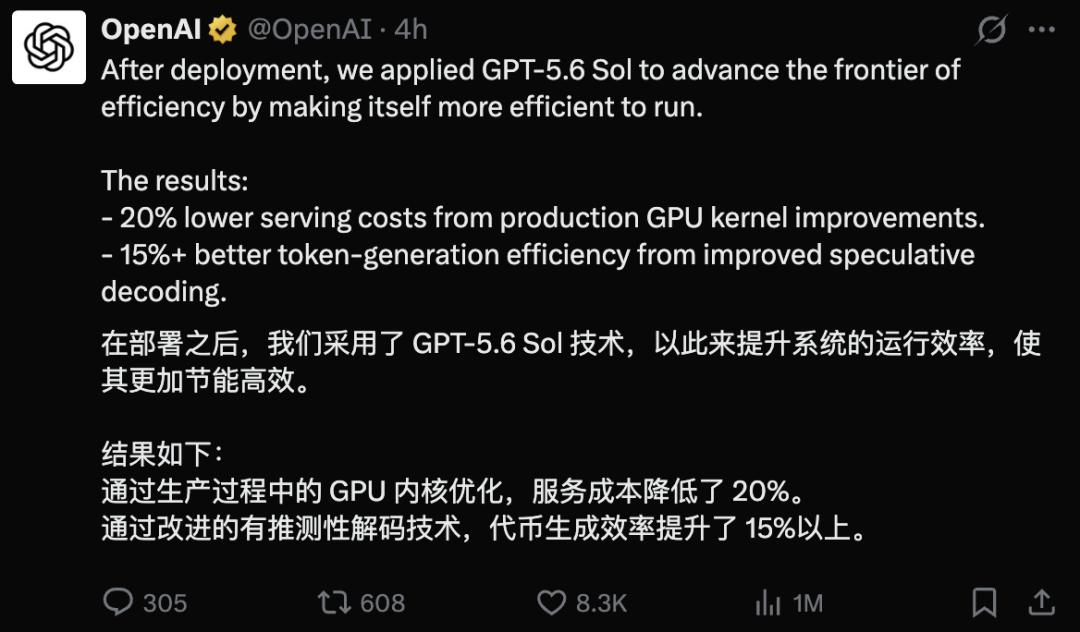
The 3-week pricing adjustment cycle signals rapid optimization capability. OpenAI's infrastructure improvements (20% reduction in end-to-end serving costs, 15% increase in token-generation efficiency via autonomous kernel rewriting) demonstrate that AI cost curves are accelerating faster than historical software pricing trends. Sellers should expect continued price reductions quarterly, making long-term AI contracts risky. Instead, adopt flexible, pay-as-you-go models with Luna/Terra to capture future savings automatically.
Questions 8
How should sellers monitor token consumption to avoid unexpected cost increases?
Set up weekly monitoring dashboards in OpenAI's API console tracking tokens used per task type. Create alerts if weekly token consumption exceeds 10% above baseline. For example, if product descriptions typically use 150 tokens, flag any task exceeding 165 tokens for review. Implement A/B testing: run 10% of tasks with reasoning models to measure token consumption increase before scaling. Use OpenAI's usage API to segment costs by model (Luna vs. Terra vs. Sol) and task type (descriptions vs. customer service vs. pricing). Document baseline costs for each workflow, then review monthly to identify optimization opportunities. If token consumption increases 50%+ despite price cuts, switch to non-reasoning models or reduce task complexity (shorter descriptions, simpler customer responses).
What are the hidden costs of using reasoning models despite lower per-token pricing?
Reasoning models consume 3-5x more tokens than standard models during extended agentic tasks, potentially offsetting 60-80% of the price reduction. For example, inventory forecasting using reasoning might consume 500-1,000 tokens per query versus 100-200 tokens with Luna's standard mode. A seller running 100 daily forecasts would see costs increase from $0.02/day to $0.10-0.20/day despite the 80% price cut. Sellers should test token consumption on their specific workflows before scaling. Monitor API usage dashboards weekly to identify unexpectedly high token consumption and switch to non-reasoning models where accuracy permits.