



Amazon AWS Growth Drives $220B AI Investment | Seller Infrastructure Opportunity
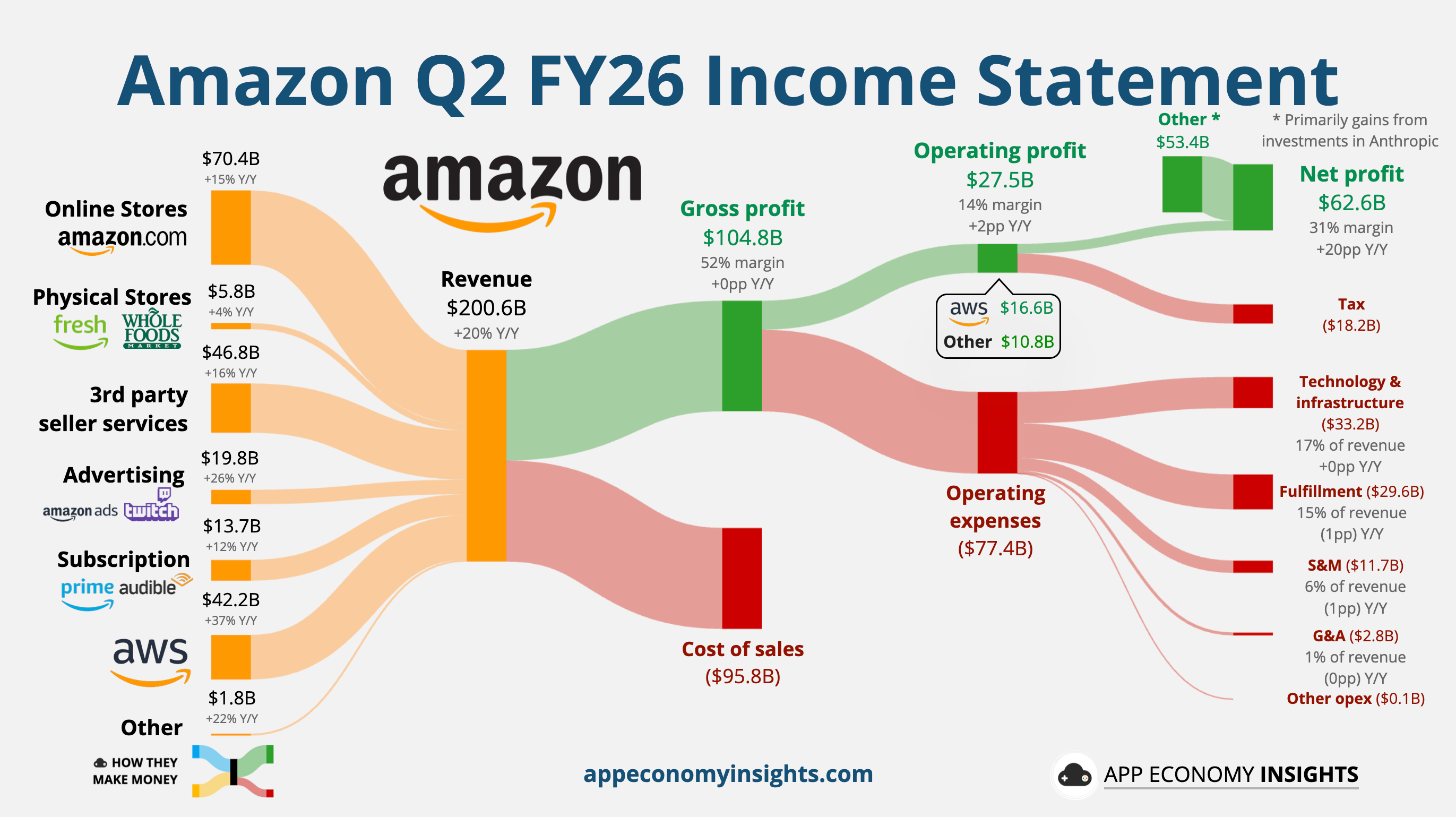
- AWS revenue hits $42.2B (+36.7% YoY), AI/chip businesses exceed $25B run rates; Amazon increases capex guidance by $20B, signaling accelerated infrastructure expansion benefiting seller tools and logistics




Overview
Amazon's exceptional Q2 2024 earnings reveal a critical inflection point for e-commerce sellers: the company's aggressive $220 billion capital expenditure guidance (up from $200B) signals massive infrastructure investment that will directly enhance seller capabilities and platform competitiveness. AWS generated $42.2 billion in Q2 revenue with 36.7% year-over-year growth, while AI and custom chip divisions each surpassed $25 billion in annualized revenue run rates—demonstrating Amazon's strategic pivot toward high-margin, technology-driven services that underpin its e-commerce platform.
For Amazon sellers, this investment translates into tangible operational advantages. The $220B capex allocation prioritizes AI infrastructure, which will power enhanced seller tools including predictive demand forecasting, automated inventory optimization, and machine learning-driven pricing algorithms. Amazon's custom chip division (growing at triple-digit rates) indicates the company is building proprietary hardware to reduce cloud costs and improve latency—benefits that cascade to FBA fulfillment speed and seller dashboard responsiveness. The $496 billion AWS backlog (growing triple digits YoY) demonstrates enterprise demand for cloud services, which Amazon will leverage to improve Seller Central platform stability and introduce new AI-powered features for product research, competitor analysis, and demand prediction.
The competitive implications are significant. Amazon's infrastructure dominance creates a widening moat against eBay, Shopify, and Walmart Marketplace. Sellers on Amazon benefit from superior logistics networks, faster order processing, and increasingly sophisticated AI tools—advantages that smaller platforms cannot match. The 2027 expansion plans already booked into 2028 indicate Amazon is locking in capacity for sustained growth, meaning sellers who establish strong positions now will benefit from infrastructure improvements over the next 3-4 years. Conversely, sellers relying on smaller platforms face increasing competitive pressure as Amazon's technology gap widens.
Regional and category implications vary. US-based sellers benefit most immediately from infrastructure improvements, as Amazon's primary data centers and fulfillment networks are concentrated domestically. EU sellers should monitor AWS expansion in European regions (Frankfurt, Ireland) to assess FBA delivery speed improvements. Sellers in high-velocity categories (electronics, home goods, beauty) will see the greatest benefit from AI-driven demand forecasting, as these categories generate the data volume needed for accurate machine learning models. Low-velocity, niche categories may see less immediate benefit but will eventually gain access to improved seller tools as AI capabilities mature.
Questions 8
Which geographic regions benefit most from Amazon's infrastructure investment?
US-based sellers benefit most immediately, as Amazon's primary data centers and fulfillment networks are concentrated domestically. AWS's $42.2B Q2 revenue and 36.7% YoY growth indicate strong US enterprise demand. EU sellers should monitor AWS expansion in European regions (Frankfurt, Ireland data centers) to assess FBA delivery speed improvements; Amazon typically expands EU infrastructure 6-12 months after US investments. Asia Pacific sellers should expect infrastructure improvements in 2025-2026, as AWS backlog growth (triple digits YoY) indicates Amazon is prioritizing Asian market expansion. Sellers in high-demand regions (US, UK, Germany, Japan) will see the greatest benefit from improved fulfillment networks and AI tools.
Should sellers invest in alternative platforms given Amazon's infrastructure dominance?
Amazon's infrastructure advantage is widening but not insurmountable. Shopify, eBay, and Walmart Marketplace remain viable alternatives for sellers targeting specific niches or customer segments. However, Amazon's $170B AWS annual revenue run rate (4x larger than 2019) and custom chip development indicate the company is building defensible competitive advantages in logistics and AI. Sellers should maintain presence on multiple platforms but prioritize Amazon for high-velocity categories where infrastructure advantages compound. Consider Shopify for brand-building and direct-to-consumer sales, eBay for collectibles and vintage items, and Walmart for grocery and household goods. Diversification reduces platform risk while allowing sellers to capitalize on Amazon's superior infrastructure for core inventory.