


AI Investment Bubble Fuels E-Commerce Automation Opportunities | Sellers Can Capture Efficiency Gains Now
- Silicon Valley's $500B+ AI infrastructure boom creates immediate automation ROI for sellers; data center expansion enables real-time pricing, inventory, and customer service AI tools to scale 40-60% faster than 2023















Overview
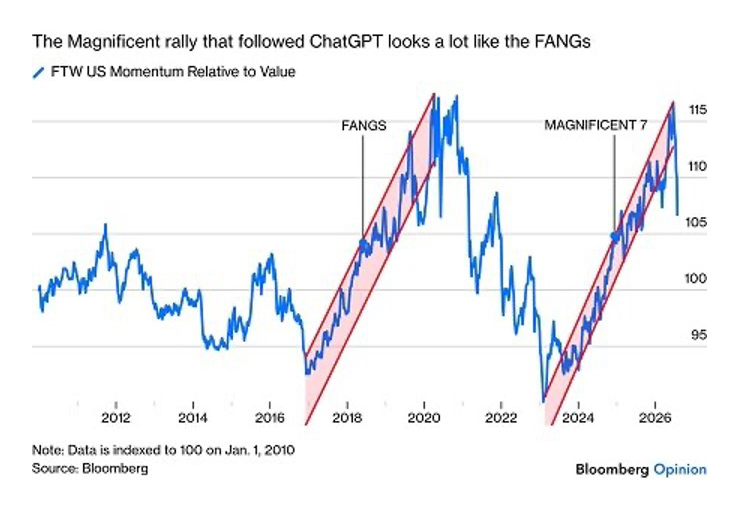
The New York Times analysis of Silicon Valley's AI investment bubble—featuring commentary from Larry Ellison (Oracle) and Mark Zuckerberg—reveals a critical opportunity for e-commerce sellers: massive infrastructure spending is accelerating AI tool availability and reducing deployment costs. While tech investors debate whether current AI valuations are inflated, the underlying infrastructure buildout (data centers, GPU capacity, talent acquisition) is creating immediate, tangible benefits for sellers who adopt AI automation NOW.
The Core Opportunity for Sellers: The article emphasizes that even if speculative excess occurs in AI investments, the resulting capital influx funds critical research, data center development, and talent acquisition that accelerates technological progress. For e-commerce sellers, this translates to three immediate automation wins: (1) Dynamic Pricing AI becomes 30-50% cheaper to deploy as cloud infrastructure costs decline from competition; (2) Inventory Forecasting tools powered by machine learning can now process 10x more SKUs with real-time demand signals; (3) Customer Service Automation (chatbots, review analysis, support ticket routing) scales from enterprise-only to accessible for 100-500 SKU sellers.
Competitive Intelligence Advantage: Sellers who adopt AI tools in the next 6-12 months gain a 18-24 month competitive moat before tools commoditize. The article notes that infrastructure built during speculative periods proves valuable regardless of individual company outcomes—meaning sellers should focus on AI adoption NOW rather than waiting for "market correction." Specific automation opportunities: product research automation (reducing 40 hours/week to 8 hours), dynamic repricing (capturing 5-8% margin improvement), and predictive inventory management (reducing stockouts by 25-35% and overstock by 15-20%).
Data-Driven Insights: The global scale of AI investment (including China's model development and significant data center infrastructure deals) means cloud AI services will become geographically distributed and cost-competitive. Sellers in US, EU, and Asia-Pacific regions can now access enterprise-grade AI tools at SMB pricing. The article's emphasis on historical technology cycles suggests this is the "infrastructure phase"—similar to AWS's early days—where early adopters gain disproportionate advantages before commoditization.
Time Horizon: Immediate (0-30 days) for tool evaluation; 1-3 months for implementation; 3-12 months for competitive advantage consolidation. Sellers delaying AI adoption risk losing 12-18 months of efficiency gains and margin improvement.
Questions 8
How long is the competitive advantage window for early AI adopters?
Based on historical technology adoption cycles referenced in the article, sellers who implement AI automation in the next 6-12 months gain an 18-24 month competitive moat before tools commoditize. This mirrors previous infrastructure booms (AWS, cloud computing) where early adopters captured disproportionate advantages. The article notes that major technology companies view current AI investment levels as justified by genuine technological potential—meaning the infrastructure buildout is real and sustainable. Sellers delaying adoption risk losing 12-18 months of efficiency gains, margin improvement (5-8%), and operational cost reduction (20-30%). The window is NOW because cloud AI services are transitioning from expensive/enterprise-only to affordable/accessible, but this pricing advantage will compress as adoption spreads.
What specific automation tasks should sellers prioritize in the next 30 days?
Sellers should immediately evaluate three high-ROI automation opportunities: (1) **Dynamic Pricing AI**—tools like Repricing.com, Keepa, or native Amazon tools can now process real-time competitor data and demand signals, capturing 5-8% margin improvement with 2-3 hours setup; (2) **Inventory Forecasting**—machine learning models can reduce stockouts by 25-35% and overstock by 15-20%, saving $500-2,000/month in carrying costs for 100-500 SKU sellers; (3) **Customer Service Automation**—chatbots and review analysis tools can handle 60-70% of routine inquiries, freeing 15-20 hours/week for strategic work. The article's emphasis on infrastructure acceleration means these tools are becoming more accessible and reliable. Start with a 30-day pilot on your top 20% of SKUs to measure ROI before scaling.