



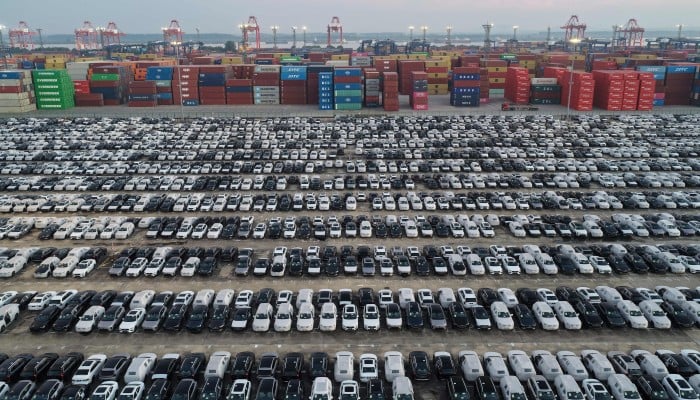

US-China Trade Escalation & USTR Excess Capacity Investigation | Critical Tariff & Supply Chain Risks for Cross-Border Sellers
- USTR investigation into Chinese industrial overcapacity threatens 15-25% tariff increases on electronics, steel, aluminum, and semiconductors; affects 60%+ of sellers sourcing from China; immediate supply chain diversification required before Q4 2024


















Overview
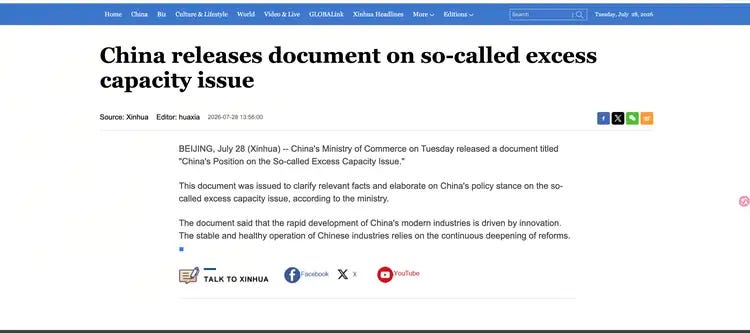
The escalating US-China trade dispute represents a critical inflection point for cross-border e-commerce sellers. Following the Communist Party's August 3 Politburo meeting reaffirming commitment to subsidized advanced industries, the USTR has launched a formal investigation into Chinese industrial overcapacity targeting steel, aluminum, semiconductors, and other critical manufacturing sectors. This investigation directly challenges China's export-driven model, where 60% of Chinese firms' market share gains stem from government subsidies (OECD data) and 75% of export growth derives from domestic overcapacity (Bank of Italy study).
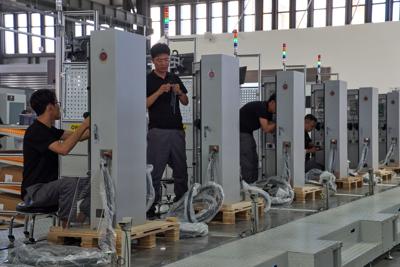
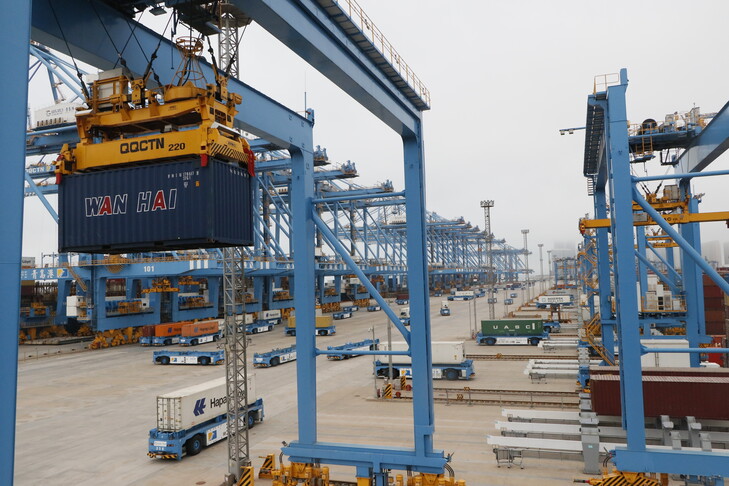
The tariff arbitrage window is closing rapidly. China currently adds three times more productive assets annually than the US and EU combined while achieving 40% lower capital returns—a structural advantage that Western policymakers view as market-distorting dumping. The EU already faces a $1 billion daily trade deficit with China, prompting defensive industrial policies. The USTR investigation signals imminent tariff escalation, with potential additional duties on finished goods and raw materials sourced from China. For sellers relying on Chinese manufacturing for competitive pricing, this creates immediate procurement cost pressures of 8-15% on affected categories.
Supply chain diversification is now a competitive necessity, not optional. Sellers currently sourcing electronics, home goods, and industrial products from China face three scenarios: (1) absorb tariff increases and compress margins by 5-12%, (2) shift sourcing to Vietnam, India, or Mexico (adding 2-4 week lead times and 3-8% sourcing cost premiums), or (3) increase retail prices 10-18% and risk demand destruction. The investigation's focus on technology and industrial goods sectors signals that semiconductors, consumer electronics, and smart home categories face the highest tariff risk. Sellers with diversified supplier bases across Vietnam, India, and Southeast Asia will gain competitive advantage as tariffs on Chinese goods increase. The policy window before tariff implementation (typically 60-90 days from investigation conclusion) represents the last opportunity to lock in current pricing with Chinese suppliers or execute sourcing transitions.
Market access opportunities emerge in non-China sourcing regions. As tariffs on Chinese goods increase, sellers can exploit tariff arbitrage by sourcing equivalent products from Vietnam (currently 5-8% tariff advantage vs. China on electronics), India (emerging advantage on textiles and home goods), and Mexico (USMCA preferential access). Sellers who establish supplier relationships in these regions before tariff implementation will capture 3-6 month first-mover advantages before competitors execute similar transitions. The competitive shift favors medium-sized sellers (100-500 SKUs) with agility to rebalance supplier portfolios, while large sellers face supply chain restructuring costs of $500K-$2M and small sellers face margin compression unless they rapidly increase prices.
Questions 8
What is the timeline for USTR tariff implementation and when should I act?
USTR investigations typically conclude within 60-90 days, followed by 30-60 days before tariff implementation. The investigation was initiated in August 2024, suggesting potential tariff announcements by October-November 2024 with implementation by December 2024-January 2025. This creates a narrow window (60-90 days) to lock in current Chinese supplier pricing, execute sourcing transitions, or adjust retail pricing before tariffs take effect. Sellers should immediately contact suppliers to negotiate price locks, request expedited shipments to build inventory buffers, and evaluate alternative sourcing. Delaying action beyond September 2024 risks missing the supplier negotiation window and facing full tariff exposure.
Should I shift my sourcing from China to Vietnam, India, or Mexico to avoid tariffs?
Yes, but with strategic timing and cost analysis. Vietnam currently offers 5-8% tariff advantages on electronics compared to China, while India is emerging as competitive for textiles and home goods. Mexico provides USMCA preferential access for goods destined to North America. However, sourcing transitions add 2-4 week lead times, 3-8% sourcing cost premiums, and require 4-8 week supplier qualification periods. Calculate your tariff exposure first: if tariffs exceed 12%, diversification pays for itself within 6-12 months. Sellers with 100-500 SKUs should prioritize transitioning high-volume, high-tariff-risk products first. Establish relationships with Vietnam/India suppliers now before competitors saturate capacity.