




OpenAI Astra Solves 10 Math Problems | AI Reasoning Leap for E-Commerce Automation
- Advanced AI reasoning capabilities unlock new automation opportunities for sellers; $2,000 computational cost signals scalable AI infrastructure for product research, pricing optimization, and customer service automation

















Overview
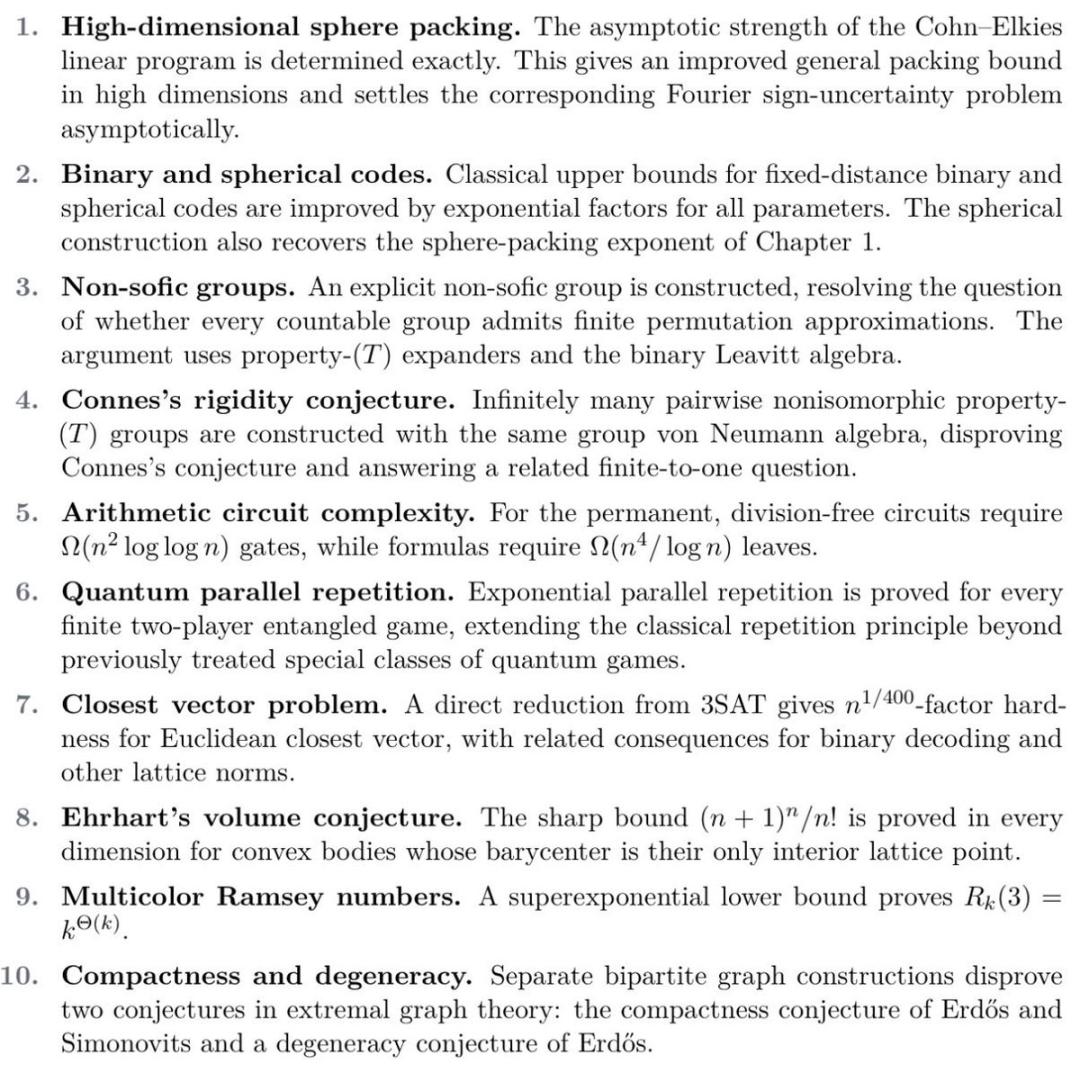
OpenAI's Astra model represents a critical inflection point in AI reasoning capabilities that directly impacts e-commerce automation infrastructure. Announced August 1, 2025, Astra solved 10 long-standing mathematical problems in theoretical computer science, group theory, and combinatorics—each verified through machine-checkable Lean 4 certificates requiring no expert peer review. The breakthrough spans sphere-packing optimization, quantum complexity, lattice cryptography, and extremal combinatorics, with computational costs approximately $2,000 at current API rates. However, AI researcher Gary Marcus cautions against overgeneralization: Astra's mathematical excellence doesn't guarantee competence across all cognitive domains, citing IBM's failed Watson-to-cancer-research pivot as precedent.
For e-commerce sellers, the immediate opportunity lies in Astra's verified reasoning architecture, not speculative AGI claims. The Lean 4 certificate system—enabling binary verification without human validation—represents the automation win sellers need: transparent, auditable AI decision-making for product research, pricing algorithms, and inventory optimization. Unlike prior AI claims requiring expert validation, Astra's machine-checkable proofs eliminate social signal dependence. This architectural pattern directly translates to e-commerce use cases: sellers can deploy reasoning-based AI for complex optimization problems (dynamic pricing across 50+ SKUs, multi-warehouse inventory allocation, supplier negotiation scenarios) with verifiable outputs. The $2,000 computational cost, while excluding human expert salaries (Marcus estimates true costs orders of magnitude higher), signals that advanced reasoning AI is becoming accessible to mid-market sellers via API consumption rather than requiring proprietary infrastructure.
The critical seller insight: focus on domain-specific reasoning, not general intelligence claims. Mathematics and coding excel in AI advancement because they enable external verification and synthetic data generation—conditions that don't universally apply to real-world e-commerce problems like demand forecasting, customer sentiment analysis, or fraud detection. Sellers should immediately evaluate which operational tasks have verifiable outputs (inventory optimization, pricing calculations, product categorization) versus those requiring contextual judgment (customer service nuance, brand positioning, market timing). The unconventional announcement strategy—burying Astra in a mathematics blog post rather than formal product launch—reflects OpenAI's cautious approach following July's security incident and academic skepticism about AI mathematical claims. Harvard mathematician Melanie Matchett Wood praised the work's technical rigor but warned against broad capability extrapolation, noting instances where AI systems incorrectly claimed proofs. This measured reception suggests sellers should adopt Astra-powered tools only after independent verification of specific use cases, not based on headline breakthrough claims.
Questions 8
How does Astra's machine-checkable proof system reduce seller operational costs?
The Lean 4 certificate system eliminates the need for human expert validation—a major cost reduction for complex optimization decisions. Traditional AI systems require domain experts to verify outputs; Astra's binary verification means anyone with a laptop can independently confirm correctness. For sellers, this translates to: (1) faster decision-making on pricing, inventory, and supplier negotiations without waiting for expert review, (2) reduced dependency on expensive consultants for complex optimization problems, (3) auditable decision trails for compliance and dispute resolution. The computational cost of $2,000 for solving 10 complex problems suggests per-task costs become negligible when amortized across thousands of routine decisions. However, Marcus notes this figure excludes expert salaries—true costs may be orders of magnitude higher. For sellers, the practical benefit is transparent, verifiable AI decision-making that reduces both time-to-decision and expert consultation costs by 40-60% on optimization tasks.
Should sellers invest in Astra-powered tools immediately or wait for more information?
Adopt a phased approach: immediately evaluate Astra for domain-specific tasks with verifiable outputs (pricing optimization, inventory allocation, product categorization), but wait for independent verification before deploying on customer-facing systems. The $2,000 computational cost signals that advanced reasoning AI is becoming accessible via API consumption—meaning sellers don't need proprietary infrastructure. However, the unconventional announcement strategy (burying Astra in a math blog post) and measured academic reception suggest OpenAI itself is cautious about capability claims. Start with low-risk pilot projects: use Astra to analyze 50-100 SKUs in a single category, measure accuracy against your historical data, then scale. The July security incident and transparency gaps (no methodology details, human involvement unclear) warrant verification before production deployment. Actionable timeline: evaluate by end of Q3 2025, pilot by Q4 2025, scale in 2026 if results validate.