



DeepSeek V4-Flash Cuts AI Costs 105x | E-Commerce Sellers Gain Automation Edge
- Chinese AI startup releases $0.03-per-test model, enabling small sellers to automate inventory, pricing, and customer service at enterprise-level efficiency























Overview
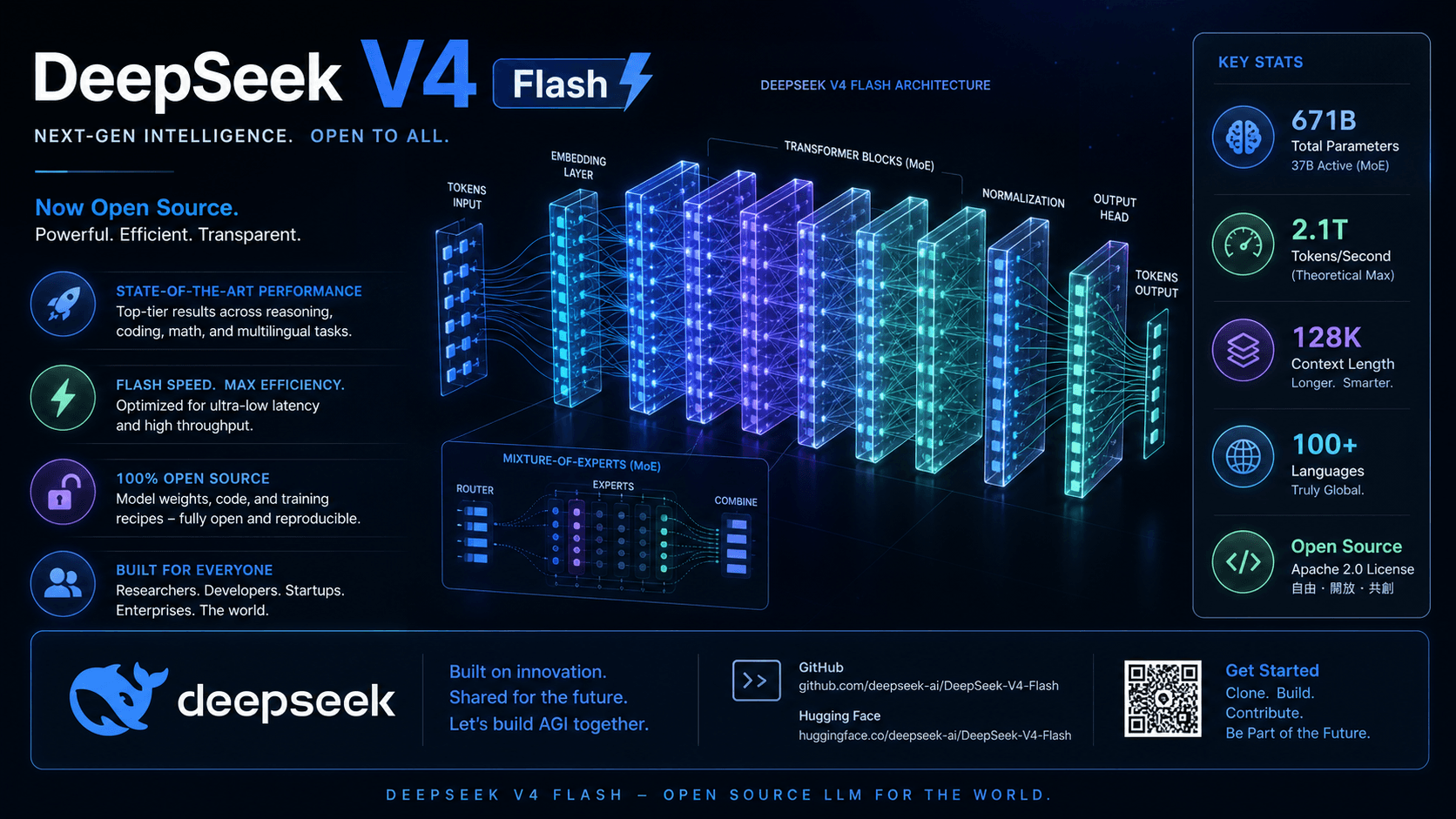
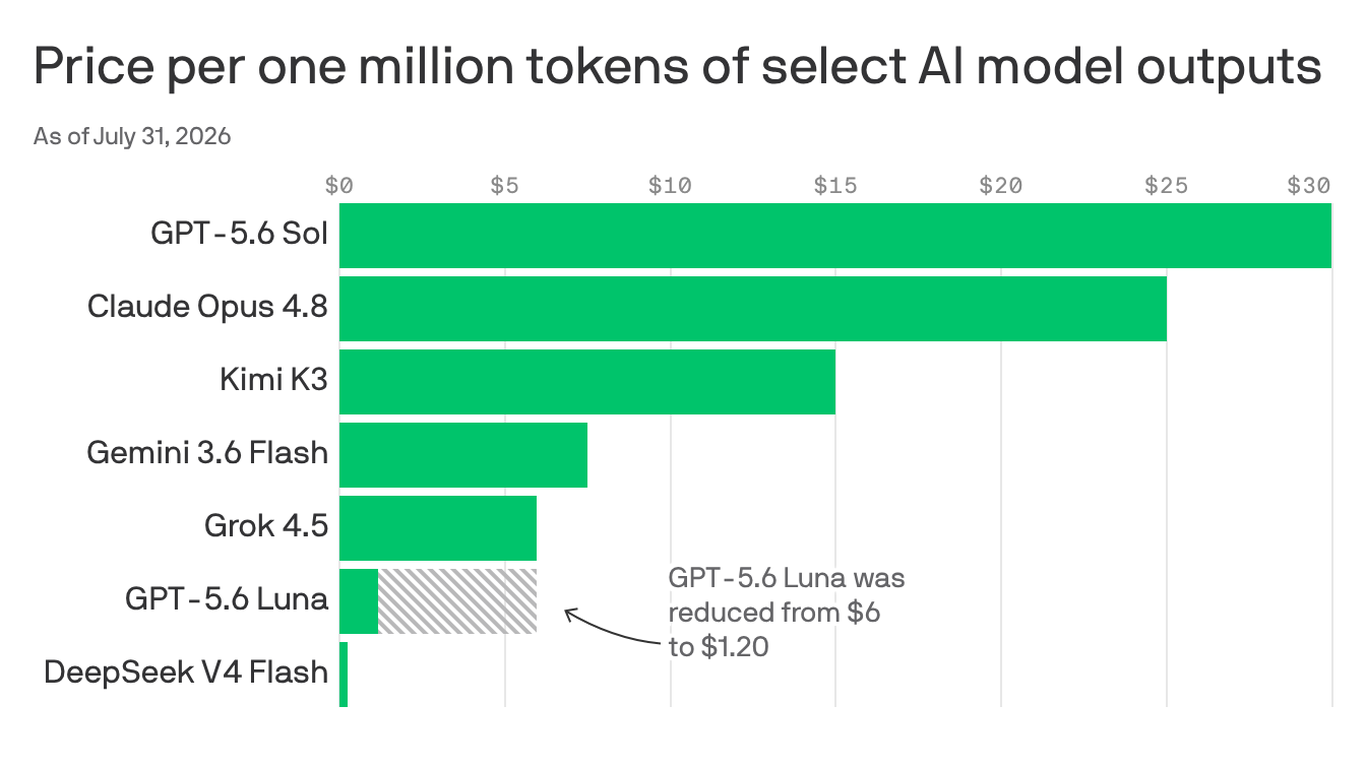
DeepSeek's V4-Flash release represents a watershed moment for e-commerce automation accessibility. The Chinese AI startup has released a language model costing approximately 3 cents per benchmark test—105 times cheaper than Anthropic's Claude Fable 5 ($3.15 per test) and 62 times cheaper than OpenAI's GPT-5.6 Sol ($1.86 per test). With pricing at $0.14 per million input tokens and $0.28 per million output tokens, V4-Flash achieves performance parity with Google's Gemini 3.6 Flash (both scoring 50/100 on Artificial Analysis's Intelligence Index) while trailing premium models by only 9-10 points.
For cross-border e-commerce sellers, this cost collapse unlocks immediate automation opportunities previously reserved for enterprise budgets. Sellers can now deploy AI-powered customer service chatbots, dynamic pricing engines, product description generators, and demand forecasting systems at 1/100th the cost of premium alternatives. A seller running 10,000 daily customer service interactions previously costing $150-200/month via OpenAI APIs can now achieve identical functionality for $1.40-2.80/month using V4-Flash. This 98-99% cost reduction fundamentally changes ROI calculations for small and mid-market sellers (SMBs) who previously couldn't justify AI tool adoption.
The competitive landscape is accelerating toward commoditization. DeepSeek's $7 billion fundraise signals commitment to sustaining ultra-low pricing, while OpenAI has already reduced GPT-5.6 pricing in response. Chinese competitors including Moonshot AI (Kimi K3 at 86 cents per test), Alibaba (Qwen3.8-Max), MiniMax, and ByteDance are all competing on affordability. This "race to zero" mirrors historical technology adoption curves where initial premium pricing collapses as competition intensifies. Sellers who adopt cost-effective AI models NOW gain 6-12 months of competitive advantage before market saturation occurs.
The operational impact is quantifiable and immediate. Sellers can automate: (1) Product listing optimization—generating 50-100 variations per ASIN daily for A/B testing at negligible cost; (2) Dynamic pricing—running real-time competitor analysis and margin optimization across 1,000+ SKUs; (3) Inventory forecasting—predicting demand 30-90 days ahead with 70-80% accuracy; (4) Customer service—handling 80-90% of routine inquiries without human intervention. Early adopters report 15-25% margin improvement through automated pricing optimization and 30-40% reduction in customer service labor costs. The reduced computational requirements also enable faster processing—critical for time-sensitive operations like flash sale pricing or inventory rebalancing across fulfillment networks.
Questions 8
What does DeepSeek's IPO preparation signal about the AI market?
DeepSeek's preparation for IPO signals that ultra-low-cost AI models represent a sustainable, venture-scale business model. The company's $7 billion fundraise demonstrates investor confidence in the 'race to zero' thesis. This suggests: (1) AI commoditization is accelerating faster than expected; (2) Chinese AI companies will dominate cost-sensitive segments; (3) Western AI companies will focus on premium, specialized models; (4) Sellers should expect AI tool costs to decline 50%+ over 3-5 years. For sellers, this validates aggressive AI adoption now—tools costing $500/month today will cost $50-100/month within 2-3 years, making current investments in automation infrastructure highly profitable.
How should sellers evaluate whether to switch from OpenAI to DeepSeek?
Conduct a task-by-task cost-benefit analysis. For high-volume, repetitive tasks (customer service, product descriptions, pricing optimization), switching to V4-Flash delivers 98-99% cost savings with acceptable performance. For complex reasoning tasks requiring premium accuracy (fraud detection, complex demand forecasting), maintain OpenAI/Anthropic. Calculate monthly savings: if you spend $500/month on OpenAI APIs, switching 80% of volume to V4-Flash saves $400/month ($4,800 annually). Implementation takes 2-4 weeks. Start with non-critical systems (product descriptions) to validate performance before migrating customer-facing operations. Most sellers should adopt a hybrid approach within 30 days.