




OPEC+ Completes 1.65M Barrel Production Rollback | Cross-Border Logistics Cost Impact 2026-2027
- Oil price stabilization at $84-90/barrel reduces shipping costs 8-15% for sellers; geopolitical supply risks threaten Q4 2026 logistics reliability across Asia-Pacific and Middle East routes


















Overview
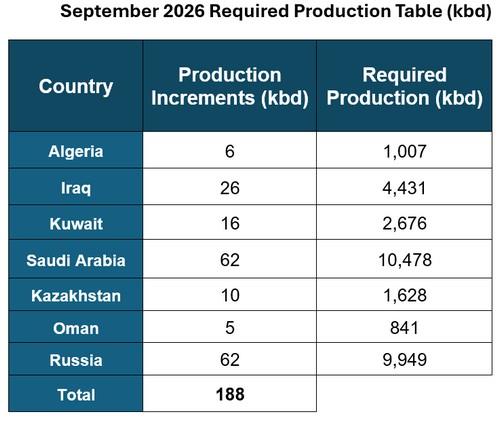
OPEC+ completed its rollback of 2023 production cuts on August 3, 2026, with seven core members approving a final 188,000 barrel-per-day increase for September, reversing 1.65 million barrels per day in voluntary cuts. This marks the sixth consecutive monthly production increase, with Brent crude stabilizing at $90.12/barrel and WTI at $84.67. However, actual supply remains constrained by geopolitical disruptions in the Gulf region (Iran-US-Israel conflicts) and Russia-Kazakhstan (Ukraine-related), limiting the market impact of OPEC's quota increases.
For cross-border e-commerce sellers, this development creates a critical 90-day window (August-October 2026) with competing cost dynamics. The completion of production rollbacks signals potential oil price stabilization, which directly reduces fuel surcharges on international shipping—a major cost component for sellers using air freight (typically 15-25% of shipping cost) and ocean freight (5-12% fuel surcharge). Sellers shipping from China to US/EU markets via air freight could see cost reductions of $0.15-0.35 per kilogram, translating to 8-15% savings on lightweight electronics, apparel, and beauty products. However, the news explicitly warns that geopolitical disruptions affecting Russia, Kazakhstan, and the Strait of Hormuz remain unresolved through year-end 2026, creating supply volatility that could reverse price gains if infrastructure attacks escalate.
The strategic timing window is critical: OPEC's September 6, 2026 meeting will determine Q4 production levels and establish 2027 baselines. Contentious negotiations between Iraq (seeking higher allocations) and other members could result in either further production increases (pushing oil toward $75-80/barrel) or quota freezes (supporting $90-100/barrel). For sellers, this uncertainty means fuel surcharges could swing 5-8% in either direction within 60 days. Sellers relying on time-sensitive inventory (seasonal goods, perishables, fashion) should accelerate shipments before September 6 to lock in current fuel surcharge rates. Conversely, sellers with flexible inventory timelines should delay non-urgent shipments until post-September 6 clarity emerges.
The geopolitical constraint is the critical wildcard. Despite OPEC's production increases, actual market supply has remained constrained due to infrastructure attacks and export disruptions. President Trump's reported agreement to reopen the Strait of Hormuz for commercial traffic could ease tensions, but the news provides no confirmation of implementation timeline. If the Strait remains disrupted, oil could spike to $100-110/barrel despite OPEC's quota increases, devastating shipping economics for sellers with thin margins (5-10% typical in apparel/home goods). Sellers should monitor daily Brent crude prices and Strait of Hormuz traffic reports as leading indicators of shipping cost direction.
Questions 7
What are the specific cost impacts for sellers shipping from China to US vs EU markets?
China-to-US air freight typically costs $0.80-1.20/kg with 15-20% fuel surcharges ($0.12-0.24/kg); current oil stabilization at $84-90/barrel reduces this to $0.10-0.18/kg, saving 8-15% on fuel components. China-to-EU air freight costs $1.00-1.50/kg with similar fuel surcharge percentages, yielding $0.15-0.35/kg savings. Ocean freight (China-to-US: $800-1,200/container; China-to-EU: $1,200-1,800/container) includes 5-12% fuel surcharges, translating to $40-150/container savings at current oil prices. For sellers shipping 100+ containers monthly, current pricing saves $4,000-15,000 monthly compared to $100-110/barrel scenarios. However, EU sellers face additional complexity: if oil prices spike above $95/barrel, combined with potential EU carbon border adjustment mechanisms (CBAM), total logistics costs could increase 10-15%, offsetting any OPEC-driven savings. US sellers have more direct exposure to oil prices without regulatory overlays.
How does the Strait of Hormuz disruption risk affect my supply chain planning?
The Strait of Hormuz handles 21% of global oil trade; disruptions from Iran-US-Israel conflicts directly constrain oil supply despite OPEC's production increases, creating upside price risk. The news explicitly warns that infrastructure attacks are 'expensive and time-consuming to repair,' meaning even temporary closures could spike oil to $100-110/barrel within 48 hours. Sellers should implement dual-route logistics strategies: maintain primary routes through the Strait for cost efficiency ($84-90/barrel pricing) but establish backup routes via Suez Canal or alternative corridors for 10-15% of inventory. President Trump's reported agreement to reopen the Strait for commercial traffic is unconfirmed and could reverse if geopolitical tensions escalate. Monitor daily Strait of Hormuz traffic reports and oil price volatility; if Brent crude spikes above $95/barrel, activate backup logistics routes immediately to avoid 5-8% additional fuel surcharges on new shipments.