


US Manufacturing Boom Drives Supply Chain Relief | Sellers Face Pricing Volatility & Geopolitical Risks
- ISM PMI hits 55.6 (4-year high), 7-month expansion streak signals demand surge but 71.1% price index threatens margins for electronics, machinery, and computer products sellers


































Overview
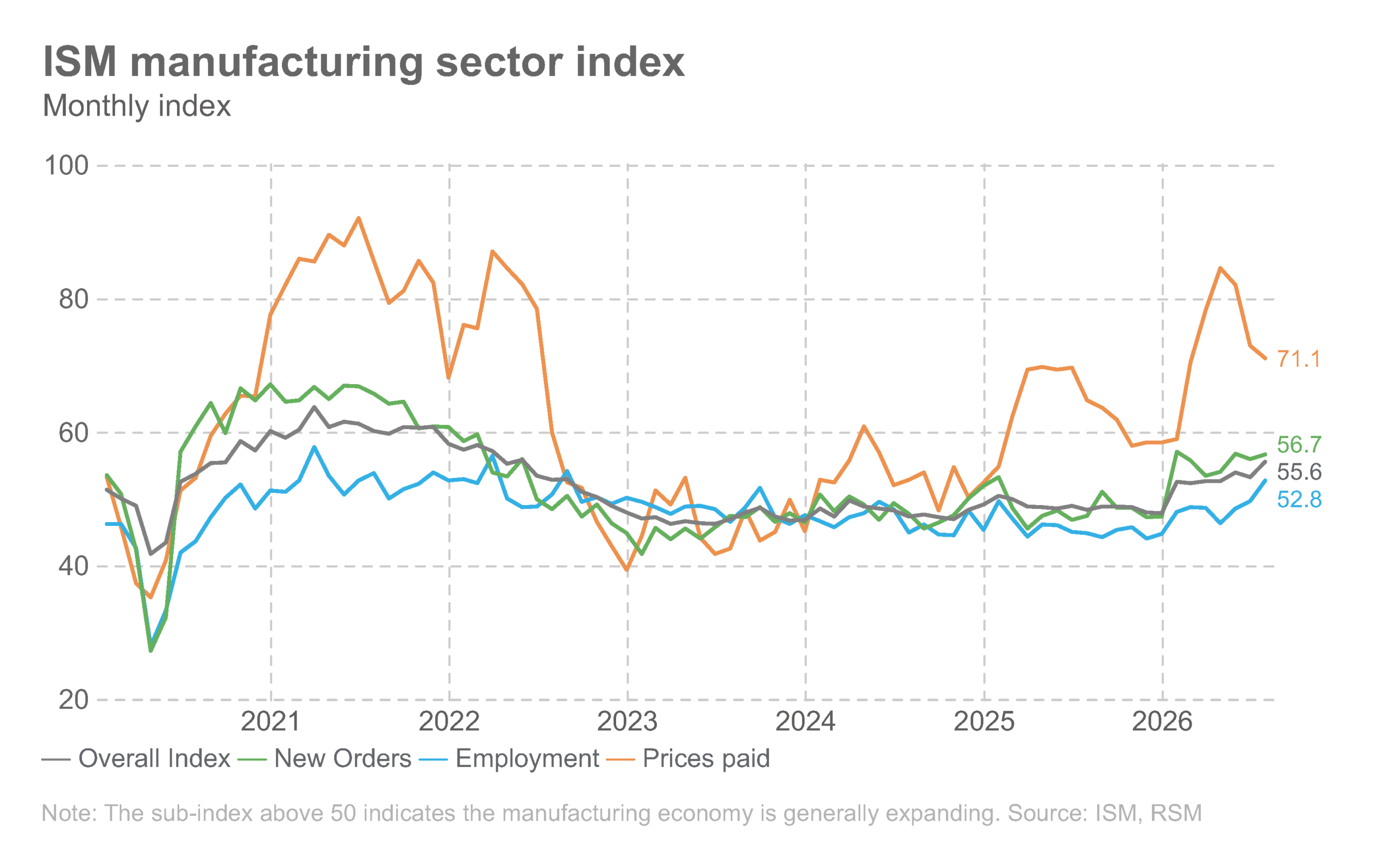
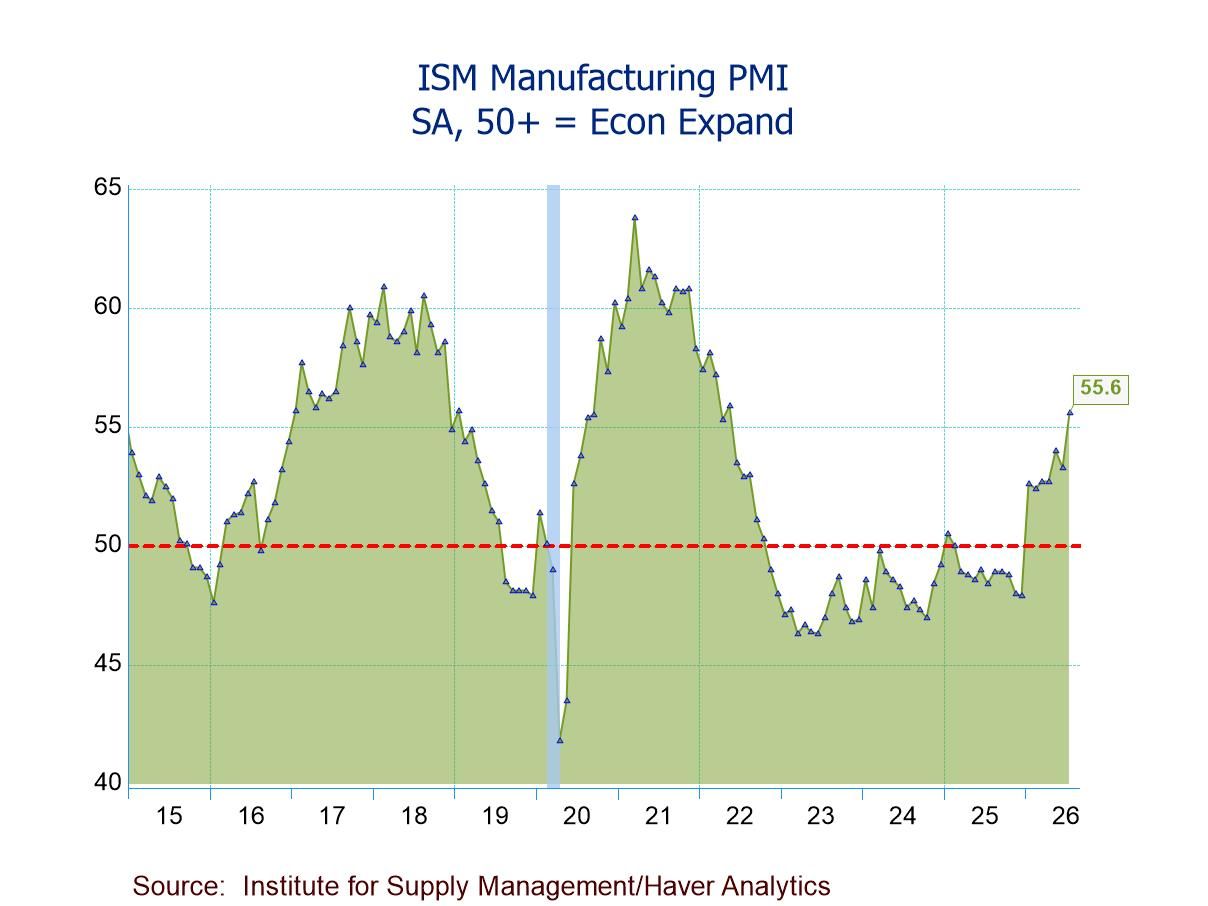
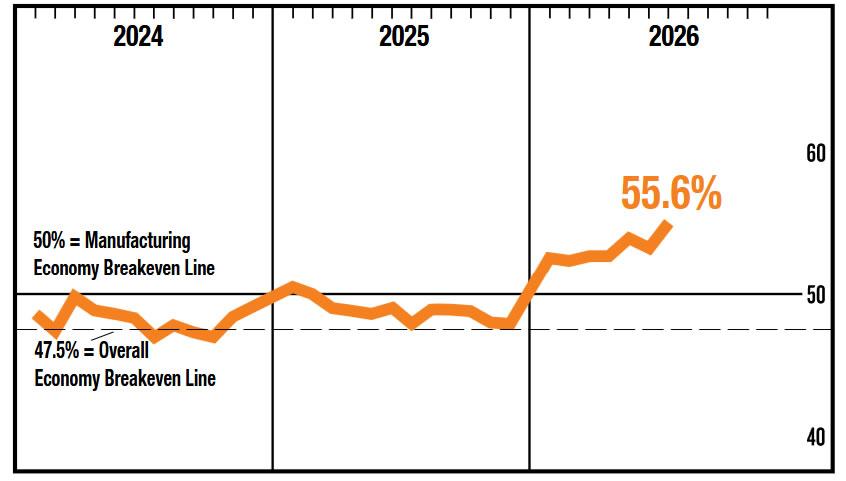
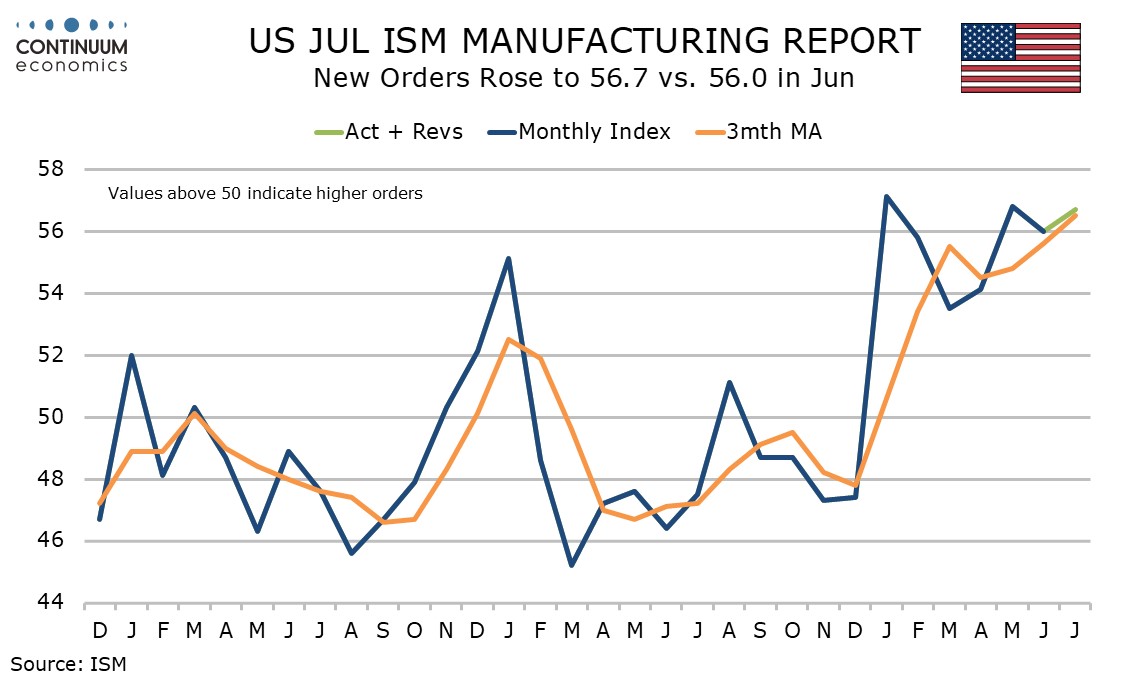
The US manufacturing sector expanded for the seventh consecutive month in July 2026, with the ISM Manufacturing PMI reaching 55.6—the highest level since May 2022—signaling robust economic growth and strong demand conditions. The New Orders Index climbed to 56.7, Production Index surged 6.3 points to 58.5, and Employment Index reached 52.8 (first expansion in 33 months with 60% of manufacturers hiring). This represents the fastest factory growth in over four years, exceeding Wall Street forecasts of 54.0 and indicating sustained economic expansion across 21 consecutive months.
However, this headline strength masks critical headwinds directly impacting cross-border e-commerce sellers. The Prices Index remained elevated at 71.1%—marking the 22nd consecutive month of price increases—with 57% of negative survey comments citing pricing volatility "worse than pandemic era." Manufacturing executives in primary metals and electrical equipment sectors report unprecedented chaos, with one metals producer stating "no normalcy in sight." Geopolitical tensions (43% of negative comments) are straining supply chains through Red Sea, Strait of Hormuz, and Suez Canal disruptions, forcing rerouted shipments and extended lead times (22% of concerns). Tariff uncertainties (18% of comments) compound cost pressures, while the Supplier Deliveries Index at 58.9% indicates the eighth consecutive month of slowing deliveries despite surging demand—a classic supply-demand mismatch.
For sellers, this creates a bifurcated opportunity-risk landscape. Positive signals: Customers' Inventories Index at 40.7% ("too low" territory) suggests strong future demand and restocking cycles; 15 of 16 manufacturing sectors reported growth, with Transportation Equipment, Machinery, Computer & Electronic Products, and Food/Beverage/Tobacco leading expansion; AI infrastructure and semiconductor demand are intensifying. This translates to increased order volumes and potential margin expansion for sellers in these categories. However, the elevated price environment and supply constraints pose acute risks. Sellers sourcing from US manufacturers face 8-15% cost increases due to input price volatility and rerouted logistics; lead times are extending (22% of manufacturers report delays), threatening inventory replenishment cycles; and tariff uncertainty (18% of concerns) creates pricing unpredictability. The 62% negative-to-38% positive comment ratio reveals underlying anxiety despite headline growth. Sellers relying on electronics, primary metals, or machinery components face the most acute pressure, while those in food/beverage and consumer goods may benefit from demand tailwinds. The sustained expansion trajectory (7 consecutive months) suggests this environment will persist through Q3-Q4 2026, requiring immediate supply chain and pricing strategy adjustments.
Questions 8
What does ISM Manufacturing PMI 55.6 mean for e-commerce sellers sourcing from US manufacturers?
An ISM PMI of 55.6 indicates strong manufacturing expansion and robust demand, which typically translates to increased production capacity and potential order fulfillment improvements. However, the elevated Prices Index at 71.1% (22nd consecutive month of increases) means sellers should expect 8-15% cost increases on sourced goods. The Supplier Deliveries Index at 58.9% signals slowing deliveries despite high demand, indicating lead times are extending. Sellers should lock in pricing contracts immediately and diversify suppliers to mitigate delays.
How do Red Sea and Suez Canal disruptions affect cross-border e-commerce shipping costs?
The news reports that 43% of manufacturers cite geopolitical tensions and rerouted shipments as major concerns, with transportation equipment makers facing increased costs from alternative routing. Rerouting through longer ocean passages (avoiding Red Sea/Suez) adds 2-4 weeks to transit times and increases shipping costs by 15-25% depending on origin/destination. Sellers should expect higher landed costs for inventory sourced from Asia or Europe; consider air freight for high-margin items; and build 4-6 week buffer inventory to absorb delays. Monitor shipping indices weekly for rate changes.