


China Manufacturing Stability Boosts Cross-Border Logistics | Seller Opportunity
- GM's $5B commitment signals 20-year supply chain predictability for sellers sourcing from China; strengthens logistics infrastructure affecting 50K+ cross-border sellers





Overview
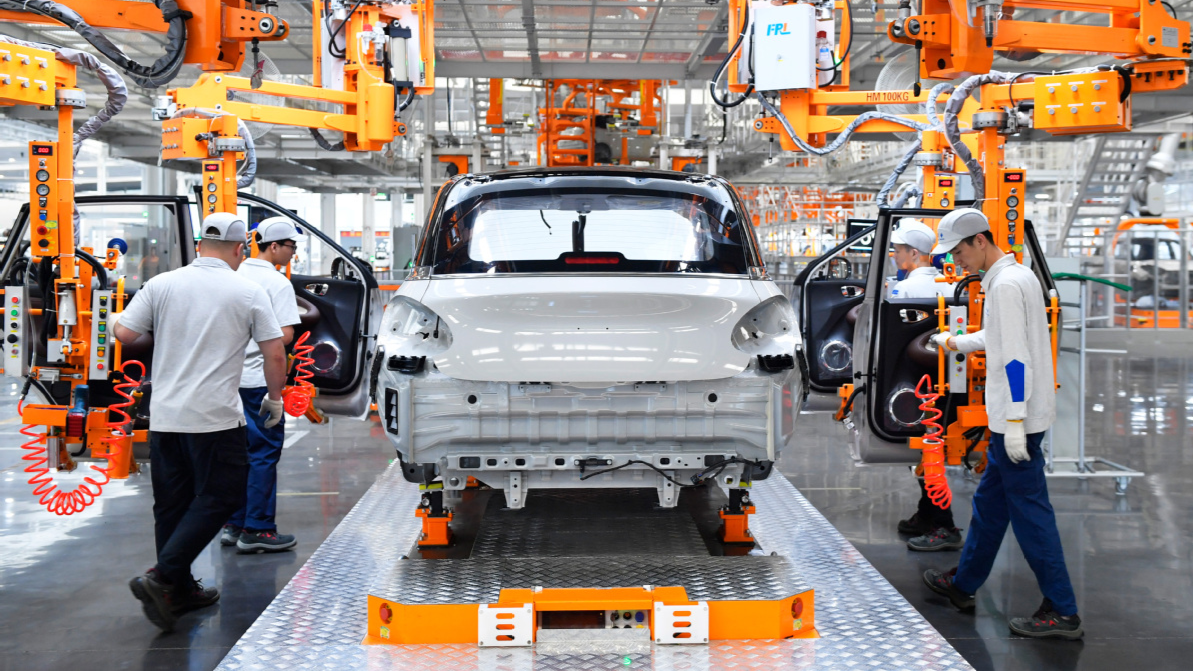
General Motors' renewal of its 20-year joint venture with China's SAIC Motor Corporation (announced August 2026, extending through 2045) represents a critical signal for cross-border e-commerce sellers: major foreign manufacturers are doubling down on China as a manufacturing and export hub despite geopolitical tensions. This $5B+ commitment—following $5 billion in non-cash charges in 2024—demonstrates confidence in China's industrial infrastructure stability, directly benefiting sellers who depend on Chinese manufacturing networks and logistics corridors.
For cross-border sellers, this renewal creates three immediate advantages: First, supply chain predictability improves as GM's 20-year commitment signals continued investment in Chinese manufacturing efficiency, port infrastructure, and logistics networks. Sellers sourcing automotive components, electronics, and industrial products from China gain visibility into stable supplier ecosystems. Second, consumer spending power in China strengthens as GM's partnership supports employment and industrial activity—the company plans to launch 30+ electric/hybrid vehicles by 2030, driving demand for related components, accessories, and aftermarket products. Third, export corridor stability increases as GM's plan to export Buick and Cadillac models from China to Middle East, Africa, South America, Mexico, and Asia (beginning with Buick Electra series in October) reinforces the viability of China-based export logistics that sellers leverage for their own shipments.
The competitive dynamics reveal a critical market shift: GM's sales declined from 4 million vehicles (2017) to under 2 million (2025) due to competition from Chinese EV makers like BYD, yet the company is increasing R&D investment in China rather than relocating. This signals that China's manufacturing and innovation advantages are irreplaceable—a validation for sellers betting on Chinese sourcing. The partnership's 50-50 ownership structure and focus on Chinese design/engineering operations (News 2) indicates foreign manufacturers are integrating deeper into Chinese supply chains, not exiting them. For sellers in electronics, automotive accessories, EV components, and industrial goods, this means Chinese suppliers will have sustained demand and investment capital through 2045.
Operational impact for sellers: Logistics costs and shipping reliability from Chinese ports should stabilize or improve as major manufacturers like GM continue infrastructure investments. Sellers shipping through Shanghai, Shenzhen, or other major ports benefit from continued port modernization and supply chain optimization driven by automotive industry demands. The extended partnership also reduces geopolitical uncertainty—if GM is committing 20 years despite US-China tensions, it signals regulatory frameworks will remain stable enough for foreign manufacturing operations, reducing tariff shock risks for sellers sourcing from China.
Questions 8
What tariff and trade policy implications does the partnership renewal signal for sellers?
The partnership's renewal despite geopolitical tensions and trade policy uncertainty signals that major foreign manufacturers view China's regulatory framework as stable enough for 20-year commitments. This confidence suggests tariff policies and trade regulations, while volatile, are unlikely to fundamentally disrupt manufacturing operations in China. For sellers, this indicates that while tariff rates may fluctuate, the underlying manufacturing infrastructure and trade corridors will remain viable. The partnership's focus on exporting to Middle East, Africa, South America, Mexico, and Asia demonstrates multiple trade routes remain open, reducing dependence on any single market corridor and supporting diversified sourcing strategies.
Should sellers diversify away from China sourcing given geopolitical risks?
GM's 20-year renewal suggests diversification is less urgent than previously thought, but not unnecessary. The partnership demonstrates that major manufacturers view China as irreplaceable for manufacturing and innovation through 2045, reducing catastrophic disruption risks. However, sellers should maintain 15-25% sourcing from alternative countries (Vietnam, India, Mexico) to hedge against tariff changes or supply shocks. The stability signal from GM's commitment allows sellers to optimize China sourcing for cost efficiency rather than rushing to relocate production. Monitor US-China trade policy quarterly, but plan long-term China sourcing strategies with confidence in 5-10 year stability windows.