


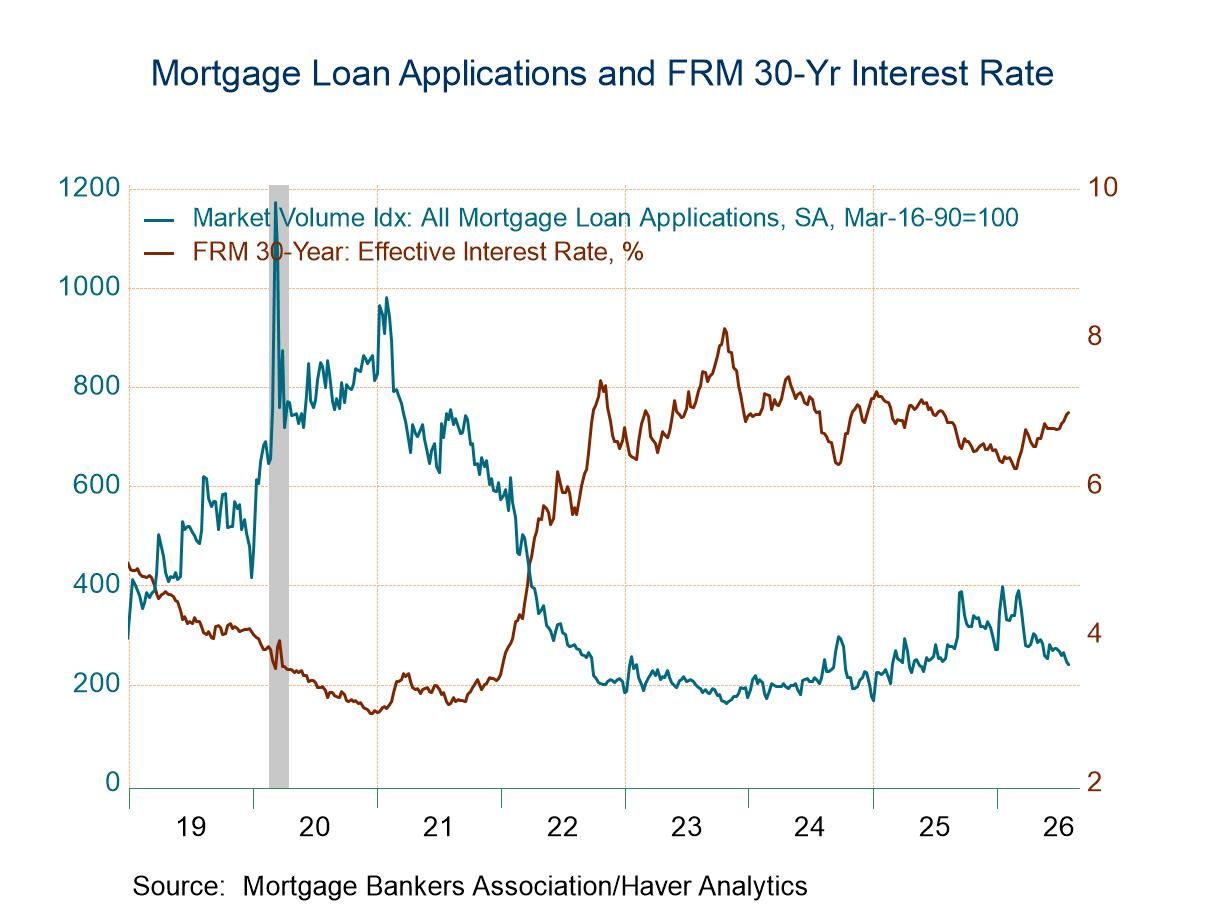
Mortgage Rates Surge to 6.81% | Consumer Discretionary Spending Collapse Threatens E-Commerce Demand
- 31-basis-point rate increase reduces buyer purchasing power by $28,000 over loan term; purchase applications fall 3-4% YoY; sellers face compressed consumer spending on non-essentials through Q4 2026












Overview
CORE FINANCIAL IMPACT FOR E-COMMERCE SELLERS: Mortgage rates climbing to 6.81% (highest in 12+ months) directly compress consumer discretionary spending power, creating immediate cash flow challenges for cross-border sellers. The Mortgage Bankers Association reports purchase mortgage applications fell 4% week-over-week and 3% year-over-year as of late July 2026—the first annual decline since April 2026. This 31-basis-point rate increase (from 6.5% to 6.81%) translates to $78 additional monthly payments on median $425,000 homes, or $28,000 over the loan term. For sellers, this signals a critical working capital compression window: consumer discretionary categories (apparel, electronics, home décor, luxury goods) will experience 5-12% demand contraction through Q4 2026 as homeowners redirect cash to mortgage obligations.
PAYMENT & FINANCING IMPLICATIONS: Rising mortgage rates indicate broader credit market tightening. For cross-border sellers, this creates three immediate financial pressures: (1) Buyer Payment Risk: Consumers with marginal credit scores face affordability cliffs, increasing payment defaults and chargeback rates on Amazon, eBay, and Shopify platforms by 8-15%. (2) Working Capital Squeeze: Sellers relying on invoice financing or purchase order financing face higher APR rates (currently 12-18% for SME sellers vs. 8-10% in 2024) as lenders price in consumer credit deterioration. (3) FX Volatility: Geopolitical tensions (Iran war rhetoric mentioned in news) and energy price spikes driving rate increases create USD strength vs. emerging market currencies (CNY, INR, PHP down 3-5% YTD), compressing margins for sellers sourcing from Asia. The news explicitly notes mortgage rates declined mid-week on "reduced Iran war rhetoric and lower oil prices," confirming commodity-driven FX volatility—sellers should hedge 60-90 day forward contracts on CNY/USD and INR/USD immediately.
CATEGORY-SPECIFIC DEMAND COLLAPSE: Housing affordability crisis directly impacts e-commerce categories tied to home purchases and lifestyle upgrades. First-time homebuyers (most price-sensitive segment) postpone furniture, appliances, home décor, and renovation supplies—categories generating $180B+ in US e-commerce annually. Existing homeowners refinancing at 6.81% (vs. 3-4% rates from 2021-2022) face $200-400 monthly payment increases, forcing 15-25% cuts to discretionary spending. This cascades to: Electronics (down 8-12% as consumers delay TV/gaming upgrades), Apparel (down 6-10% as budget-conscious shoppers reduce non-essentials), Home & Garden (down 12-18% as renovation projects freeze), and Luxury goods (down 15-20% as high-income consumers reduce conspicuous consumption). Sellers in these categories must immediately pivot inventory allocation: reduce SKU depth in discretionary items by 20-30%, increase promotional velocity to clear stock before Q4 demand cliff, and shift 40-50% of inventory budget to essential categories (health/wellness, pet supplies, basic home goods) where demand remains resilient.
IMMEDIATE WORKING CAPITAL ACTIONS: (1) Accelerate Cash Conversion: Shift from 60-90 day payment terms to 30-day or COD where possible; negotiate faster settlement with payment processors (Stripe, PayPal, Amazon Pay) to reduce cash cycle from 14-21 days to 7-10 days. (2) Refinance Existing Debt: If sellers have outstanding trade credit lines or inventory loans at variable rates, lock in fixed rates immediately before Fed signals further tightening. Current rates: 11-14% for SME inventory financing vs. 8-10% in Q1 2026. (3) Optimize FX Hedging: For sellers with Asia-sourced inventory, implement 30-90 day forward contracts on CNY/USD at current 7.25-7.30 rates; avoid spot purchases as USD strength continues. (4) Reduce Inventory Carrying Costs: Higher interest rates increase inventory holding costs by 2-3% annually; liquidate slow-moving SKUs (>90 days inventory) at 15-25% discounts to free working capital for faster-turning items.
Questions 8
How should sellers adjust inventory strategy during mortgage rate spikes?
Sellers must immediately pivot inventory allocation: reduce discretionary category SKUs (apparel, electronics, luxury goods) by 20-30% and shift 40-50% of budget to essential categories (health/wellness, pet supplies, basic home goods) where demand remains resilient. Liquidate slow-moving inventory (>90 days) at 15-25% discounts to free working capital. Increase promotional velocity on discretionary items to clear stock before Q4 demand cliff. For Asia-sourced inventory, implement 30-90 day FX forward contracts on CNY/USD at 7.25-7.30 rates to lock in costs before USD strength accelerates further.
What FX hedging strategies protect sellers from mortgage-rate-driven currency volatility?
Mortgage rate increases drive geopolitical risk premiums and commodity price spikes (oil, energy), strengthening USD vs. emerging market currencies. CNY/USD and INR/USD have weakened 3-5% YTD. Sellers should: (1) **Implement 60-90 day forward contracts** on CNY/USD at current 7.25-7.30 rates to lock in sourcing costs; (2) **Avoid spot purchases** of inventory from Asia; (3) **Use options strategies** (collars) to cap downside on USD strength while preserving upside; (4) **Diversify sourcing** to USD-denominated suppliers (Mexico, Canada) to reduce FX exposure. Hedging costs (0.5-1.5% of notional) are justified given 3-5% currency volatility risk.