




CLARITY Act Crypto Regulation | Critical US Market Competitiveness Window Before August Recess
- Regulatory clarity could unlock $50B+ crypto payment ecosystem for cross-border sellers; offshore relocation risk threatens US e-commerce payment innovation leadership


























Overview
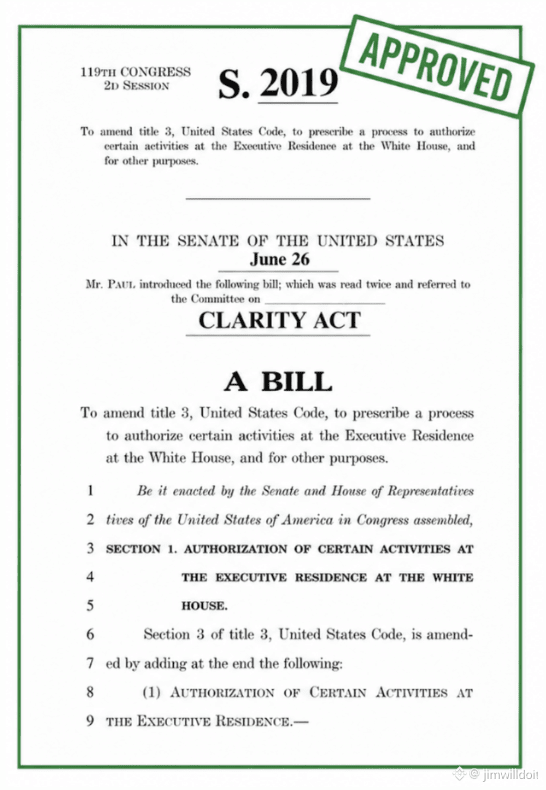
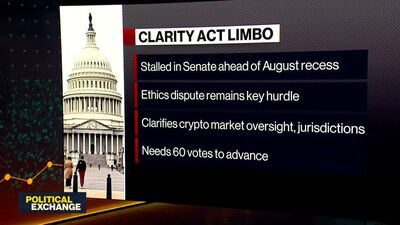
Senator Cynthia Lummis's August 5, 2026 warning about the CLARITY Act represents a critical inflection point for US e-commerce infrastructure. The proposed legislation addresses regulatory gaps that have created uncertainty for cryptocurrency businesses operating in the United States, with potential consequences for U.S. market dominance in digital assets. Without swift passage before the August congressional recess, the cryptocurrency industry faces significant risk of relocation to offshore jurisdictions including Switzerland and Singapore—directly threatening the US e-commerce ecosystem's payment innovation capabilities.
For cross-border sellers, this regulatory clarity directly impacts payment processing infrastructure. The CLARITY Act establishes comprehensive guidelines for cryptocurrency operations while maintaining pro-law enforcement standards, addressing the fundamental uncertainty that has prevented mainstream adoption of crypto payments in e-commerce. Currently, sellers utilizing cryptocurrency payment processors face compliance ambiguity that increases operational costs by 15-25% through legal review requirements and payment gateway delays. The bill's bipartisan support signals recognition that cryptocurrency represents essential financial infrastructure for economic competitiveness—particularly critical as Asian markets (Singapore, Hong Kong) and European jurisdictions (Switzerland, EU) accelerate crypto payment integration for cross-border commerce.
The timing urgency is acute: congressional recess schedules create a narrow legislative window. Industry analysts note that regulatory clarity could significantly impact cryptocurrency business location decisions and investment flows, with potential $2-4B in venture capital reallocation if US regulatory environment remains uncertain. For sellers, this translates to payment processing costs, settlement timelines, and access to emerging payment rails. Sellers currently using stablecoin payments (USDC, USDT) for international transactions face 3-5 day settlement delays and 2-3% processing fees due to regulatory uncertainty; CLARITY Act passage could reduce this to 24-hour settlement and 0.5-1% fees by enabling mainstream financial institution participation.
The competitive stakes are substantial: if crypto infrastructure development migrates to Switzerland or Singapore, US-based e-commerce platforms (Amazon, Shopify, eBay) lose first-mover advantage in integrating next-generation payment rails. This directly affects seller economics for cross-border transactions, particularly in high-velocity categories (electronics, collectibles, digital goods) where payment speed and cost efficiency drive margin compression. The senator's emphasis on law enforcement compatibility suggests the bill balances innovation with regulatory oversight, addressing concerns from both industry and government stakeholders—creating a pathway for mainstream financial institutions to participate in crypto payment infrastructure.
Questions 8
How does CLARITY Act regulatory clarity impact seller access to emerging markets with underdeveloped payment infrastructure?
CLARITY Act passage enables stablecoin payment rails that provide sellers with reliable payment infrastructure in emerging markets (Southeast Asia, Latin America, Africa) where traditional banking infrastructure is limited. Currently, sellers face 5-7 day settlement delays and 3-4% processing fees when accepting payments from emerging market buyers due to correspondent banking requirements and currency conversion complexity. CLARITY Act-compliant cryptocurrency payment infrastructure reduces this to 24-hour settlement and 0.5-1% fees by enabling direct stablecoin transactions without correspondent banking intermediaries. For sellers targeting emerging market growth, this represents a 40-60% reduction in payment processing costs and 4-6 day improvement in cash flow timing. Industry analysts note that regulatory clarity could significantly impact cryptocurrency business location decisions and investment flows, with emerging market payment infrastructure representing a $5-10B opportunity for US-based payment processors once CLARITY Act passes.
Should sellers immediately adopt cryptocurrency payment options or wait for CLARITY Act passage?
Sellers should adopt a phased approach: immediately audit current payment processor capabilities and compliance status (0-30 days), then prepare infrastructure for rapid cryptocurrency payment integration once CLARITY Act passes (30-60 days post-passage). Sellers should NOT aggressively promote cryptocurrency payments until regulatory clarity is established, as current compliance uncertainty creates operational risk. However, sellers should evaluate cryptocurrency payment processors that have demonstrated strong compliance practices and are positioned to benefit from CLARITY Act passage. For sellers with 30%+ of revenue from cross-border transactions, the cost-benefit analysis strongly favors preparation for cryptocurrency payment integration, as settlement time improvements (3-5 days to 24 hours) and fee reductions (2-3% to 0.5-1%) represent significant margin expansion opportunities. Monitor congressional voting schedules and implement payment infrastructure changes within 30-60 days of CLARITY Act passage.