



Tariff Refund Disparity 2026 | Importers Gain $166B While Sellers Face New 10-12.5% Duties
- $100B refunded to 2,000+ corporate importers; new Section 301 tariffs on 80 countries create immediate cost pressures for cross-border sellers






Overview
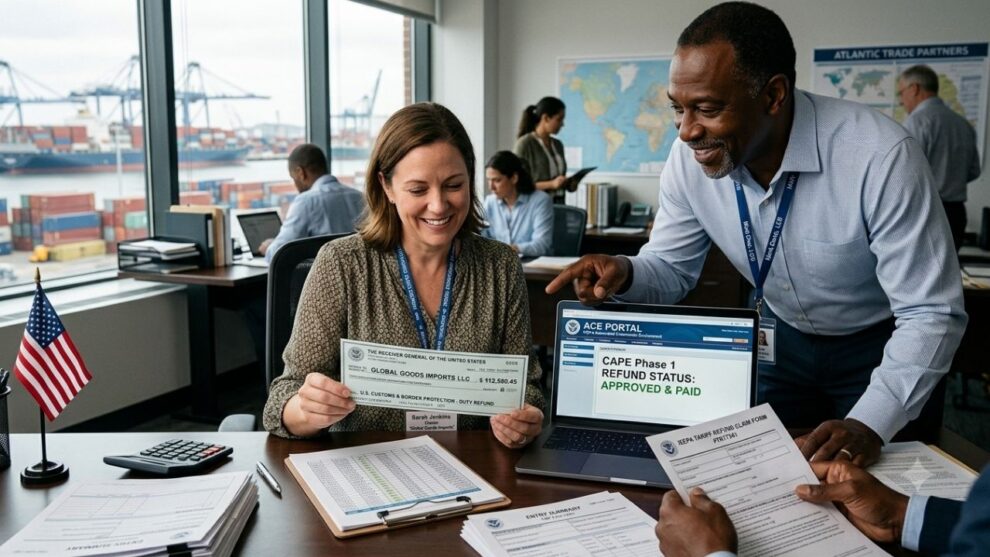
The U.S. tariff landscape has fundamentally shifted following the February 2026 Supreme Court ruling that struck down Trump's "Liberation Day" tariffs, creating a bifurcated opportunity for importers and customs brokers while simultaneously introducing new compliance risks for cross-border sellers. The government is processing approximately $166 billion in refund claims, with $100 billion (60%) already distributed to corporate importers including Apple ($2.2B), Amazon ($600M), and Nike ($300M), plus 2,000+ additional importers and logistics providers like FedEx and Costco. However, this refund windfall is exclusively available to parties who directly paid tariffs—importers and customs brokers—while consumers and small-to-medium sellers who absorbed tariff costs through higher product prices receive zero compensation, despite the Tax Foundation estimating households paid an average of $1,000 in tariff-related costs annually.
The immediate threat: New tariffs on 80 countries (10-12.5% rates) under Section 301 of the Trade Act of 1974 now target the UK, Mexico, Canada, Australia, India, China, and EU member states, covering 99.4% of U.S. imports. This creates a critical window for sellers: while large importers leverage refund capital to absorb new tariff costs, small-to-medium sellers (SMEs) importing directly from affected countries face margin compression of 8-15% depending on product category and sourcing country. Electronics, apparel, and home goods sellers sourcing from China, India, and Vietnam face the steepest cost increases. The refund processing continues through August 2026 with $40 billion still outstanding and $650 million in interest accruing monthly, indicating CBP's processing delays will extend through Q3 2026.
Strategic implications for seller segments: Large importers receiving refunds can reinvest capital into inventory expansion, price reductions to capture market share, or tariff hedging strategies. Amazon's commitment to issue customer refunds in "limited circumstances" signals platform-level tariff pass-through transparency, creating competitive pressure on sellers to disclose tariff impacts. Costco's strategy of absorbing refunds into lower member prices demonstrates how major retailers are using refund capital to strengthen customer loyalty rather than margin expansion. Meanwhile, 25 U.S. states have sued the Trump administration arguing the new Section 301 tariffs are unconstitutional replacements for the struck-down duties, creating legal uncertainty that could invalidate new tariffs within 6-18 months. This litigation window presents a critical timing opportunity: sellers can delay sourcing decisions or negotiate extended payment terms with suppliers until the Court of International Trade rules on the constitutionality of the new tariffs (expected Q4 2026-Q1 2027).
Operational impact by seller type: Direct importers can file CBP refund claims immediately for duties paid on struck-down tariffs (deadline likely Q4 2026), recovering 5-12% of import costs from 2024-2026 shipments. Third-party sellers using FBA or fulfillment services should audit historical invoices to identify tariff charges embedded in landed costs—Amazon's CFO indicated the company will "proactively contact affected customers," suggesting seller reimbursement may follow. Sellers in high-tariff categories (electronics 15-25% tariff rates, apparel 12-18%, home goods 10-15%) should immediately model the impact of new 10-12.5% Section 301 duties on gross margins and adjust pricing strategies accordingly. The complexity of multiple tariff rounds and varying corporate absorption rates means sellers cannot assume historical tariff pass-through rates will apply to new duties.
Questions 8
Should I shift sourcing away from China to avoid new tariffs?
The new Section 301 tariffs affect 80 countries covering 99.4% of U.S. imports, so geographic diversification alone won't eliminate tariff exposure. However, Vietnam, India, and Mexico face lower tariff rates than China in certain categories. Vietnam benefits from lower apparel tariffs (8-12% vs. 15-18% from China), while Mexico has USMCA advantages for electronics and automotive components. India offers competitive rates for pharmaceuticals and chemicals. Before committing to sourcing shifts, wait for the Court of International Trade ruling on the constitutionality of new Section 301 tariffs (expected Q4 2026-Q1 2027). If tariffs are invalidated, sourcing shifts will prove unnecessary and costly. Negotiate extended supplier payment terms (60-90 days) to preserve flexibility until the legal outcome is clear.
Which product categories face the highest tariff cost increases?
Electronics, apparel, and home goods face the steepest tariff impacts. Electronics sourced from China currently face 15-25% combined tariff rates and will see additional 10-12.5% Section 301 duties, compressing margins by 12-18% for sellers. Apparel faces 12-18% combined rates, and home goods 10-15%. Conversely, products sourced from Mexico and Canada (USMCA partners) may see lower tariff exposure if you can shift sourcing. The Tax Foundation estimates households absorbed $1,000 in annual tariff costs, indicating significant consumer price sensitivity—sellers in high-tariff categories should model price elasticity and consider absorbing 3-5% of tariff costs to maintain market share.