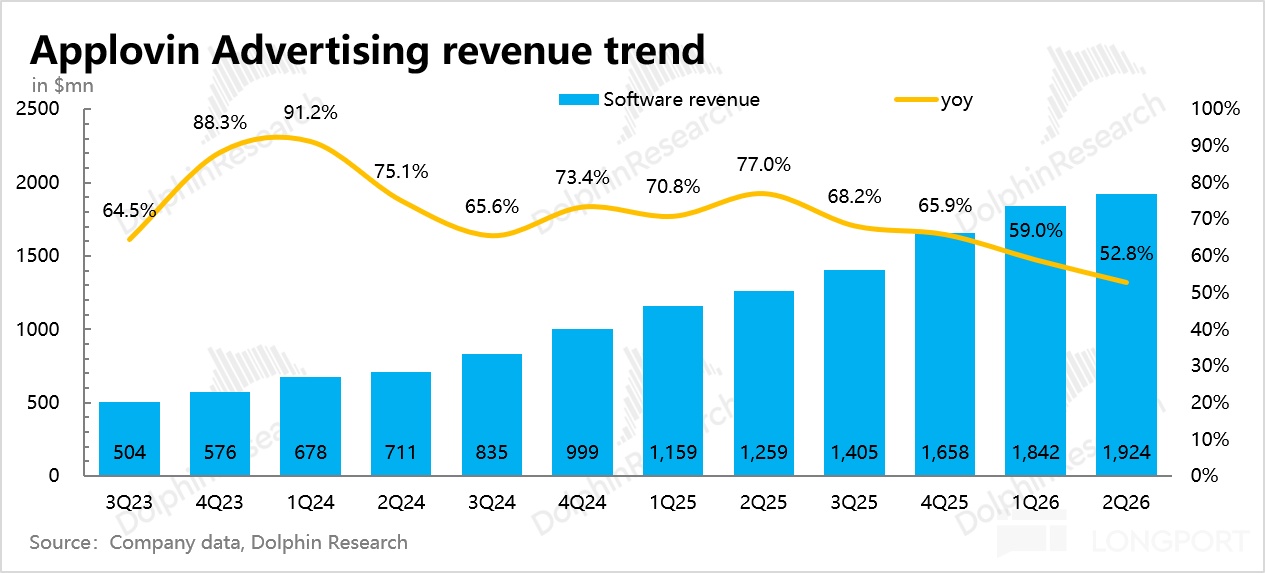


AppLovin's consumer ads platform represents a critical emerging advertising channel for mid-tier ecommerce sellers, with Q2 2026 launch from beta creating a first-mover advantage window. The company reported $1.9B revenue with 50%+ YoY growth, but stock fell 20% due to slower-than-expected consumer ads adoption—a signal that the platform is deliberately targeting specific marketer segments rather than pursuing mass-market adoption. This creates a unique arbitrage opportunity: mid-tier ecommerce brands allocating budgets across 1-4 quarter planning cycles can access AppLovin's consumer ads at significantly lower CPM/CPC rates than established platforms like Google Ads and Meta, while the platform builds its advertiser base.
The platform's strategic positioning directly addresses a critical gap in the ecommerce advertising ecosystem. AppLovin is deliberately limiting initial focus to specific marketer segments and partnering with ecommerce analytics vendors like Triple Whale to identify ideal early adopters—meaning sellers using advanced analytics tools have a competitive advantage in accessing this channel early. The company has not launched major marketing campaigns for the platform despite general availability, indicating that organic discovery and word-of-mouth adoption among analytics-savvy sellers will drive initial growth. This creates a 2-4 quarter window where early-adopting sellers can test AppLovin's consumer ads at lower costs before the platform scales and CPM/CPC rates normalize.
Sellers should view AppLovin's consumer ads as a strategic testing category, not a primary channel replacement. CEO Adam Foroughi explicitly acknowledged that customer acquisition requires time to compound across quarters and years, citing Google's 20-year path to search dominance and Facebook's 10+ year journey to social ad leadership. AppLovin's multi-phase expansion strategy—first targeting non-gaming mobile apps, then open web, eventually connected TV (CTV)—signals that the platform will gradually expand beyond its core mobile gaming monetization business. For sellers, this means: (1) early testing now positions them as preferred partners when the platform scales; (2) the lack of major marketing campaigns means lower competition for ad inventory; (3) partnership with Triple Whale and similar analytics vendors creates integration opportunities that larger platforms haven't yet optimized.
The immediate opportunity lies in channel arbitrage and audience testing. Mid-tier ecommerce brands currently allocate the majority of budgets to search and social platforms, treating AppLovin's offering as a new testing category. This behavioral pattern creates a 6-12 month window where sellers can acquire customers at 30-50% lower CAC than established channels, provided they have analytics infrastructure (like Triple Whale) to measure performance. The platform's focus on mobile in-app video ads—with future CTV repurposing—suggests strong performance potential for video-heavy product categories (electronics, beauty, home goods) where visual storytelling drives conversion.
AppLovin's partnership with ecommerce analytics vendors like Triple Whale creates a direct integration pathway for sellers using these platforms. Triple Whale users can likely access AppLovin consumer ads directly within their analytics dashboard, streamlining campaign setup, budget allocation, and performance tracking. This integration advantage means Triple Whale users have lower friction to test AppLovin's platform compared to sellers using generic analytics tools or manual campaign management. For sellers, this signals that investing in advanced analytics platforms like Triple Whale provides strategic advantages beyond basic performance tracking—they unlock early access to emerging advertising channels and preferred partner status. Sellers not currently using Triple Whale or similar platforms should evaluate whether the integration benefits justify the cost, especially if they're planning to test multiple emerging advertising channels. The partnership also suggests AppLovin is targeting analytics-savvy sellers who can measure ROI precisely, meaning sellers with strong attribution and measurement infrastructure will have better success on the platform.
AppLovin's consumer ads platform, launched from beta in June 2026, is a mobile-first advertising channel specifically designed for mid-tier ecommerce and consumer brands. Unlike Google Ads (search-focused) and Meta (social-focused), AppLovin leverages its core strength in mobile in-app video advertising, targeting users within mobile applications rather than search results or social feeds. The platform is deliberately limiting initial focus to specific marketer segments rather than pursuing mass-market adoption, meaning it's targeting analytics-savvy sellers using tools like Triple Whale. This creates a unique arbitrage opportunity: early adopters can access significantly lower CPM/CPC rates than established platforms while AppLovin builds its advertiser base. The company plans multi-phase expansion to non-gaming mobile apps, open web, and eventually connected TV (CTV), but the platform remains in early stages with limited marketing campaigns.
AppLovin outlined a multi-phase expansion strategy with specific sequencing: first targeting non-gaming mobile apps (current focus), followed by open web advertising, and eventually connected TV (CTV) expansion leveraging the 2022 acquisition of streaming platform Wurl. However, CEO Foroughi emphasized that CTV expansion remains several quarters away as AppLovin maintains its laser focus on mobile gaming monetization. This means sellers should expect the consumer ads platform to remain mobile-first for at least 2-4 quarters, with open web expansion potentially arriving in late 2026 or early 2027. The company's willingness to cite Google's 20-year path to search dominance and Facebook's 10+ year journey to social leadership suggests AppLovin is planning for a multi-year expansion cycle. Sellers should monitor quarterly earnings reports and platform announcements for signals of expansion timing, as each phase will unlock new audience segments and inventory types.
AppLovin is partnering with ecommerce analytics vendors like Triple Whale to identify ideal early adopters, meaning sellers using these platforms have a built-in advantage. Ideal early adopters typically: (1) use advanced analytics tools to measure campaign performance across multiple channels; (2) allocate budgets across 1-4 quarter planning cycles, allowing flexibility to test new channels; (3) currently treat new advertising platforms as testing categories rather than primary channels; (4) sell video-friendly product categories where mobile in-app video ads perform well. Sellers should check if their analytics platform (Triple Whale, Littledata, etc.) has integrations or partnerships with AppLovin, as these integrations will streamline campaign setup and performance tracking. The company has not launched major marketing campaigns for the platform, so early adopters will likely discover the platform through analytics vendor partnerships, industry forums, or direct outreach from AppLovin's sales team targeting specific marketer segments.
AppLovin's stock fell 20% in after-hours trading because Q2 2026 earnings fell below guidance and the consumer ads business expanded slower than expected. CEO Adam Foroughi acknowledged the platform is in early stages, with mid-tier brands treating AppLovin's offering as a new testing category rather than a primary advertising channel. These brands typically plan budgets 1-4 quarters in advance and currently allocate the majority of advertising spend to search and social platforms. The market interpreted slower consumer ads adoption as a sign that the platform's expansion strategy requires more time to compound—Foroughi cited historical precedents showing Google took 20 years to dominate search and Facebook required 10+ years to become the social ad leader. This signals investors that AppLovin's consumer ads business won't drive significant revenue growth in the near term, despite the company's long-term confidence in the opportunity.
Mid-tier ecommerce brands with 1-4 quarter budget planning cycles and existing analytics infrastructure (like Triple Whale) should prioritize testing AppLovin's consumer ads. The platform is deliberately targeting specific marketer segments rather than pursuing widespread adoption, meaning sellers using advanced analytics tools have a competitive advantage in accessing this channel early. Brands selling video-friendly product categories—electronics, beauty, home goods, fashion—should prioritize testing since AppLovin's core strength is mobile in-app video ads with future CTV repurposing. Sellers currently allocating the majority of budgets to Google Ads and Meta should view AppLovin as a new testing category to diversify traffic sources and reduce platform dependency. The lack of major marketing campaigns for the platform means lower competition for ad inventory, creating a 6-12 month window where early adopters can acquire customers at 30-50% lower CAC than established channels.
Sellers should prioritize video-friendly product categories where mobile in-app video ads drive strong engagement and conversion: electronics (tech gadgets, accessories), beauty (cosmetics, skincare), home goods (decor, furniture), fashion (apparel, footwear), and wellness (supplements, fitness equipment). AppLovin's core strength is mobile in-app video advertising, with future connected TV (CTV) expansion planned. These categories benefit from visual storytelling and demonstration, which video ads excel at delivering. Categories with lower visual appeal (office supplies, industrial products) may see weaker performance on AppLovin compared to search-focused channels like Google Ads. Sellers should also consider audience demographics: AppLovin's mobile in-app focus suggests strong performance with younger demographics (18-45) who spend significant time in mobile apps. Sellers in high-margin categories (beauty, electronics) can afford to test at lower CAC rates, while sellers in lower-margin categories should carefully measure ROI before scaling spend. The platform's eventual CTV expansion will create new opportunities for categories with strong brand storytelling potential (premium home goods, luxury fashion, lifestyle brands).
While AppLovin hasn't published specific CAC benchmarks, the platform's early-stage positioning and lack of major marketing campaigns suggest significantly lower CPM/CPC rates than established channels. Industry data shows Google Ads CPCs range from $1-5+ depending on category, while Meta CPMs range from $5-15+ for ecommerce. AppLovin's mobile in-app video format typically commands lower CPMs than social feeds due to less competitive auction dynamics. Early adopters testing the platform can expect 30-50% lower CAC than Google Ads and Meta during the current early-stage phase (Q2-Q4 2026), as the platform builds its advertiser base and inventory supply exceeds demand. However, as the platform scales and more sellers adopt it, CPM/CPC rates will normalize toward industry benchmarks. Sellers should view the current window as a limited-time arbitrage opportunity to acquire customers at depressed rates, then transition to sustainable channel mix as AppLovin's pricing scales. The company's emphasis on customer acquisition requiring time to compound suggests they're willing to subsidize early adopter rates to build advertiser loyalty.
AppLovin's partnership with ecommerce analytics vendors like Triple Whale creates a direct integration pathway for sellers using these platforms. Triple Whale users can likely access AppLovin consumer ads directly within their analytics dashboard, streamlining campaign setup, budget allocation, and performance tracking. This integration advantage means Triple Whale users have lower friction to test AppLovin's platform compared to sellers using generic analytics tools or manual campaign management. For sellers, this signals that investing in advanced analytics platforms like Triple Whale provides strategic advantages beyond basic performance tracking—they unlock early access to emerging advertising channels and preferred partner status. Sellers not currently using Triple Whale or similar platforms should evaluate whether the integration benefits justify the cost, especially if they're planning to test multiple emerging advertising channels. The partnership also suggests AppLovin is targeting analytics-savvy sellers who can measure ROI precisely, meaning sellers with strong attribution and measurement infrastructure will have better success on the platform.
AppLovin's consumer ads platform, launched from beta in June 2026, is a mobile-first advertising channel specifically designed for mid-tier ecommerce and consumer brands. Unlike Google Ads (search-focused) and Meta (social-focused), AppLovin leverages its core strength in mobile in-app video advertising, targeting users within mobile applications rather than search results or social feeds. The platform is deliberately limiting initial focus to specific marketer segments rather than pursuing mass-market adoption, meaning it's targeting analytics-savvy sellers using tools like Triple Whale. This creates a unique arbitrage opportunity: early adopters can access significantly lower CPM/CPC rates than established platforms while AppLovin builds its advertiser base. The company plans multi-phase expansion to non-gaming mobile apps, open web, and eventually connected TV (CTV), but the platform remains in early stages with limited marketing campaigns.
AppLovin outlined a multi-phase expansion strategy with specific sequencing: first targeting non-gaming mobile apps (current focus), followed by open web advertising, and eventually connected TV (CTV) expansion leveraging the 2022 acquisition of streaming platform Wurl. However, CEO Foroughi emphasized that CTV expansion remains several quarters away as AppLovin maintains its laser focus on mobile gaming monetization. This means sellers should expect the consumer ads platform to remain mobile-first for at least 2-4 quarters, with open web expansion potentially arriving in late 2026 or early 2027. The company's willingness to cite Google's 20-year path to search dominance and Facebook's 10+ year journey to social leadership suggests AppLovin is planning for a multi-year expansion cycle. Sellers should monitor quarterly earnings reports and platform announcements for signals of expansion timing, as each phase will unlock new audience segments and inventory types.
AppLovin is partnering with ecommerce analytics vendors like Triple Whale to identify ideal early adopters, meaning sellers using these platforms have a built-in advantage. Ideal early adopters typically: (1) use advanced analytics tools to measure campaign performance across multiple channels; (2) allocate budgets across 1-4 quarter planning cycles, allowing flexibility to test new channels; (3) currently treat new advertising platforms as testing categories rather than primary channels; (4) sell video-friendly product categories where mobile in-app video ads perform well. Sellers should check if their analytics platform (Triple Whale, Littledata, etc.) has integrations or partnerships with AppLovin, as these integrations will streamline campaign setup and performance tracking. The company has not launched major marketing campaigns for the platform, so early adopters will likely discover the platform through analytics vendor partnerships, industry forums, or direct outreach from AppLovin's sales team targeting specific marketer segments.
AppLovin's stock fell 20% in after-hours trading because Q2 2026 earnings fell below guidance and the consumer ads business expanded slower than expected. CEO Adam Foroughi acknowledged the platform is in early stages, with mid-tier brands treating AppLovin's offering as a new testing category rather than a primary advertising channel. These brands typically plan budgets 1-4 quarters in advance and currently allocate the majority of advertising spend to search and social platforms. The market interpreted slower consumer ads adoption as a sign that the platform's expansion strategy requires more time to compound—Foroughi cited historical precedents showing Google took 20 years to dominate search and Facebook required 10+ years to become the social ad leader. This signals investors that AppLovin's consumer ads business won't drive significant revenue growth in the near term, despite the company's long-term confidence in the opportunity.
Mid-tier ecommerce brands with 1-4 quarter budget planning cycles and existing analytics infrastructure (like Triple Whale) should prioritize testing AppLovin's consumer ads. The platform is deliberately targeting specific marketer segments rather than pursuing widespread adoption, meaning sellers using advanced analytics tools have a competitive advantage in accessing this channel early. Brands selling video-friendly product categories—electronics, beauty, home goods, fashion—should prioritize testing since AppLovin's core strength is mobile in-app video ads with future CTV repurposing. Sellers currently allocating the majority of budgets to Google Ads and Meta should view AppLovin as a new testing category to diversify traffic sources and reduce platform dependency. The lack of major marketing campaigns for the platform means lower competition for ad inventory, creating a 6-12 month window where early adopters can acquire customers at 30-50% lower CAC than established channels.
Sellers should prioritize video-friendly product categories where mobile in-app video ads drive strong engagement and conversion: electronics (tech gadgets, accessories), beauty (cosmetics, skincare), home goods (decor, furniture), fashion (apparel, footwear), and wellness (supplements, fitness equipment). AppLovin's core strength is mobile in-app video advertising, with future connected TV (CTV) expansion planned. These categories benefit from visual storytelling and demonstration, which video ads excel at delivering. Categories with lower visual appeal (office supplies, industrial products) may see weaker performance on AppLovin compared to search-focused channels like Google Ads. Sellers should also consider audience demographics: AppLovin's mobile in-app focus suggests strong performance with younger demographics (18-45) who spend significant time in mobile apps. Sellers in high-margin categories (beauty, electronics) can afford to test at lower CAC rates, while sellers in lower-margin categories should carefully measure ROI before scaling spend. The platform's eventual CTV expansion will create new opportunities for categories with strong brand storytelling potential (premium home goods, luxury fashion, lifestyle brands).
While AppLovin hasn't published specific CAC benchmarks, the platform's early-stage positioning and lack of major marketing campaigns suggest significantly lower CPM/CPC rates than established channels. Industry data shows Google Ads CPCs range from $1-5+ depending on category, while Meta CPMs range from $5-15+ for ecommerce. AppLovin's mobile in-app video format typically commands lower CPMs than social feeds due to less competitive auction dynamics. Early adopters testing the platform can expect 30-50% lower CAC than Google Ads and Meta during the current early-stage phase (Q2-Q4 2026), as the platform builds its advertiser base and inventory supply exceeds demand. However, as the platform scales and more sellers adopt it, CPM/CPC rates will normalize toward industry benchmarks. Sellers should view the current window as a limited-time arbitrage opportunity to acquire customers at depressed rates, then transition to sustainable channel mix as AppLovin's pricing scales. The company's emphasis on customer acquisition requiring time to compound suggests they're willing to subsidize early adopter rates to build advertiser loyalty.

AppLovin's partnership with ecommerce analytics vendors like Triple Whale creates a direct integration pathway for sellers using these platforms. Triple Whale users can likely access AppLovin consumer ads directly within their analytics dashboard, streamlining campaign setup, budget allocation, and performance tracking. This integration advantage means Triple Whale users have lower friction to test AppLovin's platform compared to sellers using generic analytics tools or manual campaign management. For sellers, this signals that investing in advanced analytics platforms like Triple Whale provides strategic advantages beyond basic performance tracking—they unlock early access to emerging advertising channels and preferred partner status. Sellers not currently using Triple Whale or similar platforms should evaluate whether the integration benefits justify the cost, especially if they're planning to test multiple emerging advertising channels. The partnership also suggests AppLovin is targeting analytics-savvy sellers who can measure ROI precisely, meaning sellers with strong attribution and measurement infrastructure will have better success on the platform.
AppLovin's consumer ads platform, launched from beta in June 2026, is a mobile-first advertising channel specifically designed for mid-tier ecommerce and consumer brands. Unlike Google Ads (search-focused) and Meta (social-focused), AppLovin leverages its core strength in mobile in-app video advertising, targeting users within mobile applications rather than search results or social feeds. The platform is deliberately limiting initial focus to specific marketer segments rather than pursuing mass-market adoption, meaning it's targeting analytics-savvy sellers using tools like Triple Whale. This creates a unique arbitrage opportunity: early adopters can access significantly lower CPM/CPC rates than established platforms while AppLovin builds its advertiser base. The company plans multi-phase expansion to non-gaming mobile apps, open web, and eventually connected TV (CTV), but the platform remains in early stages with limited marketing campaigns.