



Google DeepMind Restructuring Accelerates AI Tools for E-Commerce | Sellers Must Prepare for Gemini Integration
- Google's 950M Gemini users and leadership shift signal imminent AI-powered seller tools; actionable for Google Ads, Cloud, and marketplace sellers within 1-4 weeks










.jpg?branch=production&width=3840&quality=75&auto=webp&crop=3:2)











Overview
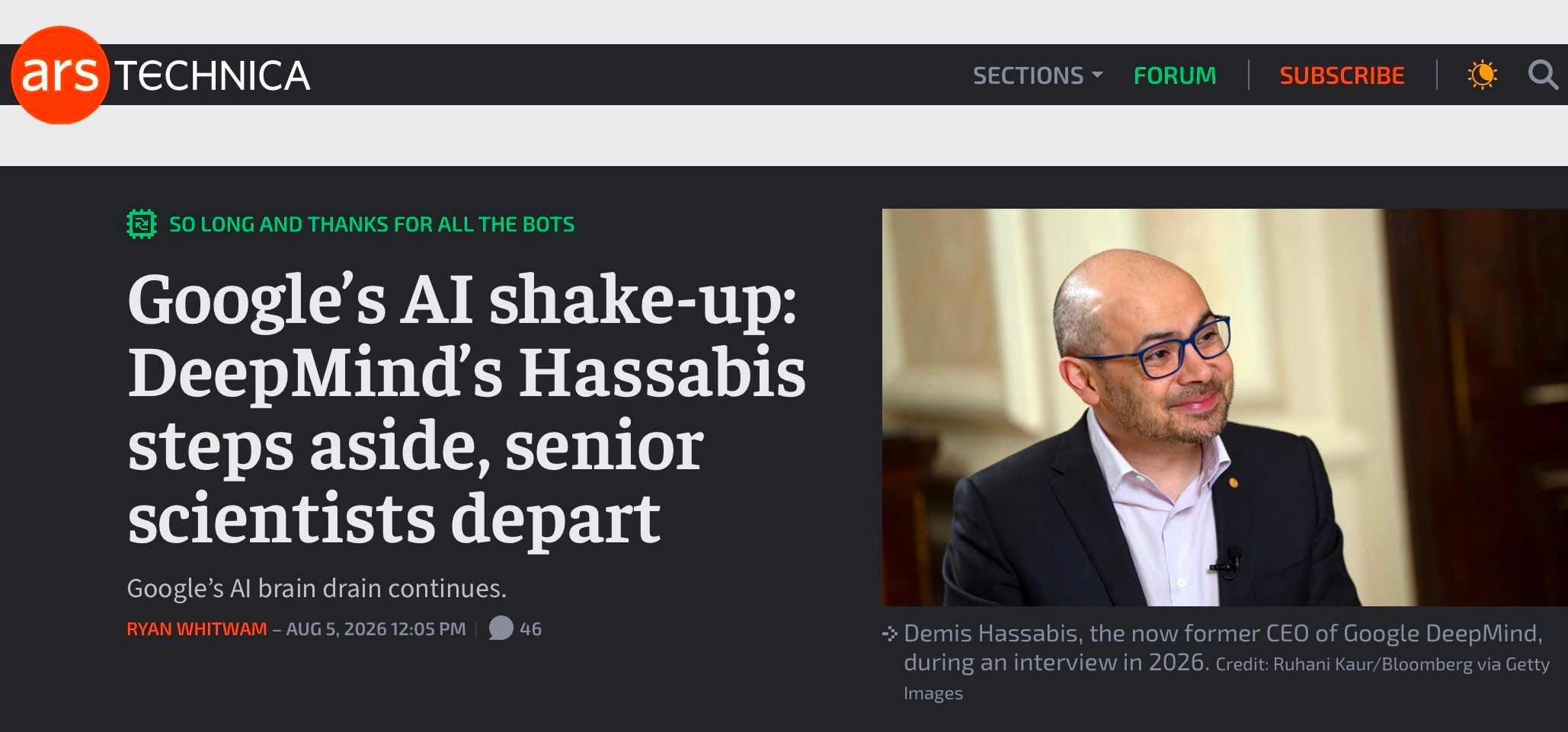
Google's strategic restructuring of DeepMind—with Demis Hassabis transitioning to Chief Scientist and Koray Kavukcuoglu assuming operational leadership of Gemini development—signals an accelerated push to embed AI across Google's entire e-commerce ecosystem. The announcement reveals critical metrics: Gemini has reached 950 million monthly users, Gemma models have exceeded 900 million downloads, and Google DeepMind is advancing robotics and frontier AI research. This organizational shift directly impacts cross-border sellers relying on Google Ads, Google Cloud, and YouTube for customer acquisition and operations.
For e-commerce sellers, the immediate implication is clear: Google is consolidating AI leadership to rapidly deploy new seller-facing tools. Kavukcuoglu's focus on "day-to-day operations and model development" means faster iteration cycles for Gemini API integrations, which sellers can leverage for product research automation, dynamic pricing optimization, and customer service chatbots. The 950M Gemini user base represents a massive distribution channel—sellers using Google Ads will increasingly compete in an AI-augmented search environment where product visibility depends on AI-optimized listings and bidding strategies. Sellers currently managing Google Shopping campaigns should expect algorithmic changes within 1-4 weeks as Gemini integration deepens.
The involvement of Jeff Dean and Sanjay Ghemawat in launching an independent ML-focused public benefit corporation—with Google as founding investor—signals that research breakthroughs will rapidly translate into commercial tools. This creates a competitive advantage window: early adopters of Gemini APIs for inventory management, demand forecasting, and content generation will gain 3-6 month leads over competitors. For sellers using Google Cloud services (BigQuery, Vertex AI), expect new AI capabilities for predictive analytics and automated reporting. The restructuring also indicates Google is betting heavily on AI-powered automation for supply chain optimization—sellers managing 3PL logistics or inventory across multiple warehouses should monitor Google Cloud announcements for new fulfillment optimization tools.
Actionable timeline: Sellers should audit their current Google Ads performance (conversion rates, ROAS) by week 2 of January 2025, as Gemini-powered search changes may already be rolling out. By week 4, sellers should evaluate Gemini API access through Google Cloud Console for pilot projects in product description generation or customer inquiry automation. The competitive moat belongs to sellers who integrate Gemini early—those waiting 6+ months will face saturated markets where AI-optimized competitors have already captured market share gains.
Questions 8
How can I use Gemini APIs to automate product research and content generation for my listings?
Gemini APIs are now accessible through Google Cloud Console and can automate product description generation, keyword research, and competitive analysis at scale. With 900M+ Gemma model downloads, the infrastructure is mature for production use. Sellers can build workflows that: (1) analyze competitor listings using Gemini vision capabilities, (2) generate optimized product descriptions for 100+ SKUs daily, (3) create A/B test variations for titles and bullets. Time savings: 15-20 hours/week per seller managing 500+ products. Cost: ~$0.01-0.05 per API call depending on model complexity. Start with a pilot on 50 products to measure quality and ROI before scaling.
When should I expect changes to Google Shopping and how do I prepare?
Gemini integration into Google Shopping is likely rolling out now through Kavukcuoglu's accelerated development cycle. Changes typically include: improved product matching algorithms, AI-driven bid recommendations, and enhanced visual search capabilities. Sellers should prepare by: (1) ensuring product feeds are complete with high-quality images and structured data, (2) testing new AI-powered bidding strategies on 10-15% of budget, (3) monitoring performance dashboards for algorithmic shifts. Historical precedent: Google's last major Shopping algorithm update (2023) caused 5-15% ROAS fluctuations for unprepared sellers. Proactive sellers saw 8-12% gains. Prepare now to capture upside.