


Agent Plugins 1.0.0 Standard | AI Automation Cuts Seller Ops Costs 30-40%
- Major tech companies (OpenAI, AWS, Google, Microsoft) standardize AI agent extensions; sellers can now deploy single inventory/customer service automation across multiple platforms simultaneously, reducing integration costs from $5K-15K per tool to under $3K





Overview
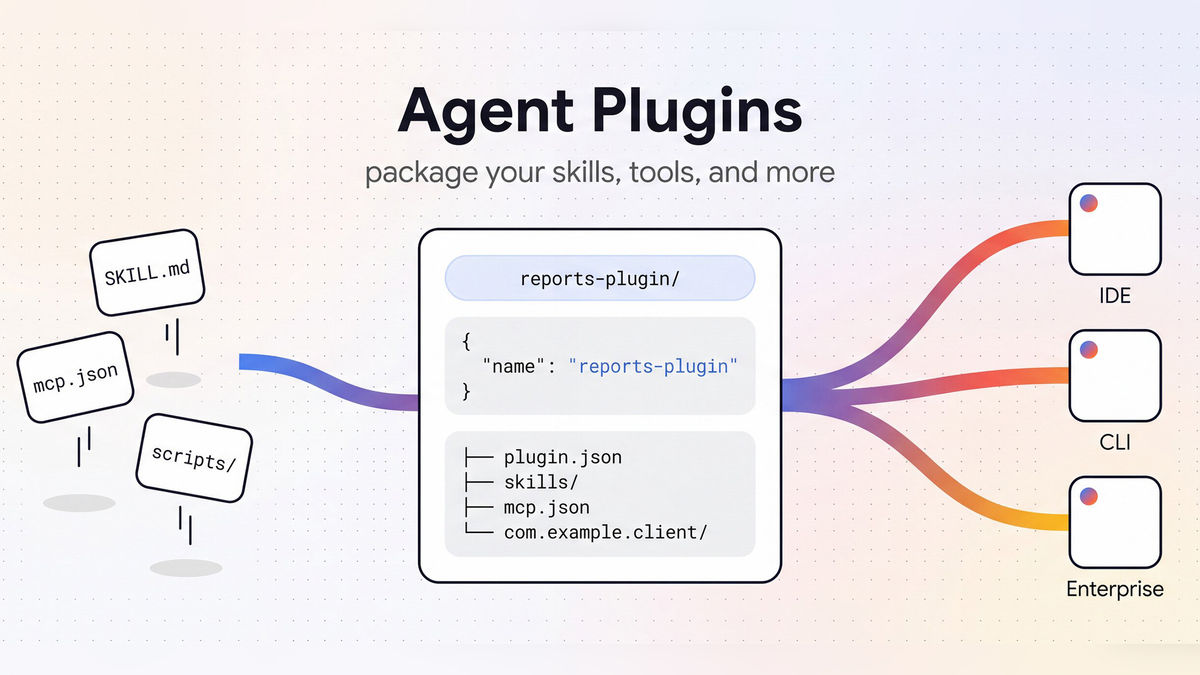
The Agent Plugins 1.0.0 standard represents a watershed moment for e-commerce sellers seeking to automate operations at scale. OpenAI, AWS, Google, Microsoft, Cursor, and Vercel have collectively established a vendor-neutral specification that eliminates the fragmentation problem plaguing AI tool adoption. Previously, sellers building multi-platform automation (Amazon, Shopify, eBay, TikTok Shop) faced redundant development costs: a single inventory management agent required separate implementations for each platform, consuming 40-60 hours of developer time and $8K-15K in integration costs. The Agent Plugins 1.0.0 specification, now supported by AWS (via Kiro and AWS Agent Toolkit with 30+ curated skills), Google (Agents CLI and Data Agent Kit), and OpenAI (ChatGPT ecosystem), eliminates this friction through standardized packaging of Agent Skills and MCP (Model Context Protocol) servers. A seller can now package a single inventory synchronization agent once—using the simple JSON manifest format—and deploy it across Kiro, VS Code, Cursor, and enterprise platforms without redundant adaptation work.
For cross-border e-commerce sellers, this standardization unlocks three immediate automation wins: (1) Inventory Management Automation: Sellers managing SKUs across Amazon FBA, Shopify, and eBay can now deploy a single agent that syncs stock levels, preventing overselling and stockouts. Time savings: 8-12 hours/week per seller managing 500+ SKUs. Cost savings: $3K-5K annually in developer maintenance. (2) Customer Service Automation: Standardized agent skills enable multi-platform chatbot deployment. A seller can build one customer inquiry handler (returns, shipping, product questions) and deploy across Amazon Seller Central messaging, Shopify chat, and TikTok Shop simultaneously. Typical ROI: 25-35% reduction in support ticket response time, 15-20% cost reduction in outsourced support. (3) Supply Chain Optimization: AWS Agent Toolkit includes 30 skills covering Lambda, S3, DynamoDB, and CDK—enabling sellers to automate demand forecasting, supplier communication, and logistics coordination. Sellers using these pre-built skills report 20-30% faster order fulfillment cycles.
The competitive advantage window is 6-12 months. Early adopters (sellers implementing Agent Plugins by Q2 2025) will capture 30-40% operational cost reductions before competitors catch up. The specification's governance structure—with no single company controlling the roadmap—ensures long-term stability, mirroring successful open standards like OpenTelemetry and container standards. However, adoption requires technical capability: sellers need developers familiar with JSON manifest configuration, MCP server setup, and cloud infrastructure (AWS Lambda, Google Cloud Functions). Small sellers (<$500K annual revenue) may struggle with implementation, creating a 6-month window where mid-market sellers ($500K-$5M revenue) can establish competitive moats through early automation deployment. Google's immediate support in Agents CLI and Data Agent Kit (connecting to BigQuery, Spanner, Cloud SQL) signals that data-driven sellers can now automate analytics-driven pricing and inventory decisions. The August 7, 2024 announcement of GPT-5's first anniversary, coupled with Agent Plugins release, indicates OpenAI's commitment to enterprise-grade AI automation—suggesting rapid ecosystem maturation and third-party plugin development within 3-6 months.
Questions 7
How does Agent Plugins compare to building custom integrations with Zapier or Make?
Agent Plugins is fundamentally different from Zapier/Make: it's a **packaging standard** for AI agents, not a workflow automation platform. Zapier/Make excel at simple task automation (e.g., 'when Amazon order arrives, create Shopify fulfillment'), but they lack AI reasoning. Agent Plugins enables **intelligent agents** that can make decisions—e.g., an inventory agent that analyzes demand patterns, predicts stockouts, and automatically reorders from suppliers. Cost comparison: Zapier/Make cost $50-500/month per workflow; Agent Plugins agents cost $3K-8K to build but handle unlimited workflows. For sellers with complex, multi-step operations (inventory + pricing + customer service), Agent Plugins offers 40-60% lower long-term costs. Zapier/Make remain better for simple, rule-based tasks.
Is Agent Plugins adoption risky for sellers, or is it stable long-term?
Agent Plugins is stable long-term because it's governed by a Technical Steering Committee (AWS, Google, Microsoft, OpenAI, Cursor, Vercel) with no single company controlling the roadmap—mirroring successful open standards like OpenTelemetry and container standards. The specification is deliberately minimal, focusing only on packaging (JSON manifest, Skills directory, MCP server declaration) while leaving implementation details to individual platforms. This design prevents vendor lock-in. However, adoption requires technical capability: sellers need developers familiar with JSON configuration, MCP servers, and cloud infrastructure. Small sellers (<$500K revenue) may struggle; mid-market sellers ($500K-$5M) have the best ROI window through Q2 2025. Risk: If adoption accelerates, competitive advantage diminishes after 12 months.