



EU Tariff Arbitrage on Chinese EVs & PHEVs | 12-Month Window for Cross-Border Sellers
- Chinese BEV market share hits 14.2% in Europe; PHEV tariff loophole closes within 12 months; UK/Italy emerge as tariff-advantaged markets; sellers can exploit 35.3% tariff differential before policy harmonization







Overview
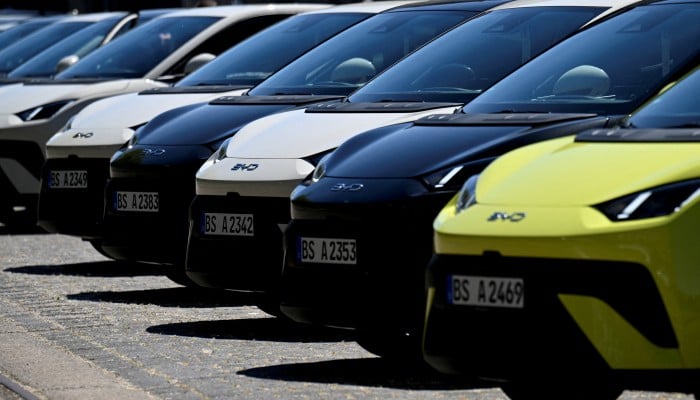
The Tariff Arbitrage Opportunity: Chinese electric vehicle manufacturers have captured 14.2% of Western European BEV sales (171,800 units in Jan-May 2025), representing a 4.9 percentage point year-over-year surge. The critical insight for cross-border sellers: EU tariffs on Chinese EVs reach 35.3%, yet Chinese brands continue aggressive market penetration because of strategic regulatory gaps. Most significantly, plug-in hybrid electric vehicles (PHEVs) currently escape EU tariffs entirely—a loophole industry analysts project will close within 12 months as Volkswagen CEO Oliver Blume and EU policymakers move toward tariff harmonization.
Market Access Arbitrage by Country: The UK emerged as the largest European market for Chinese EVs (25% of Chinese BEV sales across 18 major Western European markets), primarily because the UK government declined to impose EU-level tariffs. Italy captured one-fifth of Chinese EV sales, driven by Leapmotor's T03 model leveraging government purchase subsidies that reduced prices to €5,000—demonstrating how subsidy-driven demand creates pricing floors that benefit importers. This creates a two-tier tariff environment: UK sellers face zero tariff barriers while EU-27 sellers confront 35.3% duties, creating a 35+ percentage point cost arbitrage window for UK-based importers and distributors.
Competitive Dynamics & Sourcing Shifts: Chinese manufacturers introduced 120+ EV models in Europe (vs. 100 from European brands), signaling aggressive product diversification. More strategically, manufacturers are pivoting toward PHEVs due to limited shipping capacity and higher margins—a tactical shift that exploits the current tariff-free PHEV corridor. This creates a 12-month window before potential tariff extensions close this loophole. For cross-border sellers, this means: (1) PHEV-focused sourcing from Chinese manufacturers offers tariff-free entry into EU markets until policy changes; (2) UK market access provides tariff-free BEV distribution advantages; (3) Italian market subsidies create demand spikes for budget EV models (€5,000 price point). Tesla's 60% year-on-year sales increase in Europe demonstrates that tariff-protected premium brands still capture significant market share, but Chinese competitors are eroding margins through volume and pricing.
Structural Supply Chain Implications: Germany's automotive crisis reveals deeper supply chain vulnerabilities. Chinese manufacturers achieve 18-month product development cycles vs. 3+ years for traditional Western OEMs, creating speed-to-market advantages. Battery technology and software—areas where Chinese firms hold competitive advantages—now determine competitiveness more than geography. For sellers, this signals: (1) Chinese EV/PHEV supply will remain abundant and cost-competitive for 12+ months; (2) European OEM excess capacity may create liquidation opportunities in aftermarket parts and accessories; (3) Charging infrastructure and EV-related services (software, diagnostics, accessories) represent emerging cross-border categories as EV adoption accelerates despite slower-than-expected consumer uptake.
Questions 8
What supply chain and logistics constraints affect EV import volumes and pricing?
Limited shipping capacity is constraining BEV exports, forcing Chinese manufacturers to prioritize higher-margin PHEV sales. This supply constraint creates two opportunities: (1) PHEV imports face less competition for shipping capacity, enabling faster delivery and lower logistics costs; (2) BEV supply scarcity may drive price premiums in tariff-protected EU markets. German automotive industry data reveals that EV supply chains differ fundamentally from internal combustion engines—batteries and software determine competitiveness, not geography. Sellers should: (1) secure PHEV shipping capacity immediately (6-9 month lead times); (2) negotiate long-term supply agreements with Chinese manufacturers to lock in pricing before tariff changes; (3) consider 3PL providers specializing in EV logistics (battery handling, temperature control, safety compliance). Shipping costs for EVs typically run 15-25% higher than traditional vehicles due to battery handling requirements and regulatory compliance.
What competitive advantages do Tesla and European OEMs retain despite Chinese market share gains?
Tesla experienced a 60% year-on-year sales increase across Europe, with the Model Y becoming Europe's bestselling individual vehicle model in Jan-May 2025. This demonstrates that premium-brand tariff protection and brand loyalty still drive significant market share despite Chinese competition. German OEMs (Volkswagen, Mercedes-Benz, BMW) retain advantages in brand recognition, engineering expertise, dealer networks, and customer loyalty—but face structural challenges: high labor costs, complex regulations, lengthy product cycles, and elevated energy prices reduce flexibility vs. Chinese competitors. For sellers, this signals: (1) premium EV accessories and aftermarket parts for Tesla and German OEMs remain high-margin categories; (2) European OEM excess capacity may create liquidation opportunities in parts and components; (3) Chinese brands are capturing volume/budget segments while Western brands retain premium positioning. Sellers should diversify across both segments: premium accessories for Tesla/German OEMs; budget EV models and PHEV imports from Chinese manufacturers.