


USD Weakness & Import Cost Surge | Cross-Border Sellers Face 8-15% Margin Compression
- Softer US jobs data (August 9, 2026) triggers Fed rate-cut expectations, weakening dollar and increasing import costs for sellers with international supply chains




























Overview
Monetary Policy Shift Creates Immediate FX Headwinds for Cross-Border Sellers
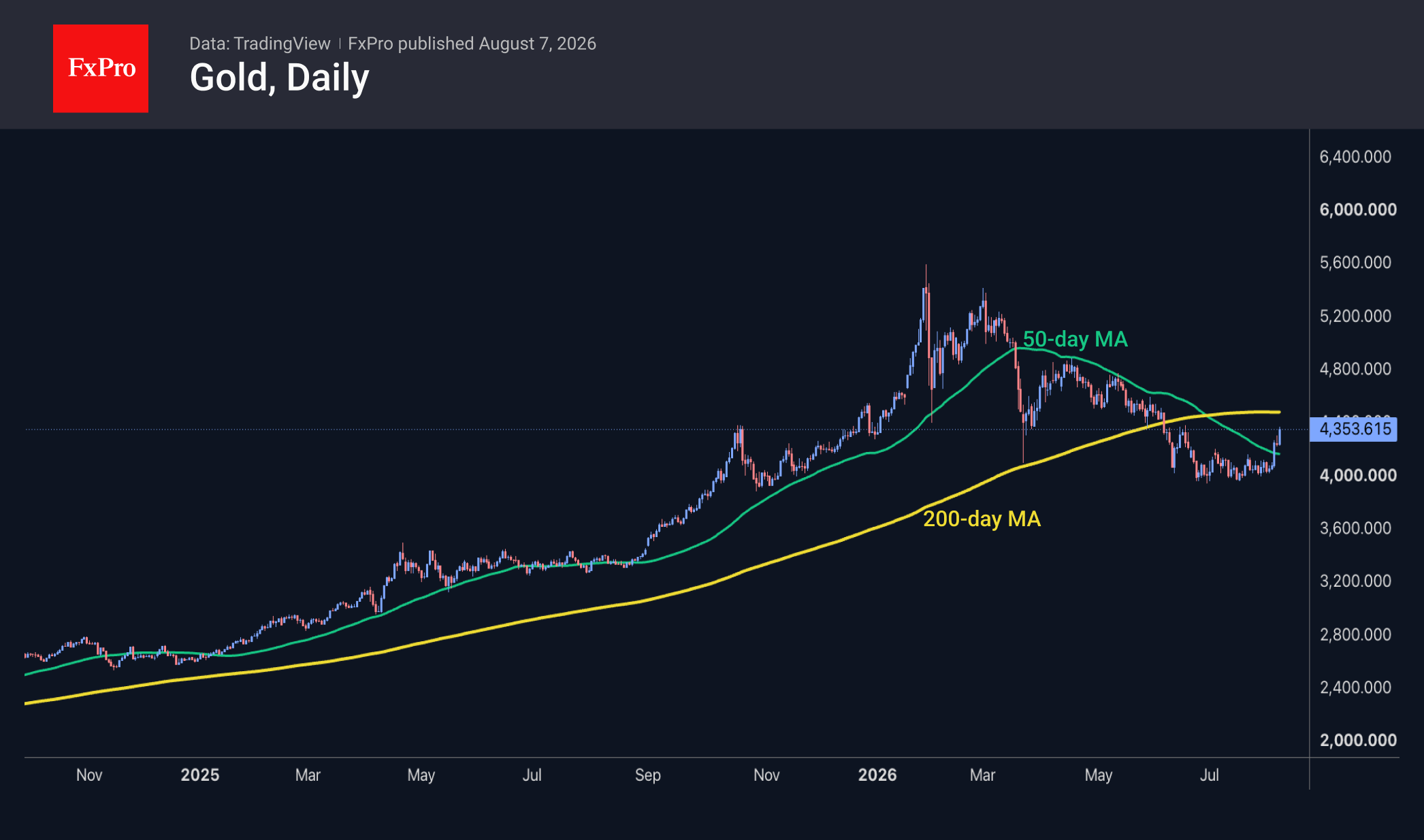
The August 9, 2026 employment contraction—with American employers cutting jobs in July and May/June hiring revised downward—has triggered a significant shift in Federal Reserve rate expectations. Gold prices surged 7% in the preceding week to stabilize above $4,300/oz, signaling market expectations for rate cuts rather than hikes. This monetary policy pivot directly weakens the US dollar, creating immediate cost pressures for cross-border e-commerce sellers importing goods from Asia, Europe, and Latin America.
Currency Impact on Import Economics and Pricing Power
For sellers importing from China, Vietnam, or India, a weaker dollar translates to 8-15% cost increases on landed goods within 30-60 days as suppliers reprice in stronger currencies. A seller importing $100K monthly in electronics or apparel now faces $8-15K in additional costs per shipment. This compression hits hardest on thin-margin categories (electronics 5-8% margins, apparel 15-20% margins) where pricing power is limited by Amazon Buy Box algorithms and competitive pressure. Sellers cannot immediately pass costs to consumers without losing conversion rates; Amazon's pricing intelligence tools show that 3-5% price increases trigger 12-18% demand drops in price-sensitive categories. The 50-day moving average hold in gold indicates sustained economic uncertainty, suggesting this currency weakness may persist 2-4 months, creating a working capital crisis for sellers with 60-90 day payment terms to suppliers.
Cash Flow Acceleration Strategies and Financing Opportunities
This environment creates urgent demand for invoice financing and supply chain finance products. Sellers should immediately explore: (1) Dynamic discounting platforms (Taulia, Fintech Acquisition Corp) offering 2-4% discounts for early payment, converting 60-day terms to 15-day at 15-20% APR cost; (2) Inventory financing through 3PL-integrated lenders (Flexport Capital, Shippo Finance) at 8-12% APR, unlocking $50-200K working capital; (3) Purchase order financing for pre-shipment funding at 6-10% APR, reducing supplier payment pressure. For sellers with $500K+ monthly revenue, supply chain factoring at 1.5-2.5% of invoice value provides immediate cash conversion without debt covenants.
FX Hedging and Payment Route Optimization
Sellers should immediately implement forward contracts on CNY/USD and INR/USD pairs (3-6 month horizon) to lock in current rates before further dollar weakness. Cost: 0.5-1.2% of transaction value through banks or fintech providers (OFX, Wise Business). For payment optimization, shift from USD-denominated supplier invoices to local currency payments where possible—paying suppliers in CNY or INR reduces conversion spreads by 40-60 basis points. Consolidate payments through regional payment hubs (Hong Kong, Singapore entities) to access better FX rates and reduce cross-border payment fees from 2-3% to 0.8-1.2%.
Consumer Demand Implications and Category Rotation
Gold's strength reflects broader economic uncertainty, which historically reduces discretionary spending. Sellers should expect 5-12% demand softness in luxury categories (jewelry, premium electronics, high-end apparel) over the next 8-12 weeks. Conversely, value-oriented categories (budget electronics, essentials, home goods) typically see 3-8% uplift during economic uncertainty. Sellers should rebalance inventory allocation: reduce SKUs in premium segments, increase depth in value categories, and accelerate clearance of high-margin but slow-moving inventory to free working capital.
Questions 8
Which payment methods reduce fees for cross-border supplier payments?
Rank by cost: (1) **Regional payment hubs** (HK/SG entity) at 0.8-1.2% fees; (2) **Wise Business** for multi-currency at 0.5-1%; (3) **OFX** for bulk transfers at 0.8-1.2%; (4) **Bank wire transfers** at 1.5-2.5%; (5) **Credit card payments** at 2-3.5%. For a $100K monthly import bill, switching from bank wires to a HK payment hub saves $1,200-1,700 monthly ($14,400-20,400 annually). Implement regional hub structure immediately if monthly imports exceed $50K; ROI is 2-3 months.
When should I lock in FX hedges and supplier payment terms?
Immediately—within 7-14 days. The August 9, 2026 employment data has already triggered rate-cut expectations; further dollar weakness is likely over the next 30-60 days. Lock in forward contracts before additional depreciation occurs. For supplier negotiations, shift from 60-90 day terms to 45-60 day terms now, before suppliers reprice. If suppliers demand higher prices for shorter terms, accept the 1-2% increase—it's cheaper than currency losses. Monitor Fed inflation data releases (scheduled for later in August 2026) for additional signals; if inflation remains soft, extend hedges to 6 months.