





Silencing Dissent: Russia's Legal Weaponization Against Activist Movements
- Escalating Kremlin Crackdown Transforms Activism into Potential Criminal Enterprise































Overview
The Russian legal system has emerged as a sophisticated instrument of political suppression, transforming activist resistance into a high-stakes legal battleground. The recent court ruling against Pussy Riot represents a pivotal moment in the Kremlin's systematic approach to neutralizing opposition movements through strategic legal mechanisms.
Regulatory weaponization takes center stage in this development, where a court's declarative power can instantly criminalize an entire collective's existence. By branding Pussy Riot an "extremist organization," the Russian judicial system has created a legal framework that effectively eliminates the group's ability to organize, communicate, or maintain public visibility. The September 2025 court sentence, which imposed eight to 13-year prison terms on five members in absentia, demonstrates the escalating severity of state-driven legal persecution.
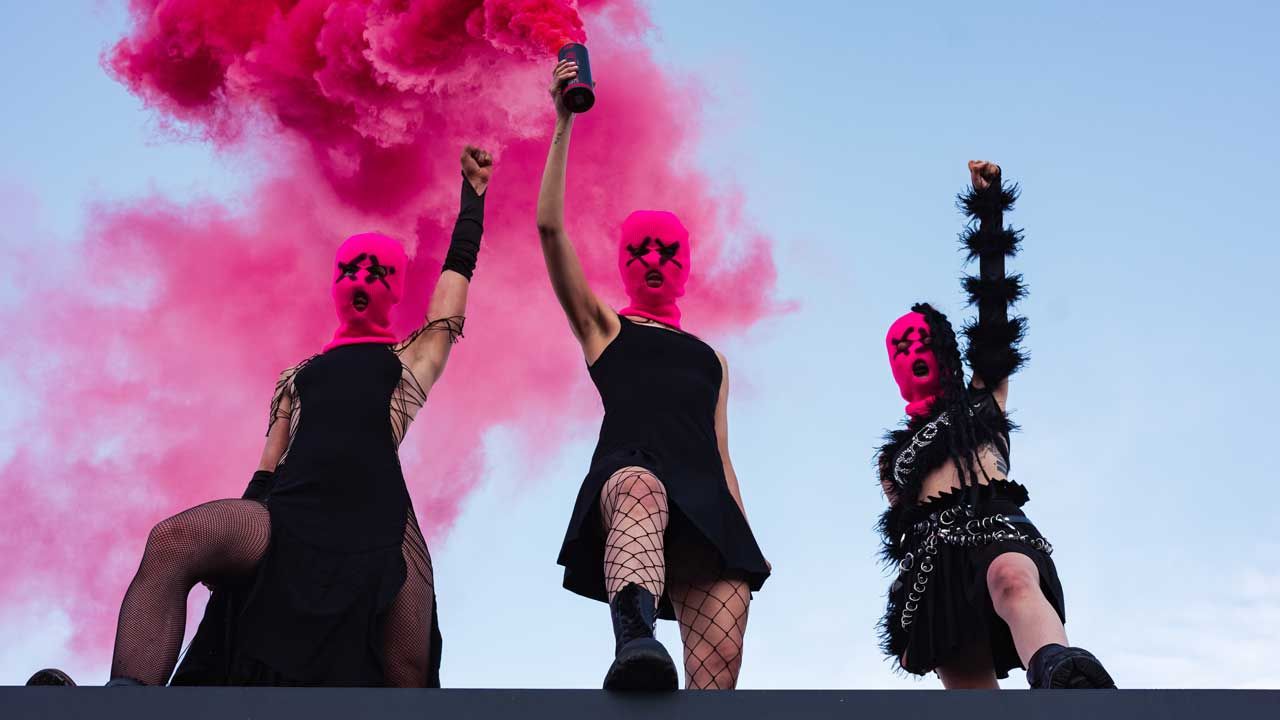
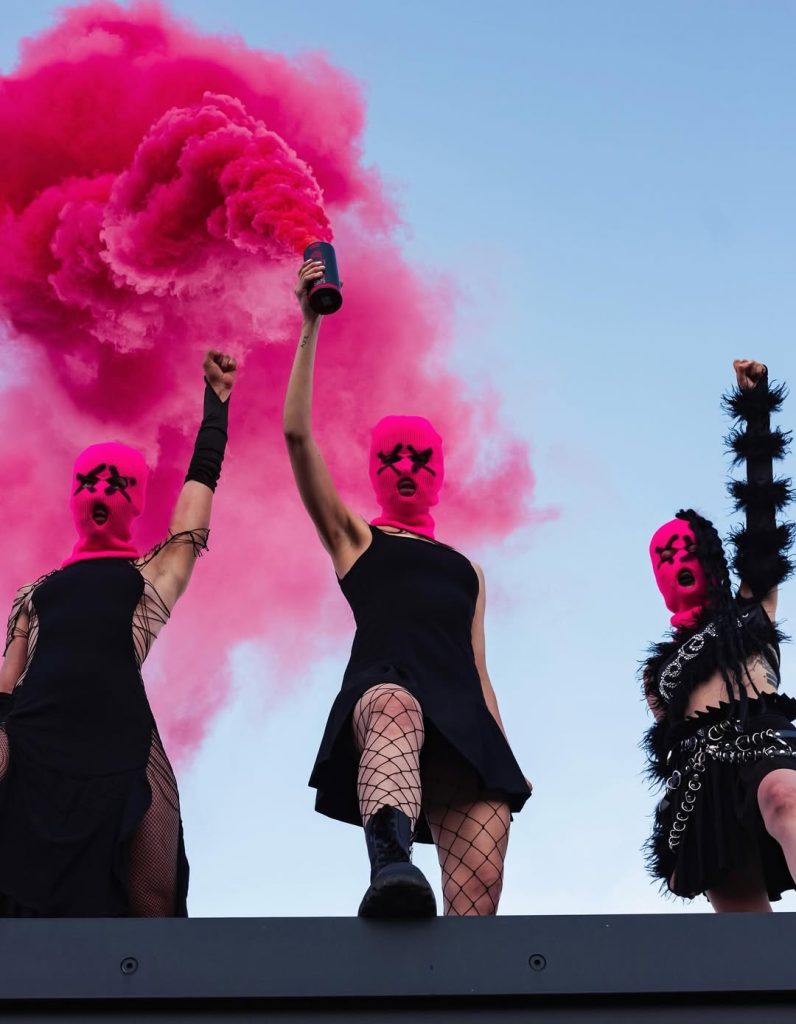
The ruling's most chilling aspect lies in its breadth of potential prosecution. Nadya Tolokonnikova's warning that possessing a balaclava, sharing a song, or even liking a social media post could result in imprisonment reveals a calculated strategy of widespread intimidation. This approach goes beyond targeting specific individuals, instead creating a systemic deterrent that criminalizes solidarity and symbolic resistance.
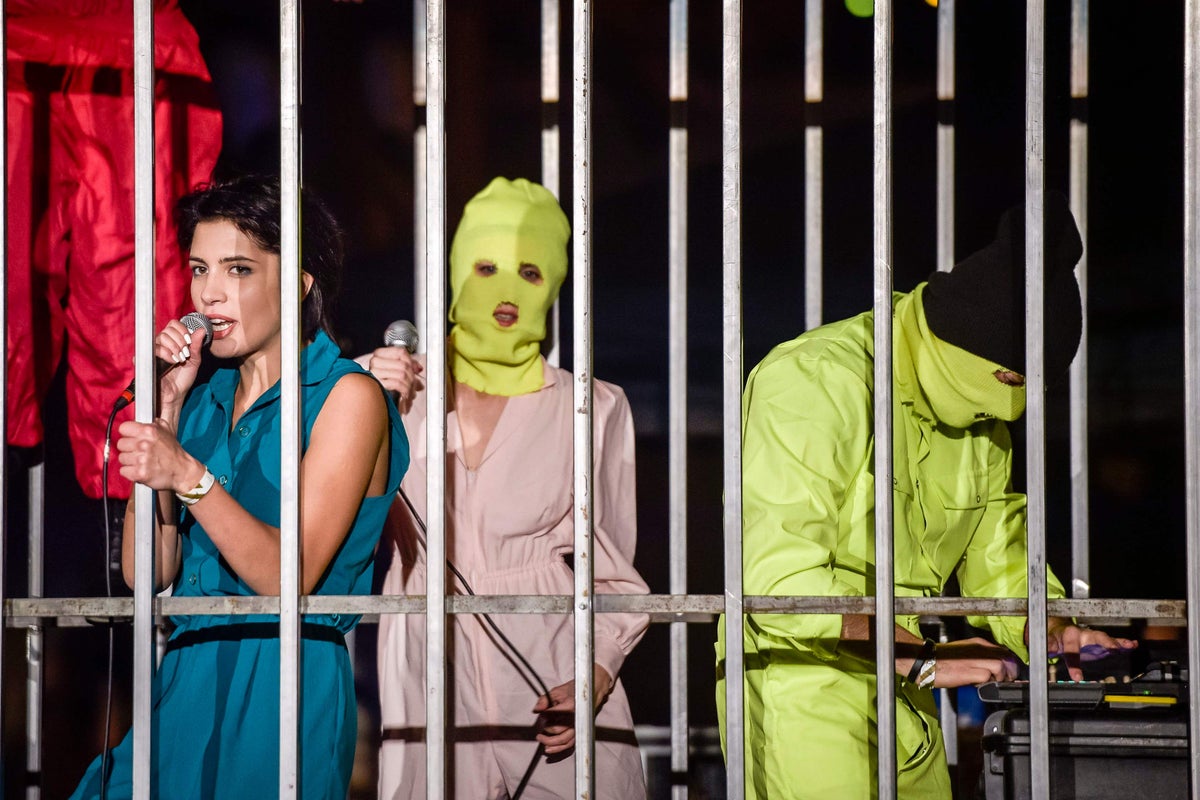
Contextualizing this development, Pussy Riot's trajectory from their provocative 2012 "Punk Prayer" performance to their current status illustrates the evolving landscape of political dissent in Russia. The group's international profile, which once provided a protective layer of global attention, now offers little shield against the Kremlin's increasingly aggressive legal tactics. Members like Tolokonnikova and Masha Alekhina have been forced into exile, further demonstrating the regime's intent to fragment and disperse opposition networks.
This legal maneuver represents more than an attack on a specific activist group—it signals a broader systematic erosion of free expression in Russia. By transforming activism into a potential criminal enterprise, the state is constructing a legal architecture that can preemptively neutralize any emerging forms of collective resistance.
Questions 3
Why did the Russian court choose to label Pussy Riot as an extremist organization now?
The timing coincides with the ongoing Ukraine conflict and the Kremlin's intensified crackdown on domestic opposition. By targeting a high-profile activist group with international recognition, the state demonstrates its willingness to use legal tools to suppress any perceived challenges to its narrative and control.
How does this ruling impact future activist movements in Russia?
The ruling creates a powerful deterrent by establishing a legal mechanism that can instantly criminalize collective activism. It sends a clear message that organized dissent will be met with severe legal consequences, likely pushing potential activists toward self-censorship or exile.