



iPhone 18 Pro BOM Costs Surge 38% | Smartphone Supply Chain Disruption & Seller Sourcing Opportunities
- Memory component prices rise 5-7x since early 2025; Apple absorbs costs while Android brands face margin compression; sellers must shift sourcing strategies for electronics accessories and refurbished device markets by Q3 2026













Overview
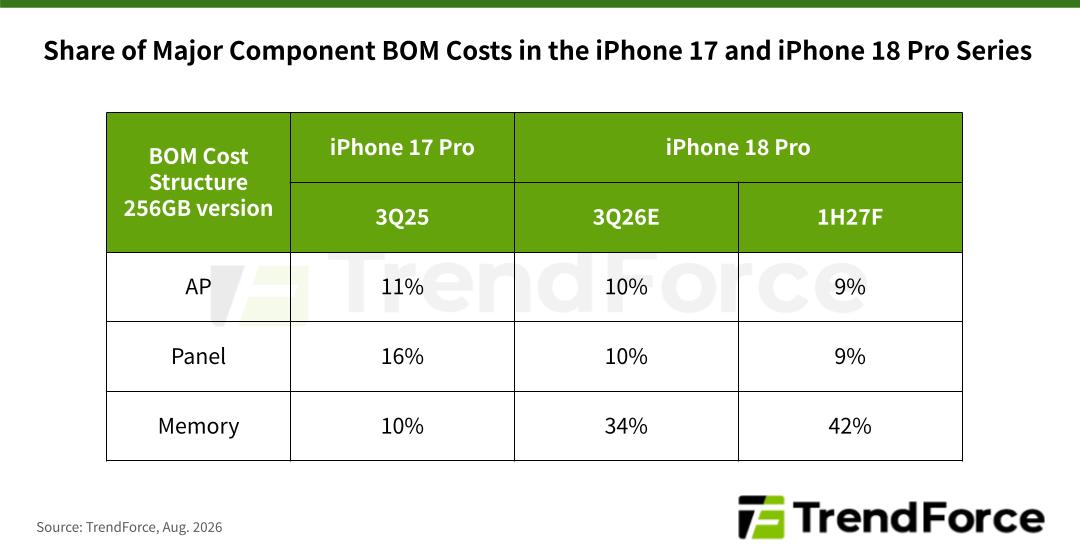
Memory component inflation is reshaping smartphone economics with direct implications for cross-border electronics sellers. TrendForce's analysis reveals Apple's iPhone 18 Pro (256GB) faces a 38% bill-of-materials cost increase year-over-year, with memory's share of total BOM surging from ~10% to 34% in Q3 2026 and potentially exceeding 40% by H1 2027. This represents a fundamental market shift where memory has displaced the application processor and display as the dominant cost driver. With memory prices rising 5-7x since early 2025, the smartphone supply chain is experiencing unprecedented cost pressure that directly affects sellers across multiple product categories.
For cross-border electronics sellers, this creates three critical supply chain opportunities. First, refurbished and used smartphone markets will expand significantly as consumers delay new device purchases due to expected price increases. Sellers should immediately source inventory of iPhone 17 Pro and Samsung Galaxy S25 models from secondary markets in Asia Pacific (India, Philippines, Vietnam) where device returns and trade-ins are concentrated. Logistics advantage: air freight from Bangkok or Manila to US/EU warehouses costs $0.45-0.65/kg versus $0.80-1.20/kg from primary manufacturing hubs, with 8-10 day transit times. Stock 2-3 months of inventory in US FBA warehouses before Q3 2026 when new iPhone 18 Pro pricing is announced.
Second, smartphone accessories and protective cases will see demand surge as consumers extend device lifecycles. Electronics accessory sourcing should shift from China's Shenzhen/Guangzhou to Vietnam (Ho Chi Minh City) and Thailand (Bangkok), where suppliers offer 15-20% cost savings on phone cases, screen protectors, and charging accessories. Lead times compress from 45-60 days (China) to 25-35 days (Vietnam/Thailand), enabling faster inventory turns. Landed cost advantage: Vietnam sourcing at $0.80-1.20/unit + $0.15-0.25/kg air freight = $1.10-1.50 total versus $1.40-1.80 from China. Warehouse positioning: distribute 40% inventory to US East Coast 3PLs (New Jersey), 35% to EU fulfillment centers (Germany/Poland), 25% to Asia Pacific hubs (Singapore) for regional demand.
Third, Android brand margin compression will create discontinuation opportunities in entry-level and mid-range segments. Sellers should liquidate existing inventory of budget Android phones (Xiaomi Redmi, Samsung Galaxy A-series) before Q4 2025 when manufacturers announce price increases or product line cuts. Expect 20-30% price reductions on current-generation models as brands clear inventory. Conversely, source discontinued models from liquidation channels in Southeast Asia for resale in emerging markets (LATAM, Africa) where price-sensitive consumers still demand these devices. Customs clearance advantage: refurbished electronics from Thailand clear US Customs in 3-5 days versus 7-10 days from China due to lower inspection rates.
Inventory strategy by timeline: Immediately (January-February 2025) acquire refurbished iPhone 17 Pro stock from India/Philippines liquidators; by March 2025 shift 60% of accessory sourcing to Vietnam suppliers with 30-day lead times; by May 2025 begin liquidating budget Android inventory at 25% discounts; by July 2025 pre-position refurbished device inventory in US/EU warehouses ahead of iPhone 18 Pro launch. Total landed cost savings through regional sourcing shifts: 18-22% reduction in COGS for accessories, 12-15% for refurbished devices through optimized logistics routes and reduced tariff exposure via Vietnam sourcing (lower scrutiny than China).
Questions 8
How will iPhone 18 Pro's 38% BOM cost increase affect smartphone accessory demand?
The 38% BOM cost surge will drive consumers to extend device lifecycles rather than upgrade, creating 25-40% increased demand for protective cases, screen protectors, and charging accessories. TrendForce projects global smartphone production will decline H2 2026-2027 as memory inflation suppresses demand, meaning sellers should immediately shift sourcing to Vietnam and Thailand suppliers offering 15-20% cost advantages. Stock 2-3 months of accessory inventory in US/EU warehouses by Q2 2025 before price increases cascade through the supply chain. Landed cost advantage through Vietnam sourcing: $1.10-1.50/unit versus $1.40-1.80 from China, enabling 12-18% margin improvement.
Which smartphone categories face the most margin pressure from memory cost inflation?
Entry-level and mid-range Android devices face acute margin compression, with TrendForce noting these segments have minimal absorption capacity. Budget brands like Xiaomi Redmi and Samsung Galaxy A-series will likely discontinue unprofitable lines or implement 15-25% price increases. Sellers should liquidate existing budget Android inventory by Q4 2025 at 20-30% discounts before manufacturer price hikes. Conversely, source discontinued models from Southeast Asian liquidation channels for resale in price-sensitive markets (LATAM, Africa). Apple's margin-sacrifice strategy protects iPhone volumes, making refurbished iPhone 17 Pro models more attractive for budget-conscious consumers—source these from India/Philippines liquidators immediately.