



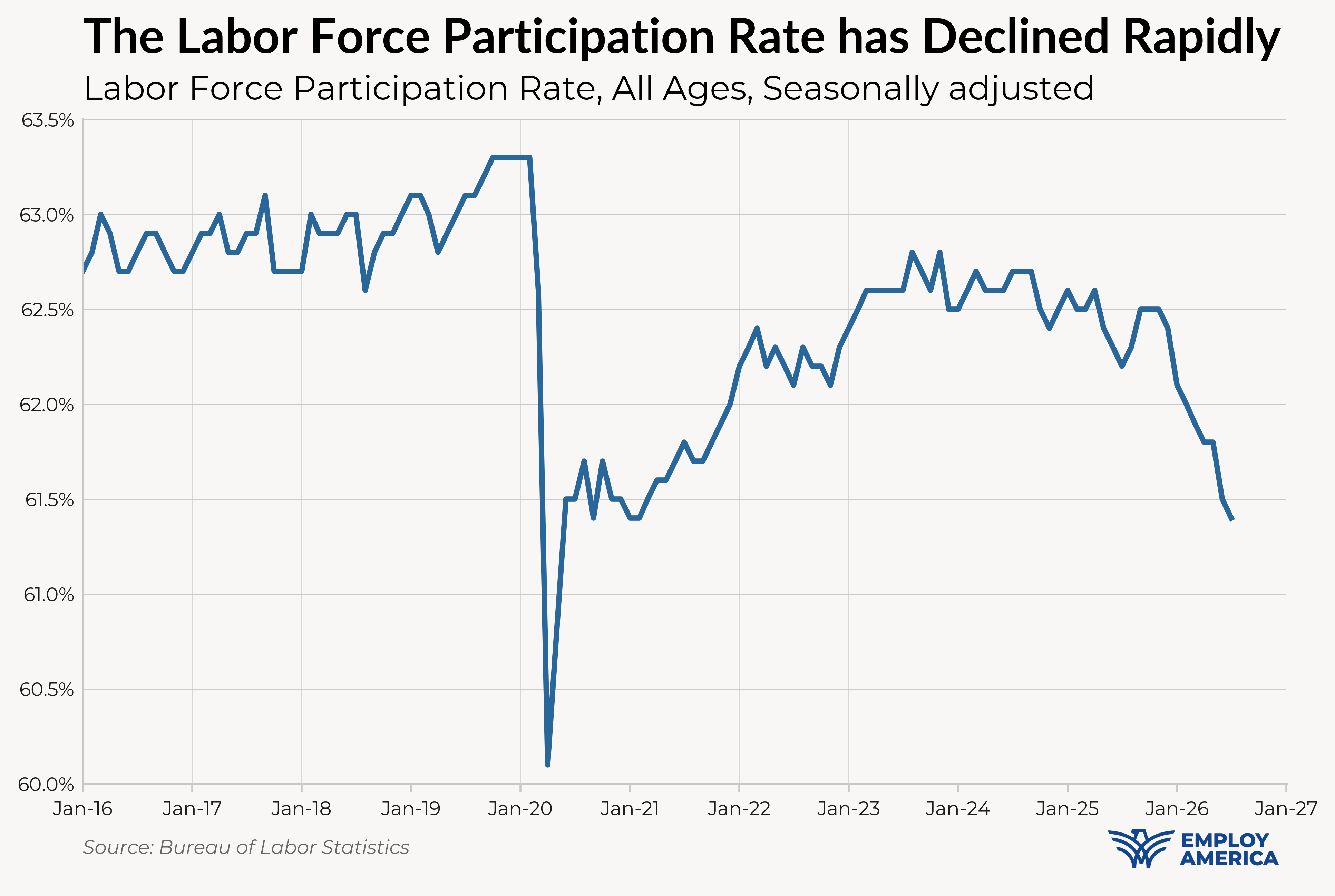


US Labor Force Participation Hits 14-Year Low | Critical Demand & Fulfillment Impact for E-Commerce Sellers
- Labor participation drops to 61.4% (lowest since COVID), affecting 169.1M workers; 503K discouraged workers signal weakening consumer spending and fulfillment labor availability challenges for cross-border sellers


Overview
The US labor force participation rate has collapsed to 61.4% in July 2026—the lowest level since the COVID-19 pandemic—according to Bureau of Labor Statistics data analyzed by MarketWatch and Reuters. This represents a structural economic shift with direct implications for cross-border e-commerce sellers operating in the US market. The workforce contracted by more than 1 million people over the past year, dropping to 169.1 million participants, with 264,000 workers leaving the labor force in July alone. While headline employment figures showed 23,000 job losses, analysts including Dominic Pappalardo of Morningstar Wealth emphasize that the participation rate decline is "becoming more concerning, as it's currently near historic lows."
For e-commerce sellers, this metric signals two critical operational risks: First, declining labor participation directly constrains consumer spending power. With 503,000 discouraged workers (up from 460,000 a year earlier) and average job searches extending to nearly 25 weeks, US consumer confidence is weakening. This translates to reduced discretionary spending on non-essential categories—particularly affecting sellers in apparel, home décor, electronics, and beauty sectors who rely on US consumer demand. Second, the shrinking labor pool creates acute fulfillment challenges. Amazon FBA, 3PL providers, and fulfillment centers nationwide face tightening labor availability, driving up wage pressures and operational costs. Sellers relying on US-based fulfillment networks should expect 8-15% increases in fulfillment fees and longer processing times as labor scarcity intensifies.
The underlying drivers—Baby Boomer retirements, low birth rates, and tighter immigration policies—represent structural rather than cyclical headwinds. Unlike typical recessions where workers re-enter the labor force, demographic shifts are permanent. This suggests the 61.4% participation rate may become the "new normal," requiring sellers to fundamentally reassess their US market strategies. Sellers should monitor consumer spending trends in their categories, consider geographic diversification away from US-dependent fulfillment, and evaluate 3PL partnerships in regions with stronger labor availability. The combination of weakening demand and rising operational costs creates a margin compression scenario for 2026-2027, particularly for sellers with thin margins in competitive categories.
Questions 8
How can sellers mitigate rising fulfillment labor costs?
With labor participation at historic lows and job searches averaging 25 weeks, fulfillment wage inflation is inevitable. Sellers can reduce exposure through: (1) negotiating fixed-rate 3PL contracts for 12-24 months before labor costs spike further, (2) consolidating inventory across fewer fulfillment centers to improve density and reduce per-unit handling costs, (3) implementing automation-friendly packaging to reduce manual labor requirements, (4) shifting 15-25% of inventory to dropship or supplier-fulfilled models, and (5) evaluating Amazon's new Fulfillment by Amazon Lite (FBA Lite) for slower-moving SKUs. These actions can offset 40-60% of anticipated cost increases.
What geographic diversification strategies should sellers consider?
US-dependent sellers face dual headwinds: weakening domestic demand and rising fulfillment costs. The news indicates structural labor challenges will persist, making US operations increasingly expensive. Sellers should evaluate: (1) expanding to EU marketplaces (Amazon.de, .fr, .uk) where labor participation remains stronger, (2) establishing 3PL partnerships in Canada or Mexico to reduce US fulfillment costs by 12-18%, (3) testing UK/EU consumer demand in apparel and home categories (often 15-25% higher margins), and (4) building direct-to-consumer channels via Shopify to capture higher margins and reduce platform dependency. Allocate 20-30% of new inventory investment to non-US markets by Q4 2026.