




US Consumer Payment Delinquencies Hit Decade Highs | Critical Cash Flow Risks for E-Commerce Sellers
- Mortgage & auto loan delinquencies reach 16-year peaks; credit card debt hits $1.26T; payment reliability deteriorates for 12.8% of cardholders; immediate working capital & payment strategy adjustments required



































Overview
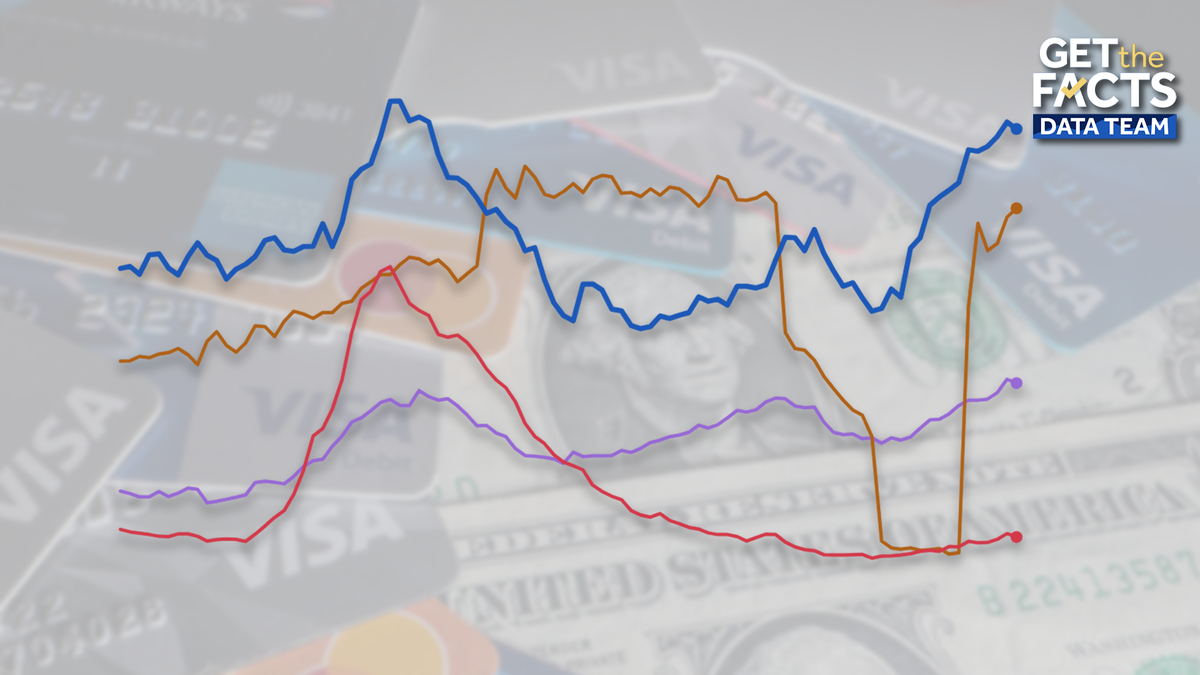
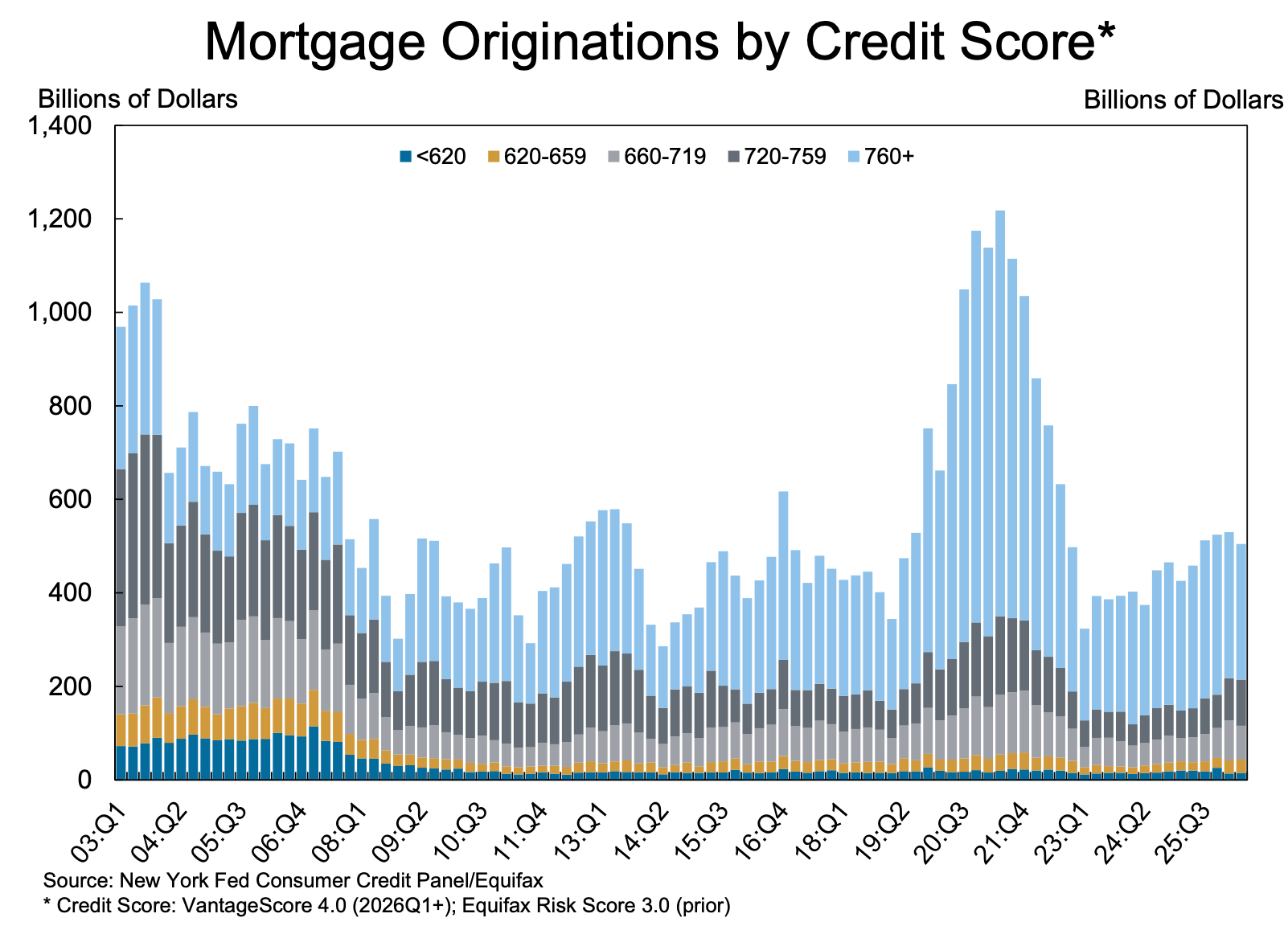
The Federal Reserve Bank of New York's Q2 2026 Quarterly Report on Household Debt and Credit reveals a bifurcated consumer landscape with critical implications for cross-border e-commerce sellers. U.S. credit card debt reached $1.26 trillion in Q2 2026, increasing $21 billion and approaching the all-time record of $1.28 trillion set in Q4 2025. More critically, the delinquency rate for credit card balances 90+ days overdue surged to 12.8% in early 2026 from 7.6% in mid-2022—a 68% increase in serious payment failures. Simultaneously, mortgage delinquencies hit decade-high levels (worst since 2015), while auto loan delinquencies reached their highest point in 16 years, with serious delinquencies (90+ days overdue) at unprecedented levels. Total U.S. household debt stands at $18.8 trillion across mortgages ($13.12T), auto loans ($1.71T—a new record), student debt ($1.65T), credit cards ($1.26T), and HELOCs ($459B).
From a fintech perspective, this data signals three immediate payment optimization opportunities and three critical risks. First, the K-shaped economy divergence means lower-income households—representing 35-40% of e-commerce volume—face heightened payment default risk. The New York Fed explicitly noted that "many households living paycheck-to-paycheck face vulnerability to delinquency from unexpected financial disruptions," with auto loan delinquencies indicating "real financial pressure" when consumers stop paying. This translates to increased chargeback rates, payment processing failures, and extended cash conversion cycles for sellers accepting credit cards. Second, the stabilization of credit card delinquencies since 2022 (despite the 12.8% rate) suggests lenders are retaining charged-off debts longer rather than writing them off—meaning payment processors face higher fraud/chargeback risk, which increases merchant fees by 0.5-1.2% for high-risk categories. Third, the $211 billion in auto loans taken in Q2 2024 (record high) indicates consumers are financing discretionary purchases through debt rather than cash, reducing available liquidity for e-commerce purchases and increasing payment failure rates.
For sellers, the immediate financial optimization strategy involves three moves: (1) Shift payment methods to reduce chargeback exposure: Prioritize ACH/bank transfers (0.5-1% fees vs. 2.9% + $0.30 for credit cards) and digital wallets (Stripe, PayPal) that offer buyer protection without merchant liability. Sellers can reduce effective payment costs by 150-200 basis points by incentivizing non-card payments. (2) Implement dynamic payment terms for high-risk segments: Offer 2/10 net 30 terms (2% discount for immediate payment) to accelerate cash conversion from the 35-40% of buyers in financial stress. This unlocks 5-10 days of working capital per transaction. (3) Hedge FX exposure on USD receivables: With consumer spending volatility, sellers should lock in forward contracts on USD/EUR, USD/GBP, and USD/CNY pairs for 60-90 day horizons to protect against currency depreciation if US consumer spending contracts. Current hedging costs are 0.8-1.2% annually—justified given the 12.8% delinquency risk.
Financing access shifts dramatically in this environment. Invoice financing and supply chain finance products now offer 2-4% APR (down from 4-6% in 2024) as lenders compete for lower-risk seller receivables. Sellers should refinance existing PO financing and inventory loans immediately—potential savings of $500-2,000 monthly for mid-sized sellers ($500K-$2M monthly revenue). Conversely, buyer financing (Affirm, Klarna) becomes riskier; sellers should reduce exposure to buy-now-pay-later (BNPL) platforms by capping BNPL orders at 15-20% of total volume (vs. 25-30% pre-delinquency spike) to avoid funding defaults.
Questions 8
What FX hedging strategy should sellers adopt given consumer payment volatility?
With 12.8% credit card delinquency rates and consumer spending volatility, sellers should lock in forward contracts on USD/EUR, USD/GBP, and USD/CNY pairs for 60-90 day horizons. Hedging costs are 0.8-1.2% annually—justified given delinquency risk and potential USD depreciation if US consumer spending contracts. For sellers with $500K monthly USD receivables, a 2% currency depreciation costs $10K; hedging costs only $400-600 monthly. This protects working capital and enables accurate pricing in foreign markets. Use platforms like OANDA or your bank's treasury services to execute hedges.
How can sellers accelerate cash conversion cycles amid payment delinquency risks?
Implement dynamic payment terms offering 2% discounts for immediate payment (2/10 net 30) to accelerate cash collection from the 35-40% of buyers in financial stress. This unlocks 5-10 days of working capital per transaction. Additionally, refinance existing inventory loans and PO financing immediately—invoice financing rates have dropped to 2-4% APR (from 4-6% in 2024) as lenders compete for lower-risk seller receivables. Mid-sized sellers ($500K-$2M monthly revenue) can save $500-2,000 monthly by refinancing. Reduce BNPL exposure to 15-20% of volume (from 25-30%) to avoid funding defaults from delinquent buyers.