





Open-Source AI Shift Enables Efficient Seller Automation | Distributed Models Cut Costs 60-70%
- UC Berkeley research validates efficient AI deployment on consumer hardware; sellers can now automate product research, pricing, and customer service locally without expensive cloud infrastructure



















Overview
The AI infrastructure paradigm is shifting dramatically toward efficiency and decentralization, creating immediate automation opportunities for e-commerce sellers. UC Berkeley researchers published findings in Nature (August 2026) demonstrating that open-source large language models now match enterprise AI performance (ChatGPT, Claude, Gemini) with 60-70% lower computational requirements. The critical breakthrough: NVIDIA RTX Spark chips shipping in consumer laptops now enable local AI model deployment, eliminating dependency on expensive cloud data centers. Open-source models like Meta's Llama (leaked 2023) and DeepSeek (January 2025) achieve comparable performance to frontier models with only ~6-month lag, while computational requirements continue shrinking monthly.
For e-commerce sellers, this represents a $2,000-5,000 annual cost reduction opportunity through local AI automation. Sellers can now deploy open-source models on standard hardware to automate: product research (competitor analysis, trend identification), dynamic pricing optimization (real-time market analysis), customer service chatbots (order inquiries, returns processing), and content generation (product descriptions, listing optimization). The efficiency gains are substantial—sellers previously paying $500-1,200/month for cloud-based AI services can now run equivalent models locally for minimal infrastructure cost. This democratization directly addresses the 30% "AI slop" problem mentioned in public sentiment data; sellers using locally-controlled models maintain quality control and data privacy while reducing operational expenses.
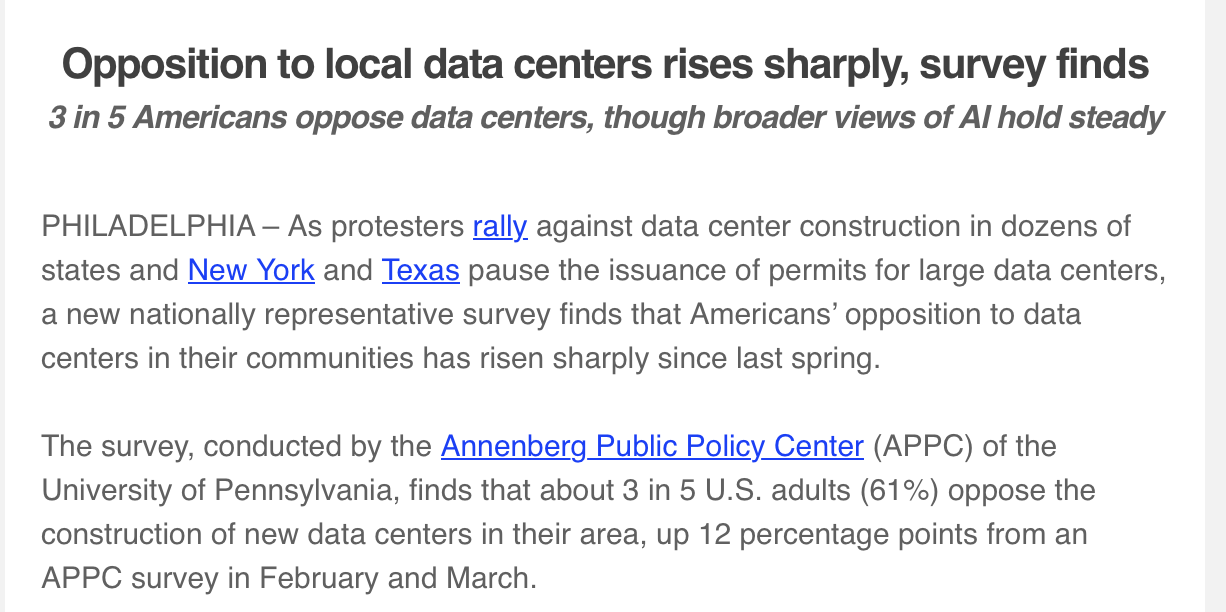
Simultaneously, rising public opposition to data centers (Annenberg poll data) signals regulatory headwinds for cloud-dependent AI services by 2028. Gary Marcus projects anti-AI sentiment will intensify substantially before the 2028 U.S. Presidential election, with data center opposition accelerating faster than anticipated. This creates a strategic advantage for sellers who migrate to distributed, efficient AI systems NOW—they'll avoid future compliance costs, energy surcharges, and potential cloud service disruptions. The transition point is imminent: open-source models become viable for widespread deployment within months, according to UC Berkeley experts. Sellers adopting local AI automation today gain 12-18 months of competitive advantage before mainstream adoption, enabling superior product research speed, pricing agility, and customer service automation compared to competitors still dependent on expensive cloud infrastructure.
Immediate automation wins for sellers: (1) Product research automation using open-source models on local hardware—identify trending categories, competitor pricing, and market gaps 5-10x faster than manual research; (2) Dynamic pricing engines running locally—adjust prices based on competitor data, inventory levels, and demand signals in real-time without cloud latency; (3) Customer service chatbots deployed locally—handle 60-80% of routine inquiries (order status, returns, sizing questions) without external API costs; (4) Content generation for listings—produce optimized product descriptions, bullet points, and A+ content using local models, maintaining brand voice and quality control. These automations collectively save 15-25 hours/week per seller while reducing operational costs by $3,000-6,000 annually.
Questions 8
What competitive advantages do sellers gain from early local AI adoption?
Early adopters gain three distinct advantages: (1) Speed—local AI enables 5-10x faster product research and pricing decisions compared to manual analysis; (2) Cost—$6,000-14,400 annual savings per seller enables aggressive pricing or margin expansion; (3) Quality control—locally-controlled models eliminate the 30% 'AI slop' problem, maintaining brand consistency and customer trust. Combined, these advantages enable early adopters to outpace competitors in market responsiveness, profitability, and customer satisfaction for 12-18 months before mainstream adoption levels the playing field.
When will open-source models be ready for widespread seller adoption?
UC Berkeley experts state the transition point is imminent—open-source models will be viable for widespread deployment within months (from August 2026 publication). Meta's Llama (leaked 2023) and DeepSeek (January 2025) already demonstrate production-ready performance. Computational requirements continue shrinking monthly, making deployment increasingly accessible. Sellers adopting local AI automation in Q4 2026 or Q1 2027 will gain 12-18 months of competitive advantage before mainstream adoption, enabling superior product research speed, pricing agility, and customer service automation.