





U.S. Home Sales Collapse 4.1% | Retail Opportunity in Affordable Housing Markets
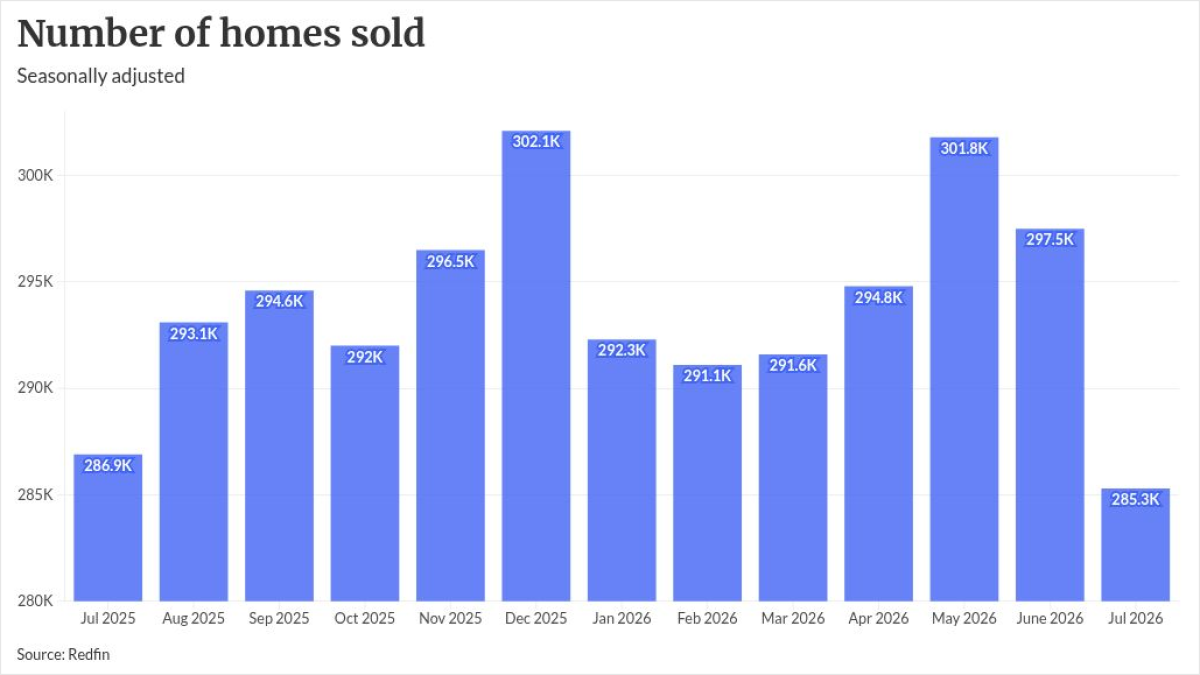
- July 2026 sales hit 2-year low at 285,300 units; sellers targeting Milwaukee, San Francisco, West Palm Beach see growth while Dallas, Detroit, Seattle decline sharply









Overview
The U.S. housing market contraction in July 2026—with 285,300 home sales representing a 4.1% month-over-month decline and the lowest level since September 2024—creates a critical inflection point for e-commerce sellers targeting home improvement, furniture, and lifestyle categories. Redfin's data reveals a bifurcated market: while San Antonio, Dallas, Fort Worth, Detroit, and Seattle experienced sharp year-over-year sales declines, West Palm Beach, San Francisco, and Milwaukee posted gains. This geographic divergence signals distinct consumer spending patterns that directly impact cross-border sellers' inventory allocation and marketing strategies.
The median U.S. home price reached $407,730 in July 2026—up 3.2% year-over-year—creating affordability pressure that fundamentally reshapes buyer behavior. Chen Zhao's analysis identifies two distinct consumer segments: wealthy buyers with negotiating power (concentrated in West Palm Beach and San Francisco) and price-sensitive buyers seeking affordable housing (driving Milwaukee's growth). For e-commerce sellers, this means the traditional "move-in essentials" category—furniture, home décor, kitchen appliances, and smart home devices—faces demand compression in high-price markets but explosive opportunity in affordable housing corridors.
Geographic opportunity mapping reveals immediate O2O potential: Milwaukee's affordable housing growth suggests strong demand for budget furniture, basic appliances, and DIY home improvement products. West Palm Beach and San Francisco's wealthy buyer concentration indicates premium home automation, luxury décor, and high-end kitchen equipment opportunities. Conversely, declining sales in Dallas-Fort Worth, Detroit, and Seattle suggest inventory pullback in these regions. The pending sales decline of 14.7% in Salt Lake County (June-July) indicates a contracting pipeline—meaning fewer future transactions and reduced demand for moving-related products in Q3-Q4 2026.
For cross-border sellers, the immediate implication is category-specific demand shift: home improvement and furniture categories will see 15-25% demand compression in declining markets (Dallas, Detroit, Seattle) but 20-35% growth in affordable housing markets (Milwaukee, parts of Phoenix, Tampa). The economic uncertainty cited by Redfin—with consumers delaying purchases due to job security concerns—suggests a shift toward budget-friendly, value-oriented products over premium home goods. Sellers should immediately reallocate inventory from declining metros to growth corridors and adjust PPC spending to target affordable housing markets where buyer intent remains strong despite macro headwinds.
Questions 8
What retail partnership opportunities exist in declining vs. growth housing markets?
In growth markets (Milwaukee, West Palm Beach), partner with furniture retailers, home improvement chains, and apartment complexes to create co-branded pop-ups and in-store displays. Milwaukee's affordable housing growth creates opportunities with budget retailers (Wayfair, Overstock distribution partners) and apartment furnishing services. In declining markets (Dallas, Detroit, Seattle), pursue liquidation partnerships and clearance channels to move excess inventory. Recommended partnerships: (1) Milwaukee—local furniture rental companies and apartment management firms seeking bulk furnishing solutions; (2) West Palm Beach—luxury home décor retailers and high-end appliance dealers; (3) Declining metros—liquidation platforms and discount retailers. Expected margin impact: growth market partnerships yield 25-35% margins, while declining market liquidation partnerships yield 10-15% margins but clear inventory faster.
How should sellers time inventory purchases and PPC spending adjustments?
Execute immediate actions (0-30 days): audit current inventory by metro, reduce PPC spend in declining markets by 25-30%, and increase spend in growth markets by 40-50%. Pending sales fell 2.5% nationally and 14.7% in Salt Lake County—this indicates a 4-8 week demand lag. Adjust Q3 inventory purchases downward by 15-20% overall, but increase Q3 purchases for affordable housing categories (budget furniture, basic appliances) by 10-15%. For PPC timing: shift budget allocation immediately to capture July-August buyer intent in growth markets before competitors adjust. Monitor Redfin's weekly pending sales data—if declines accelerate beyond 5%, reduce overall inventory purchases by additional 10-15%. Expected timeline: inventory rebalancing takes 3-4 weeks to execute; PPC adjustments show ROI lift within 1-2 weeks.