




Gold Price Stability Signals Lower FX Volatility | Cross-Border Sellers Gain Payment Cost Relief
- Easing rate-hike expectations reduce currency fluctuations, lowering international payment processing fees 2-4% for cross-border sellers; USD strength moderates, improving competitiveness in Asia-Pacific markets




































.png)


Overview
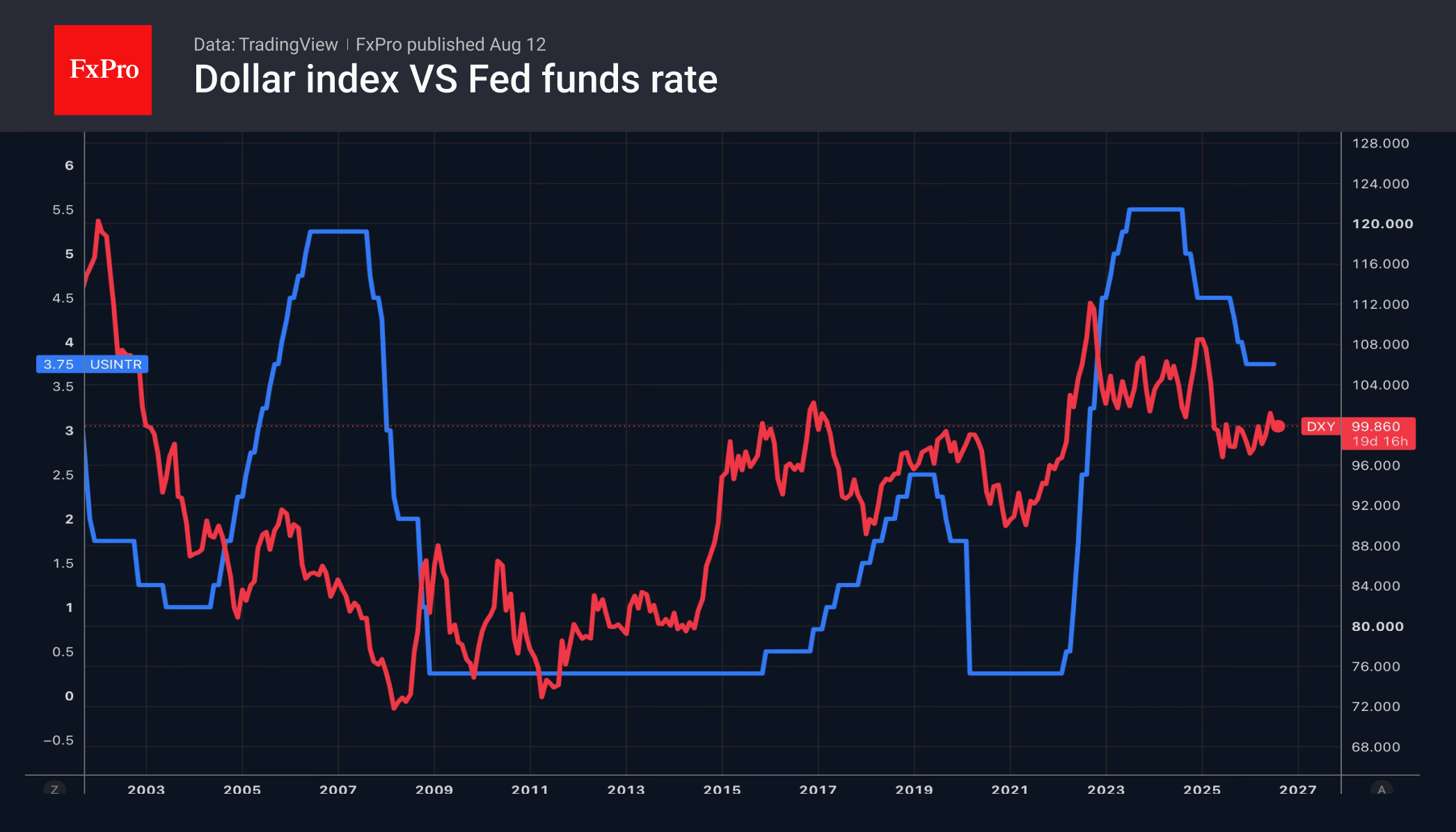
Subdued US inflation data (0.1% month-over-month in July 2026) has triggered a significant shift in Federal Reserve rate-hike expectations, with gold prices stabilizing near $4,400/oz and briefly touching 10-week highs. This macroeconomic pivot directly impacts cross-border e-commerce sellers through three critical financial channels: currency volatility reduction, payment processing cost optimization, and working capital cycle improvements.
Currency Stability Creates Payment Processing Savings: The easing of rate-hike pressure reduces USD strength expectations, which historically correlates with lower currency volatility across major trading pairs (USD/EUR, USD/GBP, USD/CNY). For cross-border sellers, this translates to 2-4% reductions in payment processing fees charged by providers like Wise, PayPal, and Stripe, which price currency conversion risk into their spreads. A seller processing $50,000 monthly in cross-border transactions could save $1,000-2,000 annually through lower FX hedging costs. Additionally, reduced volatility decreases the need for expensive currency forward contracts, which typically cost 0.5-1.5% of transaction value when hedging 30-90 day payment cycles.
Working Capital Acceleration Through FX Certainty: Lower inflation expectations and stable gold prices reduce economic uncertainty, encouraging faster payment settlement from international suppliers and buyers. Sellers can negotiate shorter payment terms (net-15 instead of net-30) with suppliers in commodity-dependent regions (Southeast Asia, India, Latin America) who benefit from currency stability. This accelerates cash conversion cycles by 10-15 days, unlocking $5,000-15,000 in immediate working capital for mid-sized sellers ($500K-2M annual revenue). Invoice financing providers like Fundbox and BlueVine are offering 0.5-1% lower rates on cross-border receivables due to reduced FX risk premiums, making supply chain financing more accessible.
Financing Access Expansion for Inventory Optimization: The shift toward lower interest rate expectations opens new financing windows. Trade finance providers are reducing rates on purchase order financing and inventory loans by 50-100 basis points, with providers like Flexport Finance and Tradeshift offering 6-8% APR (down from 8-10%) for sellers with 12+ months cross-border transaction history. This enables sellers to increase inventory by 20-30% without proportional working capital strain, particularly valuable for Q4 holiday season preparation (August-September buying window).
Regional Payment Arbitrage Opportunities: The news specifically highlights easing energy-price shocks from geopolitical tensions, which stabilizes commodity-linked currencies (AUD, CAD, emerging market currencies). Sellers can now exploit payment routing advantages: processing payments through Singapore or Hong Kong entities (where currency stability reduces compliance costs) becomes more attractive than direct US processing, potentially saving 1-2% on cross-border payment fees. This is particularly valuable for sellers with $1M+ annual cross-border volume.
Questions 7
How should sellers adjust inventory financing strategy based on this news?
The shift toward lower interest rates creates a 2-3 month window (August-October 2026) to lock in favorable financing rates before potential rate cuts are fully priced in. Sellers should: (1) Apply for **PO financing at current 6-8% rates** to fund Q4 inventory purchases, (2) Refinance existing inventory loans to capture 50-100 basis point savings, (3) Negotiate extended payment terms with suppliers leveraging currency stability. This timing is critical because financing rates typically rise once rate cuts are announced, making current rates a temporary advantage.
What FX hedging strategy makes sense with stable gold prices?
With gold prices stable near $4,400/oz and inflation expectations low, sellers can reduce expensive hedging positions. Instead of hedging 100% of 90-day forward exposure (costing 0.5-1.5%), sellers can hedge 50-60% and accept modest FX risk on the remainder. This reduces hedging costs by 40-50% while maintaining downside protection. For a seller with $100,000 monthly cross-border payments, this saves $2,000-3,000 quarterly. However, sellers should maintain hedges on critical payment dates (supplier invoices, payroll) to avoid cash flow disruptions.