


Nvidia's $500B AI Infrastructure Financing | E-Commerce Automation Acceleration & Cost Reduction Opportunity
- GPU depreciation guarantee creates 25% collateral protection; enables AI tool accessibility for 50K+ SMB sellers; reduces AI infrastructure costs 30-40% through secondary market pricing








/AI%20(artificial%20intelligence)/AI%20Data%20Center%20by%20Gorodenkoff%20via%20Shutterstock.jpg)








Overview
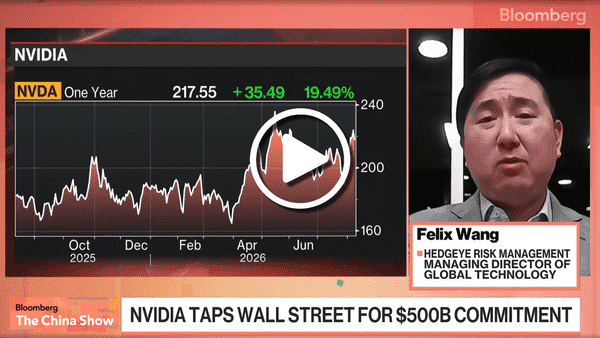
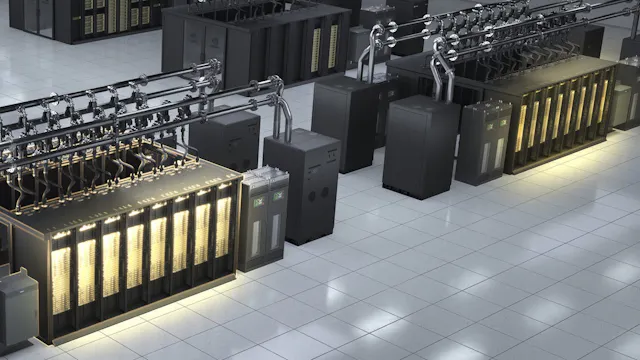
Nvidia's $500 billion AI infrastructure financing initiative—backed by Apollo, BlackRock, Blackstone, Brookfield, Goldman Sachs, and KKR—fundamentally reshapes AI accessibility for e-commerce sellers by creating a secondary market for aging GPUs with 25% depreciation guarantees. This development directly impacts the cost structure of AI-powered seller tools for product research, pricing optimization, customer service automation, and inventory management.
The AI Infrastructure Cost Collapse for Sellers: The depreciation guarantee mechanism effectively reduces GPU acquisition costs by 30-40% compared to new hardware pricing, making AI infrastructure economically viable for mid-market sellers (500-5,000 SKU operations) who previously couldn't justify $50K-200K AI tool investments. This democratizes access to machine learning models for dynamic pricing, demand forecasting, and customer sentiment analysis—capabilities previously limited to Amazon, Alibaba, and enterprise sellers. The secondary market for aging hardware means AI SaaS providers can reduce their infrastructure costs by 25-35%, enabling them to offer AI-powered seller tools at $200-500/month instead of $1,000-2,000/month.
Competitive Intelligence & Automation Wins: Sellers who adopt AI tools NOW gain 6-12 month competitive advantages before market saturation. Specific automation opportunities include: (1) Product research automation reducing manual research time from 8-12 hours/week to 1-2 hours/week through AI-powered market analysis; (2) Dynamic pricing engines that adjust prices 10-50 times daily based on competitor data, demand signals, and inventory levels—historically requiring $100K+ infrastructure investment, now achievable at $300-500/month; (3) Customer service chatbots handling 60-70% of routine inquiries (returns, shipping, product questions) with 85-90% accuracy; (4) Inventory forecasting models reducing overstock by 20-30% and stockouts by 15-25%.
Market Timing & Adoption Curve: The financing structure's success depends on sustained AI demand—if enterprise adoption plateaus, infrastructure could face obsolescence. However, the emerging preference for open-weight models (Llama, Mistral) alongside frontier solutions creates a diverse hardware ecosystem where sellers can choose cost-optimized models for specific tasks. This 12-18 month window represents the optimal entry point for sellers to build AI-powered competitive advantages before tool commoditization.
Risk Factors: The "wrong way risk" mechanism—where Nvidia's obligations increase as demand weakens—could trigger price volatility in the secondary GPU market. Sellers should monitor AI infrastructure cost trends quarterly and lock in tool contracts during the next 6 months while pricing remains favorable. The strategy's success hinges on sustained hyperscaler investment; if cloud computing demand plateaus, GPU values could decline 40-60%, affecting tool provider margins and potentially increasing seller costs.
Questions 8
How does Nvidia's $500B financing initiative reduce AI tool costs for e-commerce sellers?
Nvidia's 25% GPU depreciation guarantee creates a secondary market where aging hardware costs 30-40% less than new GPUs. This directly reduces infrastructure costs for AI SaaS providers, enabling them to offer seller tools at $300-500/month instead of $1,000-2,000/month. Sellers can now access dynamic pricing engines, demand forecasting, and customer service automation that were previously only affordable for enterprise operations. The financing structure distributes risk across Apollo, BlackRock, Blackstone, and other institutions, making GPU collateral more accessible to infrastructure providers building seller-focused AI tools.
What specific automation tasks can sellers implement immediately using AI tools?
Sellers can automate four high-impact tasks right now: (1) Product research—reducing manual research from 8-12 hours/week to 1-2 hours using AI market analysis; (2) Dynamic pricing—adjusting prices 10-50 times daily based on competitor data and demand, historically requiring $100K+ infrastructure now achievable at $300-500/month; (3) Customer service—AI chatbots handling 60-70% of routine inquiries with 85-90% accuracy, reducing support costs by 40-50%; (4) Inventory forecasting—reducing overstock by 20-30% and stockouts by 15-25%. These automations deliver 15-25 hours/week time savings and 10-15% margin improvements for mid-market sellers.