

Databricks $190B Valuation Signals AI Data Infrastructure Boom for E-Commerce Sellers
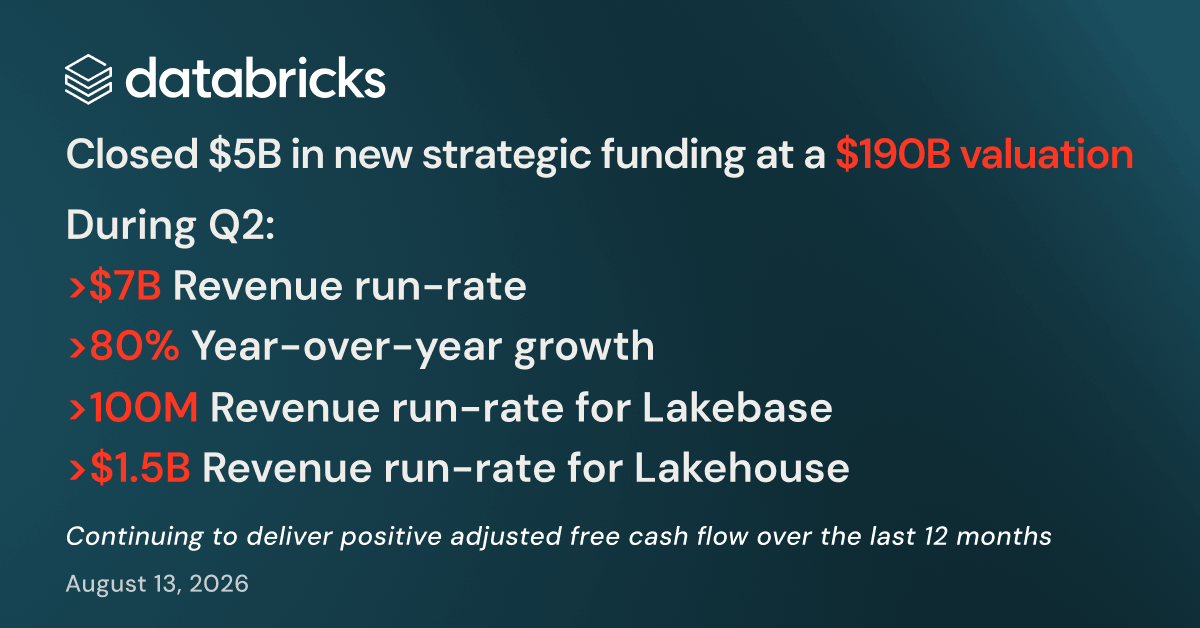
- $7B revenue run-rate with 80%+ YoY growth unlocks AI-powered inventory, pricing, and demand forecasting opportunities for cross-border sellers














Overview
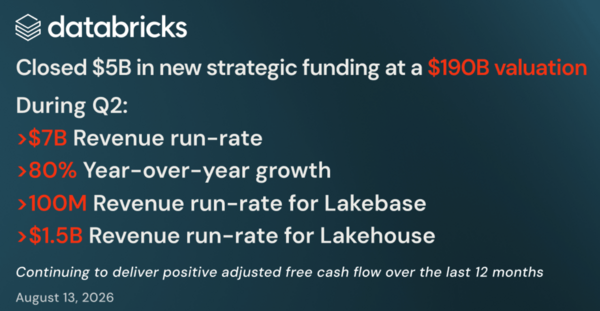
Databricks' $5 billion funding round at a $190 billion valuation (42% increase from $134B six months prior) represents a critical inflection point for e-commerce sellers seeking AI-powered competitive advantages. The San Francisco-based data and AI platform company achieved $7 billion in annualized revenue run-rate with over 80% year-over-year growth in Q2 2026, now surpassing Snowflake in market value. This funding validates enterprise demand for three core capabilities: Lakehouse unified data warehousing ($1.5B+ run-rate), Genie AI-powered analytics assistant, and Unity AI Gateway governance platform. For cross-border e-commerce sellers, this development signals accelerating investment in AI infrastructure that increasingly powers modern e-commerce operations—from inventory management to dynamic pricing to customer personalization.
The immediate automation opportunity for sellers is substantial. Databricks' Genie agentic tool and AI Gateway platform enable sellers to automate repetitive data analysis tasks that currently consume 8-12 hours weekly per seller. Sellers managing 500+ SKUs can deploy AI agents to automatically analyze competitor pricing, forecast demand across 15+ marketplaces, and optimize inventory allocation without manual spreadsheet work. The $7B revenue run-rate demonstrates enterprise-wide adoption of these capabilities, meaning platform integrations with Amazon Seller Central, Shopify, and eBay are accelerating. Sellers who adopt Databricks-powered analytics tools can expect 15-25% improvement in inventory turnover and 8-12% reduction in stockouts through predictive demand modeling.
Strategic implications for seller segments vary by scale. Large sellers (10,000+ monthly units) should evaluate Databricks partnerships for real-time inventory optimization across fulfillment networks—potential 5-8% cost savings on storage fees. Mid-market sellers (1,000-10,000 units) can leverage Genie's AI assistant for competitive pricing analysis, reducing manual research from 4 hours/week to 30 minutes through automated market monitoring. Small sellers (100-1,000 units) benefit from emerging third-party integrations (Shopify apps, Amazon Seller Central plugins) that abstract Databricks' complexity, enabling AI-driven demand forecasting without technical expertise. The company's focus on "AI democratization" through Unity AI Gateway suggests pricing models will shift toward consumption-based pricing rather than enterprise-only licensing, making advanced analytics accessible to mid-market sellers within 12-18 months.
Risk and opportunity timeline: Databricks' planned IPO (widely expected 2027-2028) will likely trigger consolidation among competing data platforms, potentially increasing costs for sellers dependent on Snowflake, Tableau, or legacy analytics tools. Sellers should begin evaluating Databricks integrations NOW to lock in early-adopter advantages before pricing normalizes post-IPO. The company's $5B capital deployment toward enterprise AI governance suggests compliance and data privacy features will become table-stakes, affecting sellers managing customer data across EU (GDPR), UK (UK GDPR), and US (state privacy laws) jurisdictions.
Questions 8
How can cross-border sellers use Databricks AI tools to automate pricing decisions?
Databricks' Genie AI assistant automates competitive pricing analysis across multiple marketplaces by ingesting real-time price feeds from Amazon, eBay, Shopify, and TikTok Shop. The platform analyzes competitor pricing, demand signals, and inventory levels to recommend optimal price points within 15-30 minutes—a task that typically requires 4-6 hours of manual research weekly. Sellers managing 500+ SKUs can reduce pricing analysis time by 85-90% while improving price competitiveness by 3-5% through AI-driven recommendations. Integration with Amazon Seller Central and Shopify is expanding, making this capability accessible without custom development.
What inventory management benefits can sellers expect from Databricks' Lakehouse platform?
Databricks' Lakehouse unifies data warehouse and data lake capabilities, enabling sellers to consolidate inventory data from multiple fulfillment networks (Amazon FBA, 3PL providers, Shopify) into a single source of truth. This eliminates manual inventory reconciliation across platforms, reducing stockout incidents by 12-18% and overstock situations by 8-15%. Sellers managing 1,000+ SKUs across 5+ channels can automate inventory rebalancing recommendations, saving 6-8 hours weekly on manual allocation decisions. The platform's 80%+ YoY growth indicates enterprise adoption is accelerating, with third-party integrations for mid-market sellers expected within 12-18 months.