





PayPal Acquisition Reshapes Cross-Border Payments | Sellers Face Fee & Settlement Changes
- Stripe-Advent $43B bid signals consolidation of $1.4T payment volume; sellers must diversify payment methods and monitor fee impacts across eBay, Shopify, WooCommerce integrations











Overview
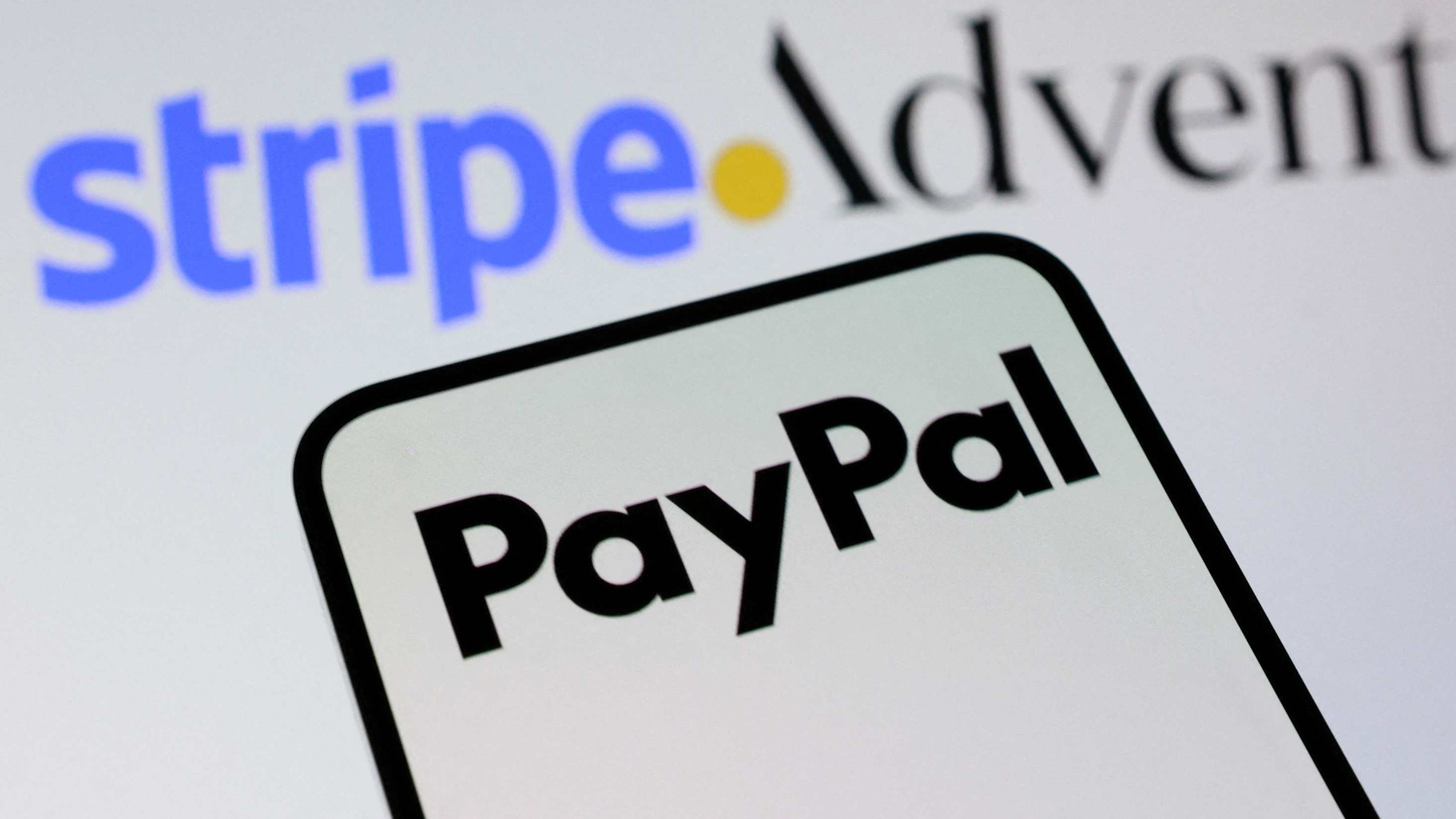
PayPal's acquisition talks represent a critical inflection point for cross-border e-commerce sellers, with Stripe and Advent Capital Management submitting a joint bid at $60.50 per share (approximately $43 billion valuation), while competing offers value the company at $53 billion. PayPal processes over $1.4 trillion in annual payment volume and serves millions of online merchants globally, making this consolidation a watershed moment for payment infrastructure. The acquisition would merge Stripe's merchant-focused technology with PayPal's consumer and business customer base, creating a formidable payments ecosystem that could reshape competitive dynamics and directly impact seller costs, settlement timelines, and available payment methods across major markets including eBay, Shopify, and WooCommerce.
From a financial technology perspective, this acquisition presents three immediate payment optimization opportunities for sellers. First, payment cost savings: The merged entity may rationalize fee structures across overlapping merchant segments. Stripe currently charges 2.9% + $0.30 per transaction for standard payments, while PayPal charges 2.2% + $0.30 for standard transactions. Post-acquisition consolidation could pressure fees downward for high-volume sellers (those processing $100K+ monthly), potentially unlocking 20-40 basis points in savings for sellers willing to commit to volume tiers. Second, cash flow acceleration: Stripe's settlement infrastructure (typically 1-2 business days) combined with PayPal's consumer payment network could enable faster working capital cycles. Sellers currently experiencing 3-5 day PayPal settlement windows may see acceleration to 1-2 days post-merger, improving cash conversion cycles by 2-3 days—critical for sellers managing inventory financing. Third, financing access: The combined entity would control both merchant payment data (Stripe) and consumer transaction history (PayPal), enabling new invoice financing and inventory lending products. Stripe Capital currently offers advances up to $500K based on payment volume; PayPal Working Capital offers similar products. A merged platform could offer integrated financing at 15-25% APR (vs. 30-40% for traditional factoring), unlocking $5-15M in aggregate working capital for mid-market sellers.
Regulatory uncertainty creates immediate hedging requirements for sellers dependent on PayPal. Antitrust authorities in multiple jurisdictions will scrutinize the combined market power of Stripe ($95 billion valuation) and PayPal, potentially delaying deal closure by 12-18 months or imposing divestitures. Sellers should immediately: (1) audit their payment method concentration—if PayPal represents >40% of transaction volume, implement Stripe, Square, or regional payment processors (Adyen, Worldpay) to reduce single-provider risk; (2) lock in current fee rates through multi-year agreements before deal closure, as post-acquisition fee increases are typical; (3) evaluate alternative settlement currencies and FX hedging strategies, as the merged entity may rationalize currency pairs and increase FX spreads. For sellers processing cross-border transactions, the current PayPal fee structure (2.2% + $0.30 + 2.5% international fee) could increase 30-50 basis points post-merger if Stripe's higher international rates (3.5% + $0.30) become the standard. This would cost a seller processing $500K monthly in cross-border volume an additional $1,500-2,500 per month.
Cash cycle optimization requires immediate action on three fronts. First, sellers should map their current payment settlement timeline: PayPal typically settles in 3-5 business days; Stripe in 1-2 days. If PayPal represents significant volume, the 2-4 day settlement delay costs sellers approximately $1,370-5,480 monthly in working capital (assuming 30% annual cost of capital on $500K monthly volume). Shifting 30-50% of volume to Stripe immediately unlocks $410-2,740 in monthly working capital. Second, sellers should evaluate invoice financing and PO financing products now, before post-acquisition repricing. Current rates: Stripe Capital (18-25% APR), PayPal Working Capital (15-25% APR), traditional factoring (30-40% APR). Post-merger consolidation may increase rates 200-300 basis points as the merged entity optimizes pricing. Locking in current rates through 12-month agreements provides 2-3 year rate certainty. Third, sellers should stress-test their cash flow models assuming a 50-100 basis point fee increase and 2-3 day settlement delay extension during the 12-18 month regulatory review period.
Regional payment method diversification is critical for sellers in high-concentration markets. EU-based sellers relying on PayPal for cross-border transactions should immediately implement Adyen (2.5% + €0.08 for EU transactions, 1-2 day settlement) or Worldpay (2.75% + €0.08, 1-2 day settlement) to reduce PayPal dependency. Asia-Pacific sellers should add Alipay (1.5-2.5% for cross-border, 1-3 day settlement) and WeChat Pay (1.5-2.5%, 1-3 day settlement) to capture regional payment preferences while reducing PayPal concentration. Latin American sellers should implement Mercado Pago (2.9% + local fees, 1-2 day settlement) and 2Checkout (3.5-4.5%, 1-2 day settlement). This geographic diversification reduces regulatory risk (if the merged entity faces divestitures in specific regions) and enables FX arbitrage opportunities across payment corridors.
Questions 7
Should I lock in invoice financing rates before the PayPal acquisition closes?
Yes, immediately. Current rates: Stripe Capital (18-25% APR), PayPal Working Capital (15-25% APR), traditional factoring (30-40% APR). Post-merger consolidation typically increases rates 200-300 basis points as the merged entity optimizes pricing. A seller securing $100K in financing at 20% APR today would pay $20K annually; post-acquisition, the same facility might cost $22-23K annually. Locking in 12-month agreements now provides 2-3 year rate certainty and protects against post-acquisition repricing. Contact your current provider (Stripe Capital, PayPal Working Capital, or alternative factoring firms) within 30 days to lock rates before deal closure.
What FX hedging strategies should I implement for cross-border transactions?
The merged Stripe-PayPal entity may rationalize currency pairs and increase FX spreads, particularly for lower-volume pairs. Current PayPal FX spreads: 2.5% for major pairs (EUR, GBP, JPY), 3-4% for emerging market currencies. Post-acquisition, expect spreads to increase 50-100 basis points. Implement hedging: (1) Forward contracts for 30-90 day currency exposure (cost: 0.5-1.5% vs. 2.5-4% spot spreads), (2) Multi-currency accounts with Wise (0.5-1.5% spreads) or OFX (1-2% spreads) for settlement, (3) Natural hedging by matching revenue and expense currencies. For a seller with $200K monthly EUR revenue, a 100 basis point FX spread increase costs $2,000 monthly. Hedging reduces this to $300-600 monthly, saving $1,400-1,700 monthly.