

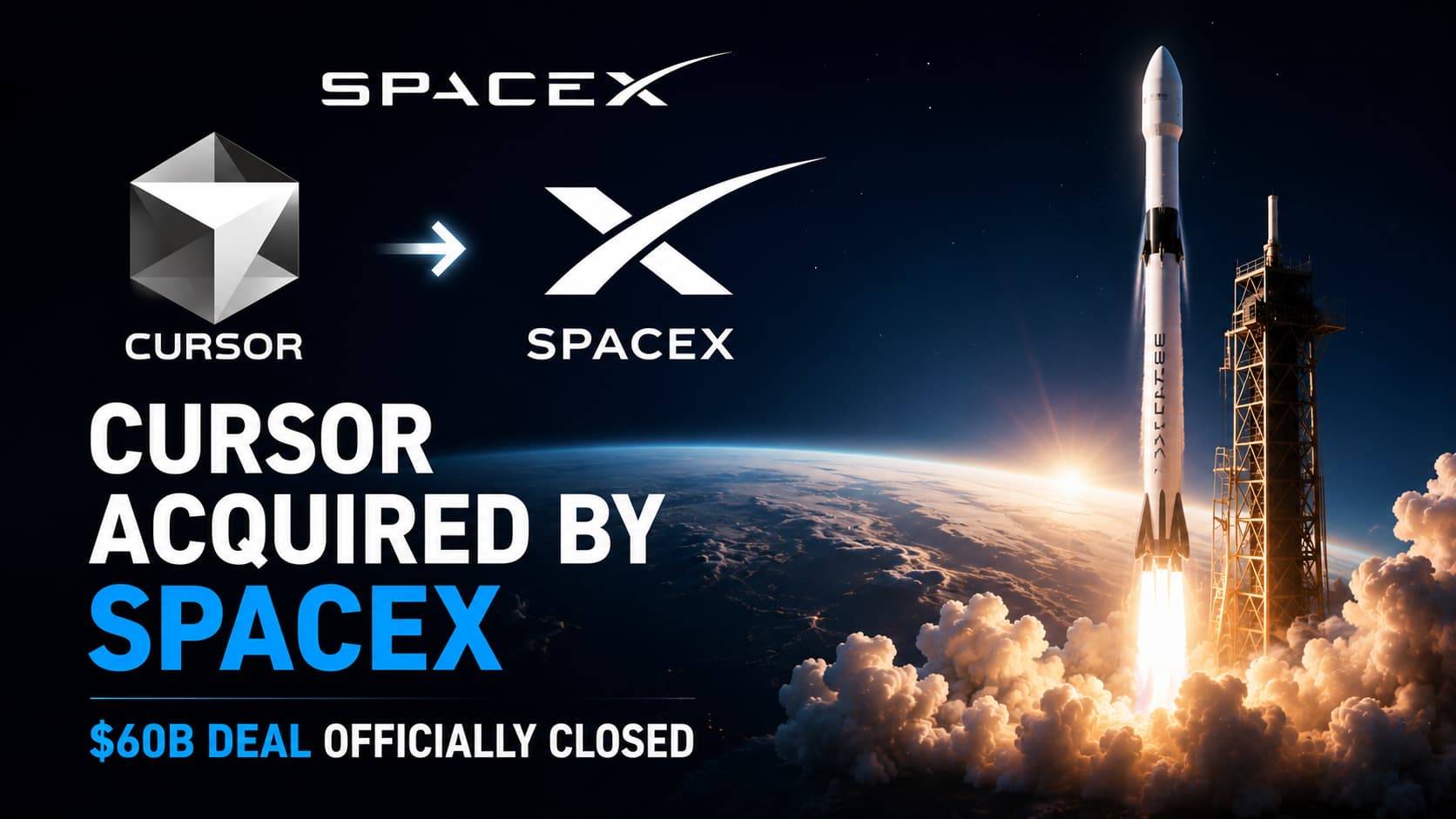
SpaceX-Cursor $60B AI Coding Acquisition | Enterprise Automation Tools Reshape E-Commerce Development Stack
- SpaceX acquires Cursor for $60B, combining 50,000+ enterprise users with Colossus supercomputer; ARR projected to surge from $4B to $33B by 2030, enabling sellers to automate product development, pricing algorithms, and customer service workflows at scale




















_5.jpg&w=1920&q=75)





Overview
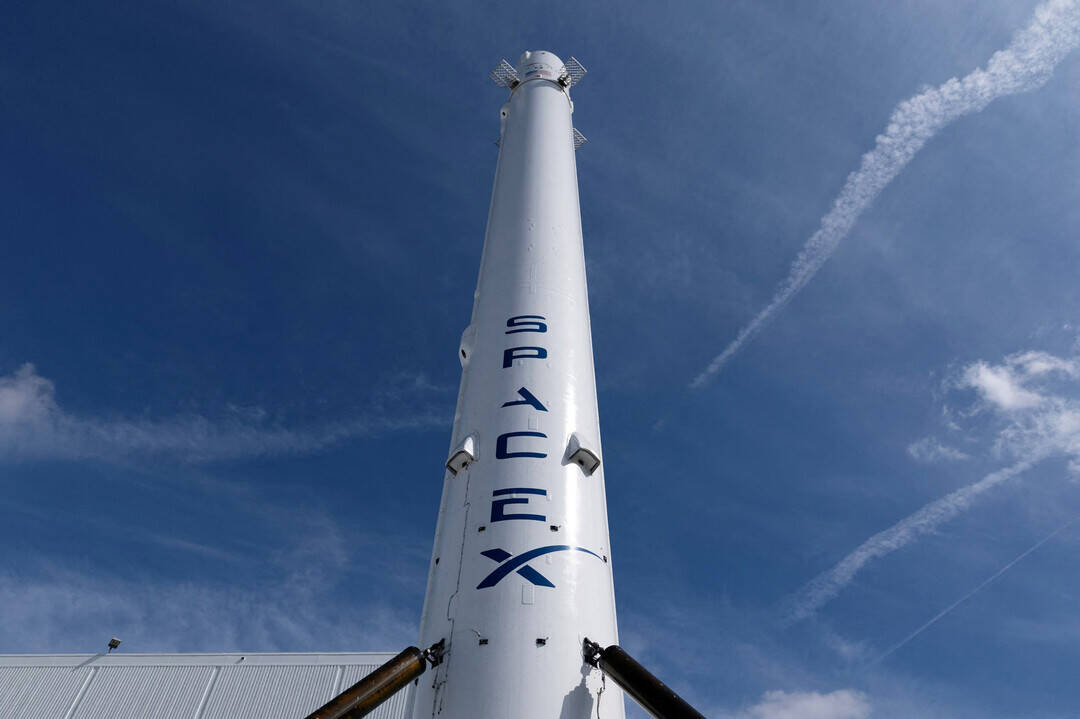
The SpaceX acquisition of Cursor for $60 billion represents a watershed moment for enterprise AI infrastructure that directly impacts e-commerce sellers' ability to automate critical business functions. Cursor, which reached $100 million ARR as the fastest-growing software company by prioritizing developer experience over model lock-in, now gains access to SpaceX's Colossus supercomputer with one million H100 GPU equivalents—resolving the computational bottleneck that previously limited AI model capabilities. This merger combines Cursor's 50,000+ enterprise users (including 64 Fortune 500 companies) with SpaceX's raw computational power, positioning the combined entity to accelerate AI model development from $4 billion to $33 billion ARR by 2030 according to Morgan Stanley projections.
For e-commerce sellers, this acquisition signals a critical inflection point: AI-powered automation tools will become dramatically more capable and affordable within 12-24 months. Cursor's developer-first approach—offering tab-complete functionality, model switching, and IDE integration—established the template for tools that meet users where they work. The emergence of autonomous coding agents like Claude Code and Codex by late 2025 demonstrated that traditional IDE interfaces could be displaced by autopilot-style functionality. However, Cursor's iteration speed advantage proved decisive: the platform evolved faster than labs with superior initial resources, validating the thesis that rapid product iteration beats raw computational power in competitive AI markets.
Immediate seller implications: The SpaceX-Cursor combination will accelerate development of AI tools for product research automation, dynamic pricing optimization, and customer service chatbots. Sellers currently using manual processes for competitor analysis, inventory forecasting, and listing optimization can expect AI-powered alternatives to become 3-5x more capable and 40-60% cheaper within 18 months. The acquisition validates that developer experience and iteration speed create defensible competitive advantages—a principle directly applicable to e-commerce SaaS tools. Sellers should monitor Grok 4.5's evolution (already trained on trillions of tokens from Cursor data) as a potential alternative to OpenAI and Anthropic APIs for building custom automation workflows. The prediction market skepticism (xAI given only 13% probability of coding dominance by 2026 vs. Anthropic's 54%) suggests competitive intensity will remain high, benefiting sellers through continued tool innovation and price competition.
Questions 8
Should sellers switch from OpenAI/Anthropic APIs to Grok 4.5 for custom automation workflows?
Not immediately, but monitor Grok's evolution closely. Grok 4.5 was already trained on trillions of tokens from Cursor's developer interaction data, giving it specialized knowledge of coding patterns. However, prediction markets give xAI only 13% probability of coding dominance by 2026 (vs. Anthropic's 54% and OpenAI's 30%), indicating competitive uncertainty. Sellers should maintain API flexibility: test Grok 4.5 for specific use cases (product listing generation, customer service automation) while keeping OpenAI/Anthropic as primary providers. The competitive intensity benefits sellers through continued price competition and feature innovation across all three platforms.
What is the timeline for AI tools to become significantly cheaper and more capable for sellers?
Morgan Stanley projects Cursor's ARR will surge from $4 billion (June 2025) to $33 billion by 2030—an 8.25x increase over 5 years. This indicates aggressive R&D spending and likely 40-60% price reductions for enterprise AI tools within 12-24 months as competition intensifies. Sellers should expect: immediate improvements in autonomous coding agents (Claude Code, Codex) by Q2 2026; pricing pressure on AI APIs by Q3 2026; and mature, affordable automation tools for product research, pricing, and customer service by 2027. Early adopters who build custom workflows now will gain 6-12 month competitive advantages before tools commoditize.