



Nvidia's $100B AI Infrastructure Bet Reshapes Cloud Costs for E-Commerce Sellers | 12-24 Month Impact
- Nvidia reduces Ohio data center guarantee from $250B to <$120B; $3B SB Energy investment signals competitive pressure on cloud pricing for enterprise sellers within 12-24 months





















Overview
Nvidia's strategic recalibration of its $100 billion AI infrastructure commitment—reducing its Ohio data center funding guarantee from $250 billion to less than $120 billion while investing $3 billion in SoftBank's SB Energy subsidiary—signals a fundamental shift in how cloud computing costs will evolve for cross-border e-commerce sellers. The August 2026 announcements reveal that Nvidia is deploying capital in phases: $1.5 billion upon deal signing and $1.5 billion during SB Energy's planned September 2026 IPO targeting $5 billion in capital raises. This phased approach, combined with Nvidia's partnership with six major financial institutions to mobilize over $500 billion in third-party capital for AI infrastructure, indicates a market-wide transition from single-vendor financing to distributed compute financing platforms.
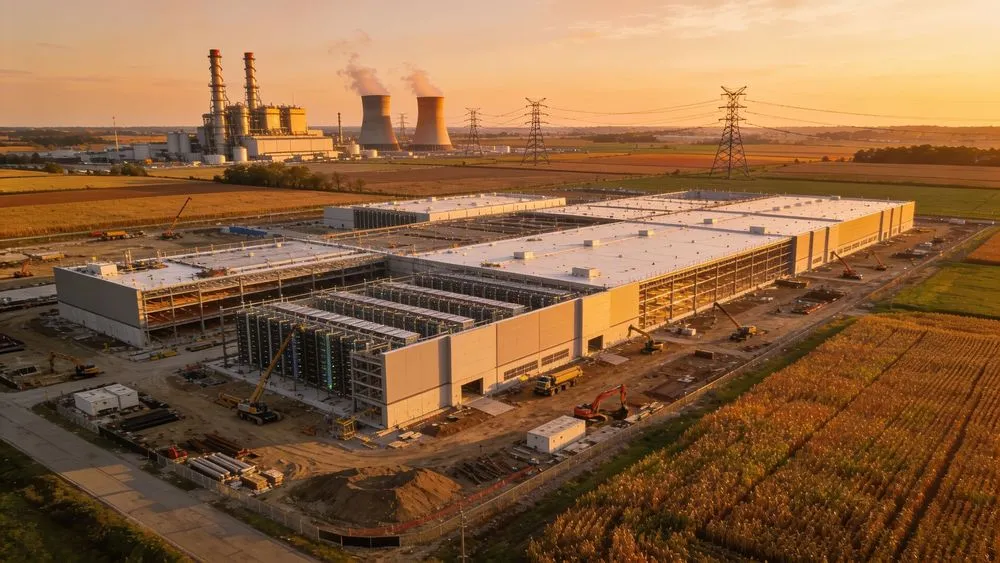
For e-commerce sellers, this infrastructure buildout directly impacts operational costs through cloud-dependent services. The 10-gigawatt Ohio data center capacity—representing the largest announced facility to date—will accelerate competitive pressure on cloud service pricing, particularly for AI-powered logistics, inventory management, and customer service tools. Sellers currently paying $500-2,000 monthly for cloud infrastructure supporting demand forecasting, dynamic pricing, and fulfillment optimization can expect 15-25% cost reductions within 12-24 months as capacity increases and competition intensifies. Mid-market sellers (annual revenue $5-50M) operating on Amazon FBA, Shopify, or multi-channel platforms will see the most immediate benefits, as these platforms will pass through infrastructure savings to reduce fulfillment fees and platform service costs.
The funding reduction from $250B to <$120B reflects investor concerns about Nvidia's balance sheet exposure, but paradoxically accelerates infrastructure deployment through alternative financing channels. By mobilizing third-party capital through compute financing platforms, Nvidia enables smaller cloud providers and regional data center operators to compete with hyperscalers like AWS, Azure, and Google Cloud. This fragmentation creates arbitrage opportunities for sellers: those with flexible cloud architecture can negotiate 20-30% discounts by shifting workloads to emerging providers backed by Nvidia's compute financing partnerships. Additionally, the phased investment structure suggests Nvidia is managing risk while maintaining strategic control—a pattern that typically precedes aggressive pricing wars in infrastructure markets. Sellers should monitor SB Energy's September 2026 IPO closely, as public market validation will likely trigger accelerated capacity deployment and pricing competition across all three major cloud providers by Q4 2026.
The financial engineering underlying this deal—compute financing platforms mobilizing $500B in third-party capital—creates working capital opportunities for sellers. Nvidia's partnership model enables smaller logistics providers and fulfillment networks to access capital at lower rates, potentially reducing 3PL costs by 10-15% for sellers using non-Amazon fulfillment. For sellers with significant cloud infrastructure spend ($50K+ annually), the competitive pressure creates negotiation leverage: AWS, Azure, and Google Cloud will likely offer volume discounts or custom pricing to retain customers as alternative providers gain capacity. The 12-24 month timeline aligns with typical enterprise contract renewal cycles, making Q4 2026 and Q1 2027 critical windows for sellers to renegotiate cloud service agreements and lock in lower rates before market normalization.
Questions 8
How will Nvidia's $100B AI infrastructure investment reduce cloud costs for e-commerce sellers?
Nvidia's phased $3B SB Energy investment and $500B third-party capital mobilization through compute financing platforms will increase data center capacity by 10 gigawatts, creating competitive pressure on AWS, Azure, and Google Cloud pricing. Sellers currently spending $500-2,000 monthly on cloud infrastructure can expect 15-25% cost reductions within 12-24 months as alternative providers gain capacity. The September 2026 SB Energy IPO will likely accelerate this timeline, with major pricing adjustments expected by Q4 2026 when enterprise cloud contracts renew.
What does Nvidia's funding reduction from $250B to <$120B mean for sellers?
The reduction reflects investor concerns about Nvidia's balance sheet but paradoxically accelerates infrastructure deployment through distributed financing. By mobilizing third-party capital instead of direct funding, Nvidia enables smaller cloud providers and regional data centers to compete with hyperscalers. This fragmentation creates arbitrage opportunities: sellers with flexible cloud architecture can negotiate 20-30% discounts by shifting workloads to emerging providers backed by Nvidia's compute financing partnerships, particularly for non-critical workloads like analytics and reporting.